
From Al-Ahsa to the world.. Green Environment Society validates the experience of reforestation with saline water – Economics
Al-Ahsa Zuhair al-Ghazali
In a move that reflects the growing presence of Saudi Arabia’s environmental experiments internationally, the Green Environment Society in Al-Ahsa Governorate has managed to document its salt-tolerant afforestation methodology on the WOCAT Global Network, which specializes in documenting and sharing practices and knowledge related to sustainable land management.
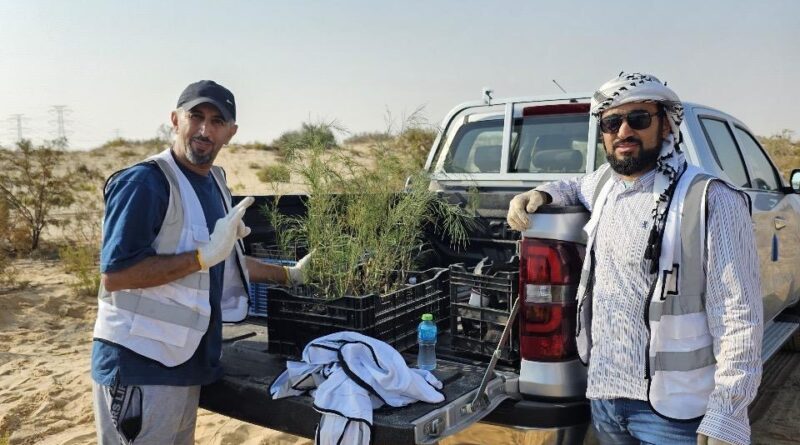
The experiment was recorded in al-Ahsa, after its use in the Yellow Lake Forest, to support the stability of vegetation in the desert and to provide a practical model for the use of water resources in places with a special ecological nature.
The association emphasized that documenting experiences at the international level is an important step in moving the Saudi field experience from a local application to a global knowledge base, allowing them to benefit and exchange with specialists and practitioners in arid and semi-arid environments around the world.
The implementation of the experiment was the result of environmental cooperation and partnership with the Food and Agriculture Organization of the United Nations (FAO), the General Irrigation Corporation and the National Center to Combat Desertification, along with environmental experts, specialists and practitioners.
Professor Abd Rab Al-Rasul Al-Omran, Chairman of the Board of Directors of the Green Environment Society, explained that documenting experiences through WOCAT reflects the importance of local environmental experiences and the innovative, practical solutions they bring.
For his part, the executive director of the association, Amar Al-Bowahih, emphasized that the inclusion of the experiment in the WOCAT network represents a transition from field application to global knowledge documentation and opens new horizons for cooperation and experience exchange with entities and institutions interested in land sustainability and ecosystem restoration.
On the other hand, Ahmed Bukhamsen, the inventor of the deep planting method and a member of the association, explained that the methodology relies on planting the seedling directly in the surface water at a depth of about one meter, which allows it to benefit from the natural water source and reduce the dependence on irrigation. He highlighted the method’s suitability for salt-tolerant plants in wetlands surrounding swamps, lakes and wetlands, particularly around Al-Asfar and Al-Habil lakes in Al-Ahsa, as well as its low cost compared to traditional planting methods.
The Green Environment Society continues its efforts to document and communicate more of Saudi Arabia’s environmental experiences and practices on international platforms, helping to strengthen the Kingdom’s presence in combating desertification, land restoration, vegetation development and environmental sustainability.