

Despite American opposition, the United Nations is changing the “map of the world”
September 5, 2026 at 12:03 AM|
Latest update:
September 5 00:16 2026
conclusion

The United Nations adopts a map projection that corresponds to the actual areas. With the support of 164 countries and America’s opposition, correct Mercator’s distortions, especially towards Africa.
The UN General Assembly on Friday adopted a resolution to improve global mapping; So that it is more in line with the actual size of the continents, the expansion of Africa – for example – and the narrowing of the United States.
The French-sponsored resolution by the African Union and Togo passed with the support of 164 countries, against one objection from the United States, with six abstentions.
The resolution calls on countries and international organizations to use the “cartographic equalization of the earth’s projection” type of map drawings and instead abandon the “Mercator projection” named after the scientist and cartographer Gerardus Mercator, who invented this methodology in 1569 to solve a practical problem of marine navigation.
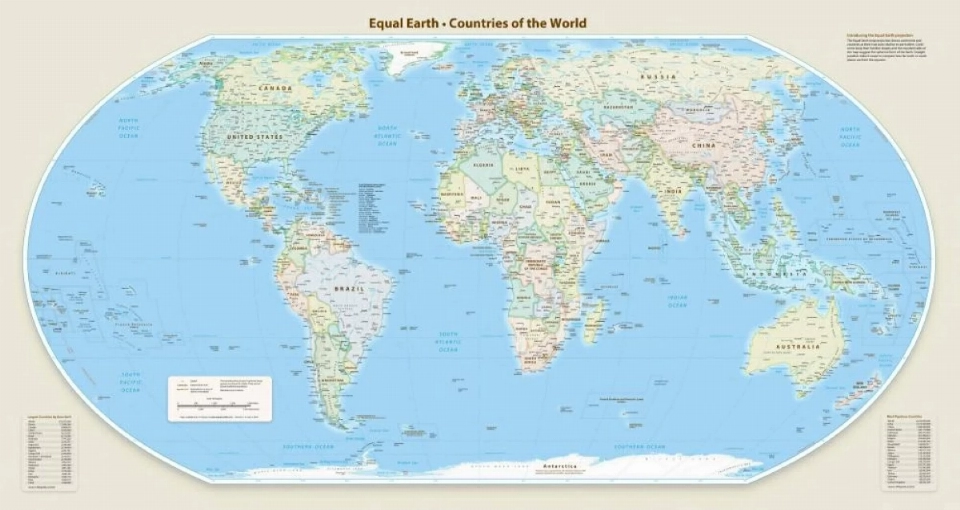
Because the straight lines on his map coincided with fixed compass directions, sailors could use them to measure courses, but maintaining the direction came at the expense of space; Land masses appear larger the farther they are from the equator.
The General Assembly resolution noted that these distortions contributed to the “symbolic minimization” of Africa and reinforced an unbalanced view of the world. “Maps shape our understanding of the world,” Togo’s Foreign Minister Robert Ducey said in a speech to the General Assembly. He continued: “They guide education, shape imaginations and influence collective perceptions. They are by no means neutral. “When it presents a distorted picture of our planet, it can reinforce misconceptions that are passed down from one generation to the next.”
Ducey emphasized that “this initiative is not about any particular country, civilization or tradition on the map”, but “it is guided by a global ambition to advance knowledge based on scientific accuracy, respect for truth and equal dignity among peoples”.
On the other hand, the representative of the United States of America at the United Nations, Yarina Ferenevich, considered that “such decisions and the ideological agenda they promote undermine the work of this institution and cause it to lose credibility.”
He added: “Instead of focusing on the real stakes of world peace, prosperity and good relations between nations, this body is looking at maps dating back to the 16th century.”