
The heirs of the owners of the French embassy building in Baghdad demand 21.5 million euros from Paris.
As a result of the pollution, Israel entered into a water crisis. The crisis erupted two weeks ago when it was revealed that the southern city of Ashkelon (Ashkelon) and its region are drinking contaminated water from the Gaza Strip’s sewage system as a result of infrastructure destruction.
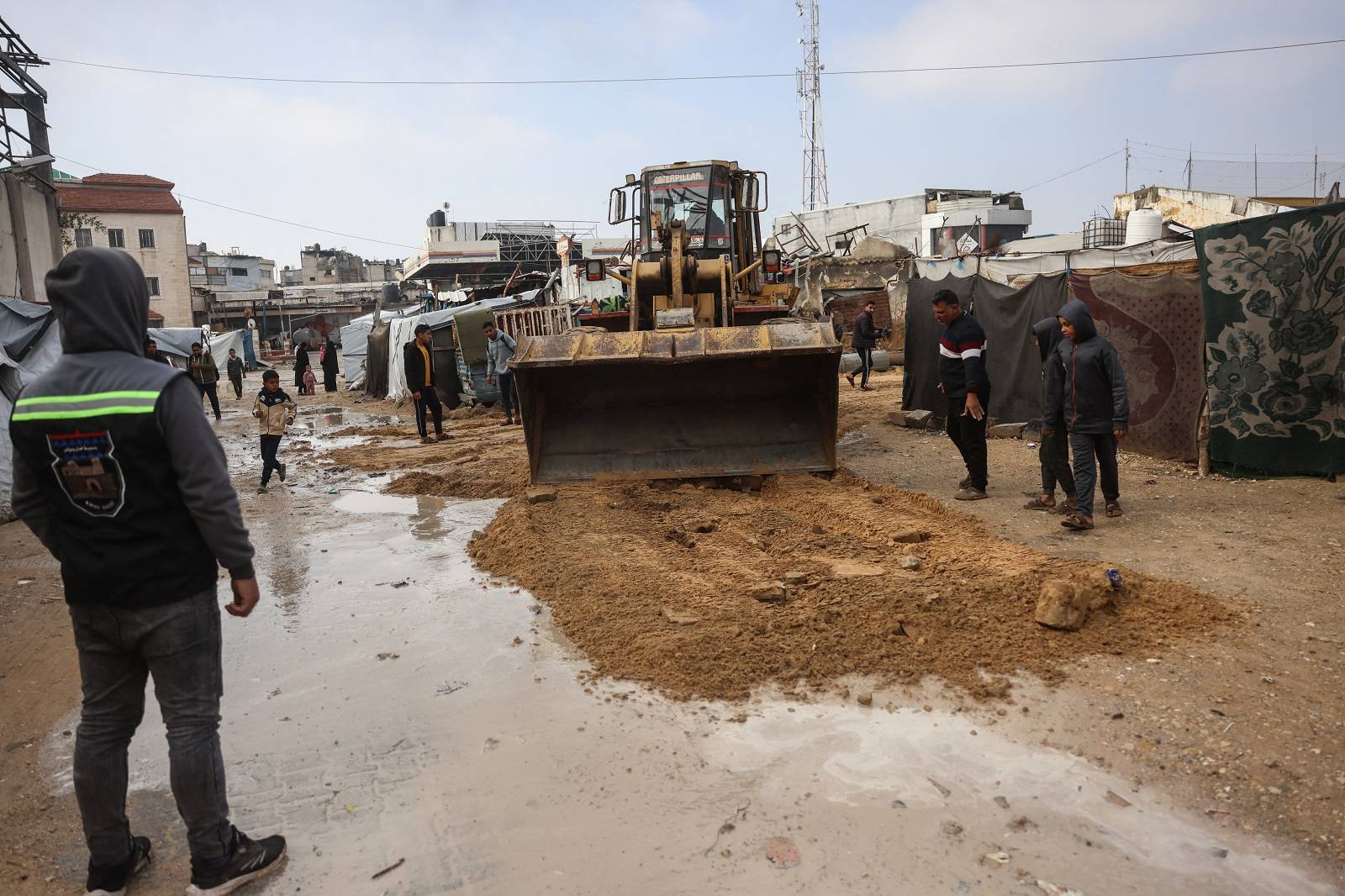
The Israeli army’s bombardment of streets, vital facilities and infrastructure in Gaza has caused chaos, causing sewage to flow uncontrollably from the Strip into the Mediterranean Sea, and from there the waves carry it northward and leak into Israel’s sewage plants.
But an Israeli investigation showed a few days ago that Ashkelon is not the only one drinking contaminated water, but that half of Israel’s population is suffering from the same.
According to local Israeli reports, extreme marine pollution has caused a near-total shutdown of Israel’s water treatment system, following a sharp increase in seawater turbidity. Five water treatment plants on the Mediterranean coast stopped working. Ashdod, Shork A, Shork Bulmahim and Ashkelon, and according to the received data, desalination plants in Hadera, Western Galilee and Eilat continued to operate normally.
The disconnection of most of the water facilities has led to a shortage of salt water, which 88 percent of Israel’s population drinks, leading to water supply disruptions in various regions of the country and a severe shortage of irrigation water.
It turns out that about half of Israel’s population, which relies on desalination at southern plants, suffers from contamination, and it may have reached places in the West Bank and Jordan that drink desalinated water from Israel.
The southern municipalities of Beersheba, Ashkelon, Ashdod and others have reported water supply interruptions and water pressure drops in a number of areas, and authorities have urged residents to deal with the situation in accordance with the instructions of the competent authorities, while the responsible authorities work to ensure continuity of water supply to homes.
Significant influence in agriculture
According to the Emergency Water Management Directive, local authorities have started to significantly reduce the irrigation of public green spaces and municipal water consumption. The main results are concentrated in the agricultural sector. For the first time in years, farmers across the country have been notified of a wholesale reduction in water quotas or a complete cutoff. The reduction in water allocated to agriculture is expected to cause significant damage to crops if the crisis continues for a long time.
The water supply service confirmed that the main priority at this stage is to ensure water supply to homes and explained that local problems that may occur in different areas will be subject to rapid treatment so that the supply can be restored to normal.
After calling for his resignation, Energy and Infrastructure Minister Eli Cohen, who is responsible for the water authority and all energy matters, said what was happening was “a natural phenomenon the likes of which we have not seen in twenty years”. He added that authorities are working to increase the frequency of pumping water from wells and the Sea of Galilee, and two additional desalination plants have been approved to operate under close supervision.
Cohen explained that “the first priority is to provide water to the population” and noted that the relevant authorities are studying solutions that will allow farmers to restore water supply as soon as possible.
While trying to resolve the crisis, the organization “Adam Teva and Din” warned that the current situation, in its opinion, reveals a strategic failure in the planning of water resources management. Experts at the organization said the policy, which relies almost exclusively on desalination of seawater, is “dangerous and wrong”. Because it doesn’t take into account potential risks, including seawater pollution and the failure of desalination plants.
The organization added that “the flexibility of Israel’s water system is its security,” stressing that it is impossible to rely on a single source of water. He criticized what he described as the neglect of natural emergency reserves and noted the closure of drinking water wells due to contamination without rehabilitating them.
The media focused on the issue throughout Tuesday and Wednesday, and several experts revealed that there was traditional Israeli arrogance that led to this crisis. Since Israel started its seawater desalination projects, it has been experiencing the phenomenon of algae inflow from the Nile waters in Egypt, and therefore must not allow Gaza to treat its sewage.