

Posted on 30/1/2026
|
Last update: 22:16 (Mecca time)
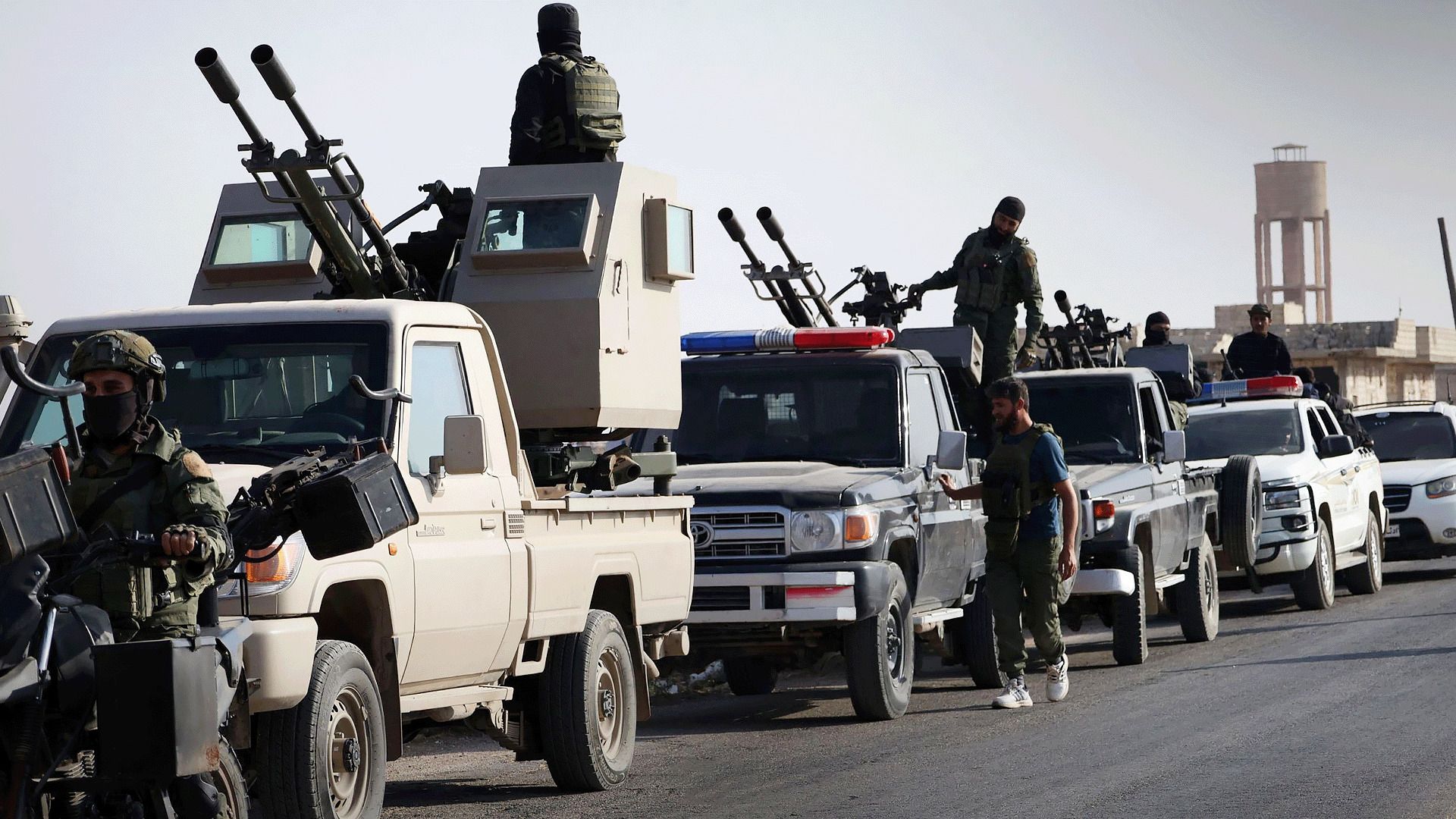
The announced agreement between the Syrian government and the SDF ended a round of military tensions that were expected to expand to the north and east of the country, but at the same time it shifted the focus of the conflict from the field to politics, where fundamental questions about the form of the state and the nature of governance remain unanswered.
The agreements, which included a ceasefire, the entry of state institutions into Hasakah and Qamishli, and the withdrawal from contact points, appeared to resolve the issue of land control, but they have not yet decided how to manage the post-arms situation, nor the nature of the political relationship between the center and its constituents.
In the “Behind the News” episode, the guests agreed to describe the agreement as a necessary military solution, but differed on their interpretation of its political implications. This difference was not in the technical details, but in a deeper reading of what the agreement lays down in the future.
From the perspective of Damascus, as presented by the writer and political researcher Hassan al-Daghi, the agreement is seen as a sovereign step that unifies the geography of Syria and ends the special phase imposed by the war. In this context, merger and redistribution measures are understood as executive measures that do not affect the essence of the state structure.
This vision derives from the priority of restoring central decision-making, while providing temporary flexibility to maintain the sensitivity of the field, which does not mean opening the way to negotiating the form of governance or redefining the relationship between the state and its constituents.
Just the end of militarism
On the other hand, journalist Shivan Ibrahim presented a question that sees in the agreement the end of the militarization of the Kurdish issue and the issue itself. Ceasing the struggle under this proposition prevents a slide into existential conflict, but it does not change the broader political treatment associated with the representation and management of diversity.
This difference in starting points was clearly reflected in the dispute over the details of the agreement, especially the issue of the SDF joining forces. The absence of a published document and the abundance of reports on the nature of the merger revealed that the disagreement was not only about the implementation, but more about the interpretation of the meaning of the merger and its limits.
Al Jazeera Center for Studies Senior Researcher, Dr. Liqaa Maki, noted that the agreement contained a significant change compared to previous views, which is the acceptance of partial collective integration in specific formations, which was not proposed before, but is governed by the ceiling of the central state.
According to this analysis, Damascus made calculated concessions to end the conflict on the ground and ensure a disciplined transition from confrontation to security arrangements, while the SDF views this formula as a transitional guarantee that prevents full dismantling until the political horizon becomes clear.
The state and the SDF are afraid
Specifically, the concern is here. The state believes that any premature political discussion could open the door to demands that cross sovereign lines, while the SDF fears that a military solution will turn into a security vacuum without a real political partnership.
Adding to the sensitivity of this phase is the fact that implementation files, such as the redeployment of forces, the integration of Asayish into the security services and the control of crossings, will be carried out in an environment fraught with a lack of trust, making every step heavy with political connotations.
Also, the regional and international dimension, despite its presence as a mitigating factor, does not remove this structural problem, because external guarantees may prevent a rapid explosion, but do not create an internal consensus on the form of the state and the nature of governance.
In this context, the agreement appears to have closed the military chapter, but opened a more complex chapter where intentions are tested by daily practice rather than data, and where implementation becomes an arena of undeclared political conflict.
