

Published on 3/5/2018
The embarrassment suffered by French President Emmanuel Macron when he called the wife of Australia’s prime minister “delicious” was not the first embarrassing linguistic incident the world leader has been involved in.
If you think about it, the man who used to be criticized for using “Franglois” (a mixture of French and English) may actually have been thinking of the French word “delicieux”, which means “delicious, sweet” in English.
However, he did not deviate from the long list of global leaders and politicians throughout history who have distorted different languages in front of a distorted world.
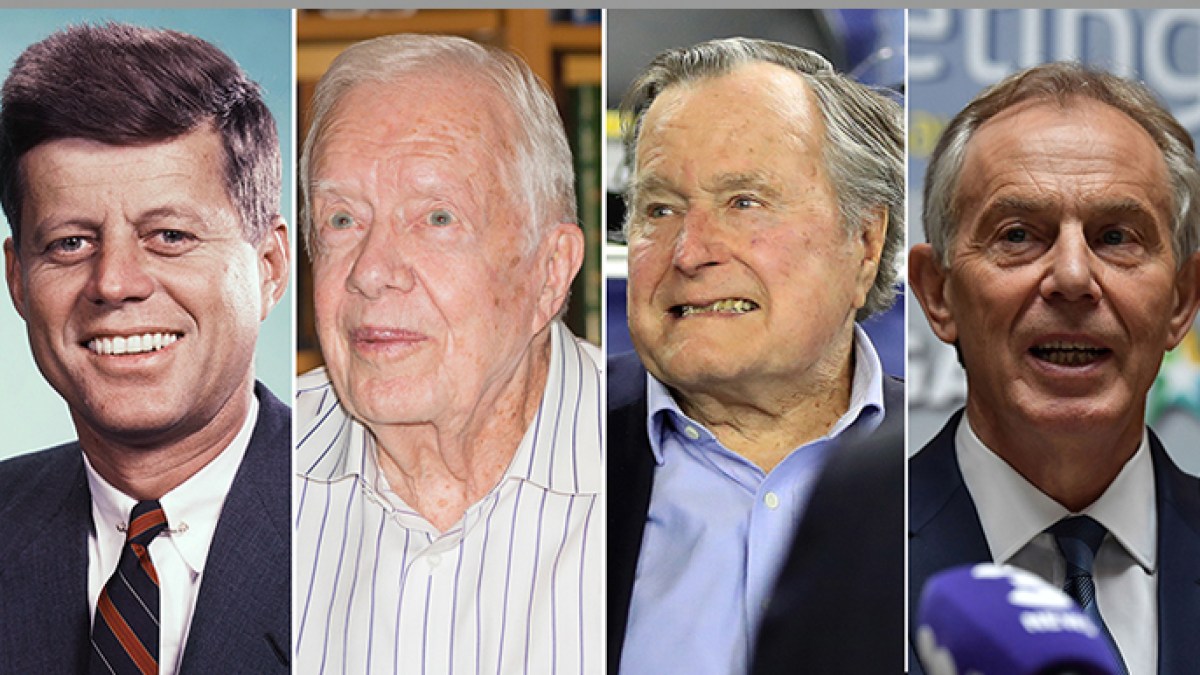
In 2004, one translator recalled how a translation error during a 1980s summit between US President George W. Bush and his Soviet counterpart Mikhail Gorbachev on arms control could have historic consequences after confusing the words “verified” and “verified.”
Bush then apologized to the interpreter when he discovered his mistake: “Never. The good news is you didn’t start World War III.”
Another similar embarrassing situation occurred with former British Prime Minister Tony Blair when he wanted to express his admiration for French Prime Minister Lionel Jospin at a press conference in French, but he said something else entirely.
Then Blair’s French got stuck, and instead of saying, “I admire Lionel Jospin in different ways,” he told the French people, “I want Lionel Jospin in different situations.”
One of the funny situations that former US President John F. Kennedy revealed was his famous phrase in German at a rally in West Berlin in 1963 “I am a Berliner, Ich bin ein Berliner” as an expression of his country’s solidarity with West Germany.
However, some observers have pointed out that the inclusion of the definite article ein means that the phrase can also be translated as “I am a doughnut”, since the meaning of Berliner is a traditional German pie.
Another situation was when former US President Jimmy Carter wanted to deliver a message to the Polish people during his first visit, saying he wanted to understand the then-communist nation’s “desires for the future,” but a published translation suggested the president had “sexual desires for the Polish people.” The said translator was also criticized in the media for making translation errors during Carter’s speech.
