

special tayyar.org –
The government review session for the “Free Patriotic Movement” was not only a parliamentary confrontation with the government, as much as it was a station through which he wanted to redefine the importance of the opposition at the current stage. Instead of being satisfied with political opposition or positions, the movement chose to use the tools of parliament itself against the government and make opposition a daily practice in the institutions.
Thus, the ten questions and interrogations prepared by the bloc “Strong Lebanon” took on a political meaning based on a comprehensive reading of the government’s path and work, starting from the economy, money, energy, water, education and the displaced, the judiciary, public policy and other files that the movement believes that the government did not give enough answers in the ministerial statement.
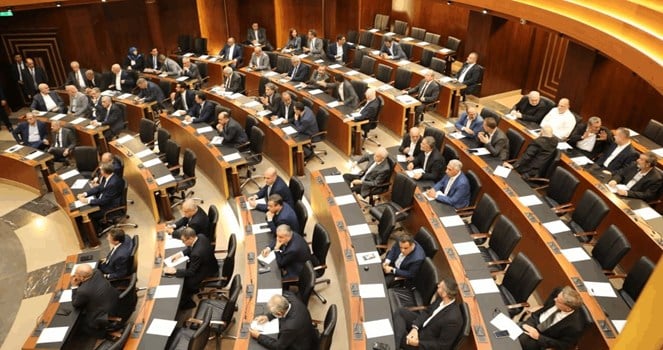
At the height of this road, the leader of the movement, MP Gebran Bassil, proposed a vote of confidence in the government, turning the session from a space of political rhetoric into a practical test of parliamentary positions. Voting, in this reading, is no longer just a constitutional procedure, but practically reveals a map of the forces that stand with the government (some say the opposition) and those who choose to withhold confidence in it or abstain from voting.
True, the government left the session with 68 votes in favor of confidence, 12 against and two abstentions, and the representatives of Hezbollah left the hall before the vote. However, the movement does not consider the numerical result as the only criterion of its success. The purpose for which he entered the session went beyond trying to topple the government in a decisive battle of numbers. He wanted to establish a clear political position in the parliament, the title of which was opposition and accountability.
In this sense, the session reframed the scene in a different light. The government has gained trust, but trust has not closed the door on accountability. The blocs that voted for them became more politically connected to the results of their activities, and the movement was able to say that a vote of confidence does not mean a blank check.
Most importantly, the free patriotic movement did not abandon the opposition within the general slogans. He linked this to constitutional and parliamentary mechanisms consisting of questions, interrogations, accountability and then a vote of confidence. This movement is the essence of what the movement considers successful in the session, as it moves the opposition from the position of a spectator of the government’s work to a position of a partner in monitoring and accountability.
Thus, the message that the movement left the session is not that the government has fallen, but that the opposition has strengthened. The government remained, but the opposition limited to the movement also remained more concrete and clear, after the positions of the parliamentary forces were tested on the ballot, not in statements and speeches.
Thus, instead of the confidence meeting being the end of the controversy, the movement turned it into the beginning of a long process of supervision: the government exercising its powers, the opposition is monitored, held accountable and questioned, and the power that gives the government parliamentary coverage, therefore, bears political responsibility for the continuation of this performance and its consequences.
