
Vance: Oil flows through Hormuz are almost back to pre-war levels
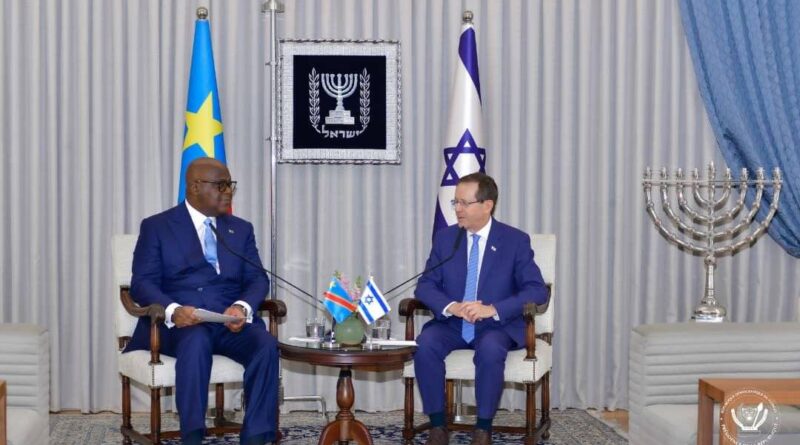
A visit by the president of the Democratic Republic of Congo, Felix Shisekedi, to occupied Jerusalem has focused on Israel’s efforts to strengthen its presence in Africa, amid regional fears of Israel’s expanding influence and presence.
Tsisekedi left Israel on Wednesday at the end of a three-day working visit during which he held discussions with President Isaac Herzog and Prime Minister Benjamin Netanyahu in Jerusalem, his second visit in about five years after a previous visit in 2021.
Experts on African affairs who spoke to Asharq Al-Awsat point to Tel Aviv’s efforts to expand its interests and buy pressure cards to maximize its influence, moving towards rapprochement with countries such as the Democratic Republic of Congo and entities such as the separatist region of Somaliland. In pursuit of economic and security gains.
Several Arab and Islamic countries, including Egypt, Turkey and Somalia, have rejected Israel’s presence in Somaliland and warned of threats to stability in the region.
During the visit, Tsisekedi’s discussions with Netanyahu focused on security and defense issues, in addition to the areas of agriculture, energy, infrastructure and advanced technology, the Congolese presidency said in a statement on the “X” platform.
The Congolese president renewed his country’s commitment to Israel’s security while calling for the protection of civilians, respect for international law and continued dialogue as a way to resolve regional crises, France Internationale radio reported.
Congo and Israel are getting closer and the Duke visited the Democratic Republic of Congo in November 2025.
Relationships and interests
Hussain al-Behairi, an expert on African affairs at the National Center for Middle East Studies, believes that the visit shows the development of relations and that both sides are reaching several interests. Congo seeks security and military support to deal with internal crises with the rebels, while Israel in return pursues a foreign policy aimed at expanding its influence on the African continent in general and the Nile Basin countries in particular, to offset international pressure from its violation of the Occupied Palestinian Territories and to assert its foreign partnership.
He added in an interview with Asharq Al-Awsat that the Democratic Republic of Congo is an important source for Israel to obtain natural resources and untapped precious minerals such as copper, aluminum, lithium and copper, which are used in strategic industries such as batteries and aircraft.
As for the Chadian political scientist specializing in African affairs, Saleh Ishaq Issa, he told Asharq Al-Awsat his belief that the visit reflects a move towards a broader partnership that includes political, security, economic and technological aspects, in light of the challenges facing the Democratic Republic of Congo in the development of the army and security services in the east. Israeli expertise and technology in intelligence, surveillance, training and defense.
presence is increasing
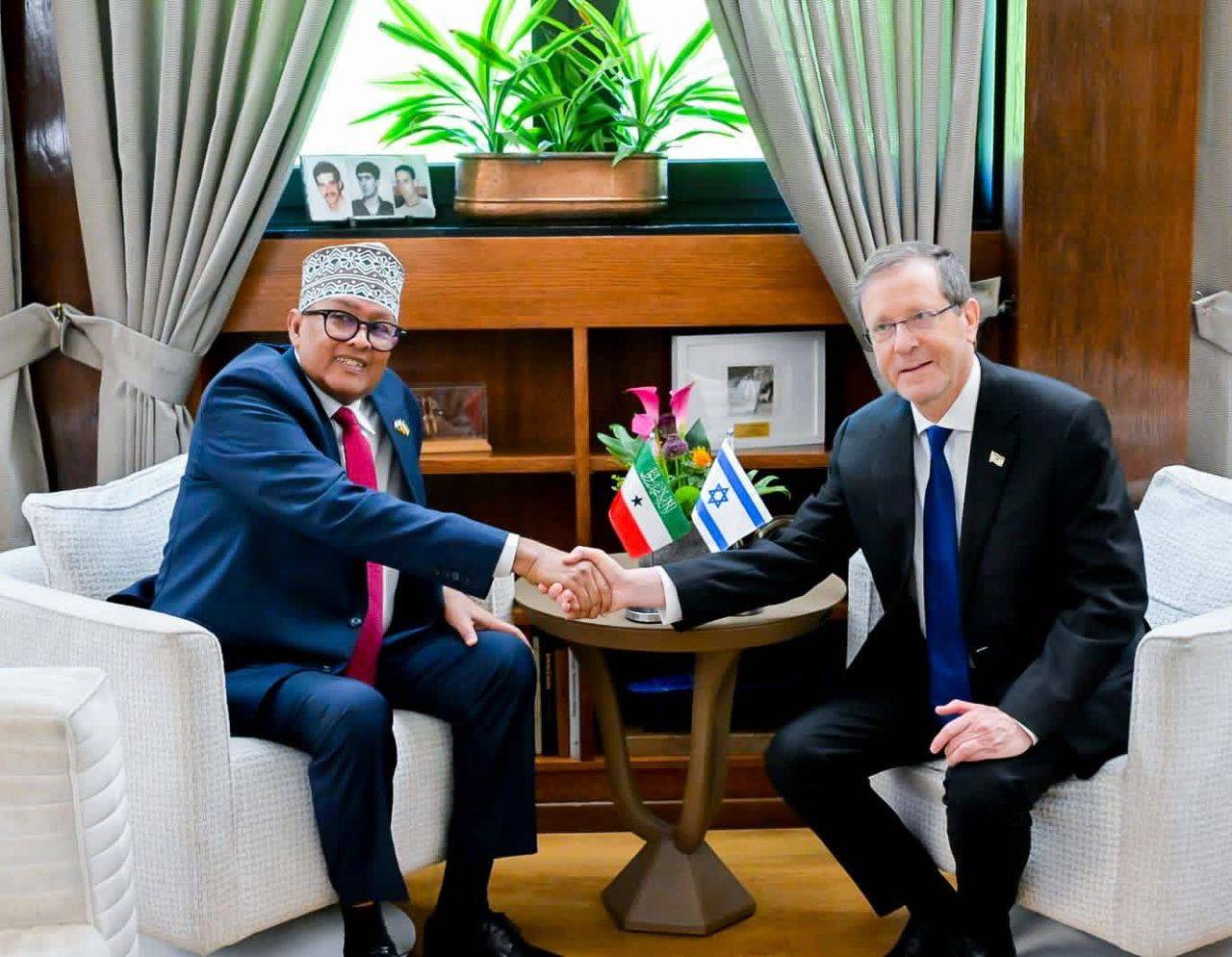
Israel is trying to strengthen its presence in Africa. Late last year, it recognized the breakaway region of Somaliland, amid denials from Egypt, Somalia, Arabs and Turkey.
Israel has relations with African countries such as Ethiopia, South Sudan and Uganda, and in August 2025 opened its embassy in Lusaka, the capital of Zambia. It also has security, military and trade relations with countries such as Chad, Nigeria and Cameroon.
Israel also maintains military cooperation with Rwanda; His ambassador met with the defense minister and Rwandan army chief of staff in Kigali last March. Discussion of ways to deepen cooperation between the two sides.
Al-Beheir believes that Israel’s expansion into Africa and the Nile basin, which was preceded by establishing a foothold in the Horn of Africa and the Red Sea with the recognition of the territory of “Somaliland” near Bab al-Mandab and international shipping lines, “directly and indirectly affects the national security of Egypt, the strategically considered region of Egypt. Strategically for the region, Aviv will use relations with the basin countries as a pressure card to resolve some outstanding issues between the two sides.
Issa says: “Israel’s growing presence in Africa is usually a strategy with common features that is selectively implemented according to the specifics of each arena, rather than a series of separate moves,” indicating that the security dimension has become a central element in the expansion of Israel’s relations with African countries, in addition to economic and diplomatic interests.
“Partnership Network”
The case of Somaliland, according to Issa, reveals the “geopolitical dimension” of Israeli policy. The site’s location in the Gulf of Aden and its proximity to Bab al-Mandab make it of direct importance to navigation and security in the Red Sea, especially in light of the growing Houthi threat.
Israel has become the first government to officially recognize “Somaliland”, a move that goes beyond bilateral relations and Israel’s repositioning in a highly strategically sensitive region.
As for the Democratic Republic of the Congo, relatively different interests emerge. The rapprochement has more to do with the need for security and technological cooperation, in addition to investment opportunities and the use of vast mineral resources.
This shows that Israel is not using any one tool in Africa, but a combination of security, technology, investment and diplomacy according to the nature of the country, its location and needs, Isa. Therefore, Israel’s policy in Africa can be seen as a flexible strategy rather than a plan with uniform details.
Issa says: “The overall goal is to create a broad network of partnerships that serve Israel’s interests in security, navigation and trade, counter Iran’s influence and gain political support, while the tools vary from one country to another.”
Israel’s growing expansion into Africa may change some of the regional balances, particularly in the Horn of Africa and the Red Sea, by shifting Israel’s presence from sporadic diplomatic and economic ties to one related to security, ports, shipping lines, and technology.
Issa believes that the presence of an Israeli partner in the Somaliland region could open the door to new security and intelligence arrangements and increase competition between existing forces in the region.