

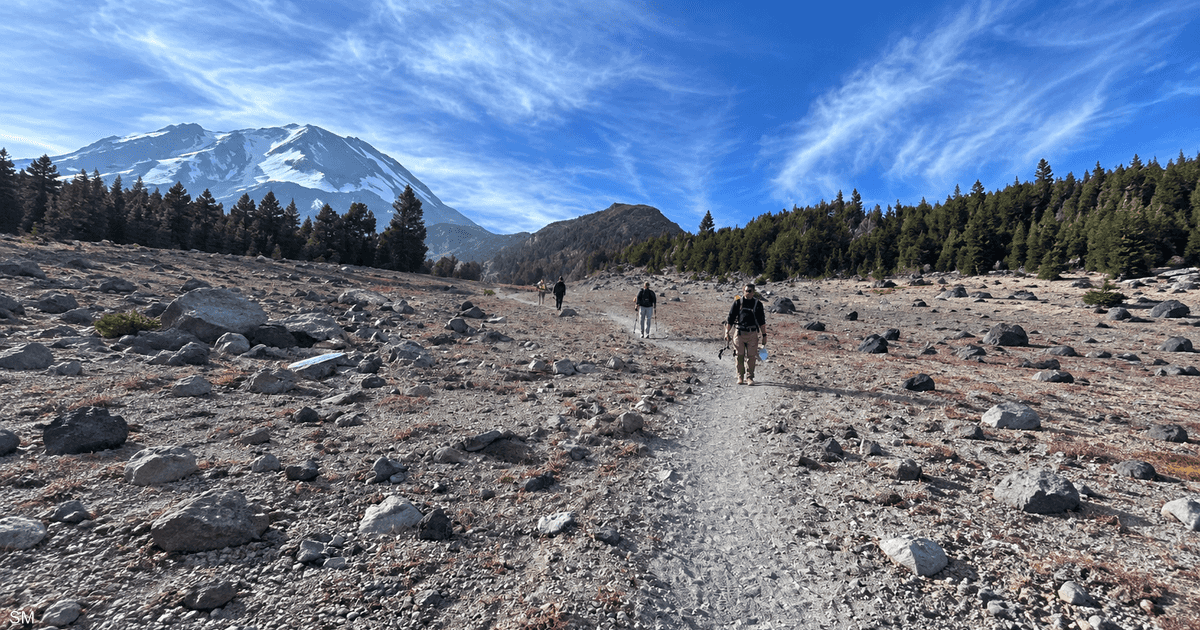
The trip, which the climbers thought would take 8 hours, took about 16 hours to reach the summit before their navigation equipment broke down and they lost their way during the night descent, and one of them injured his knee.
Mountaineers later admitted to rescue teams: “We relied too much on artificial intelligence instead of our critical thinking.”
Insufficient digital plan and inventory
The three men, college students from Roseville, began their hike Aug. 29 from the Clear Creek Trail and set up camp at about 8,400 feet.
The group used Gemini for route information, food and water intake, along with YouTube clips and the All Trails app dedicated to hiking trails.
The climbers took with them enough food and water for what they estimated was an 8-hour climb. But Mount Shasta, more than 4,300 meters high, forced them to make a longer and more difficult journey than they expected.
He set out for all three peaks at three o’clock in the morning. When they reached 11,000 feet at 1 p.m., they considered turning back, but decided to continue climbing.
The climbers encountered on the way were also advised to turn back due to the late hour, but they continued to reach the summit at around 7 pm, about 16 hours after the return time recommended by the competent authorities.
Dead battery and wrong way
Climbers began their descent after dark using the All Trails navigation app. But they treated the suggested lines on the map as real routes until the phone running the app ran out of battery.
They were unable to use a spare battery charger due to a faulty connection to the phone, leaving them with no clear digital means of determining their location or way back.
After calling 911 for guidance, the three turned off the Clear Creek Trail and entered the rugged area of Mud Creek Valley. During the descent, one of them lost his balance and hurt his knee, so the group stopped at about 11,000 feet in the middle of the night.
The climbers were not equipped to spend the night on the mountain as they lacked food, water and warm clothing and did not carry emergency shelter.
Air rescue failed
US Forest Service officials arrived at the climbers at 9:30 a.m. the next day and found them exhausted, hungry and thirsty. They provided treatment for the injured, food and water for the group.
Rescuers tried twice to evacuate them by air, but strong winds prevented the operation, forcing climbers and rescuers to descend on foot.
Everyone arrived at base camp around three in the afternoon before search and rescue teams from Siskiyou County helped the group back to the trailhead. The operation was completed at six thirty in the evening without serious injuries.
Was artificial intelligence responsible?
Authorities did not consider AI the sole cause of the accident, but called the overreliance on it a “mistake” as part of a series of decisions that included neglecting safe return times and carrying enough equipment and supplies.
Siskiyou County Police Chief Jeremiah Lario cautioned against relying solely on artificial intelligence on trips that could turn into life-threatening situations, urging climbers to consult mountain guides and use official maps and local sources of information.
Authorities stressed the need to have back-up navigation aids, including paper maps, to prepare for sudden changes in weather and conditions, and to turn back if the climber does not reach the summit of Shasta by noon.
The story reveals the limits of digital tools when used as a substitute for expertise and specialized resources, especially in security solutions where an answer that looks convincing on screen can turn out to be a path to danger on the ground.
