

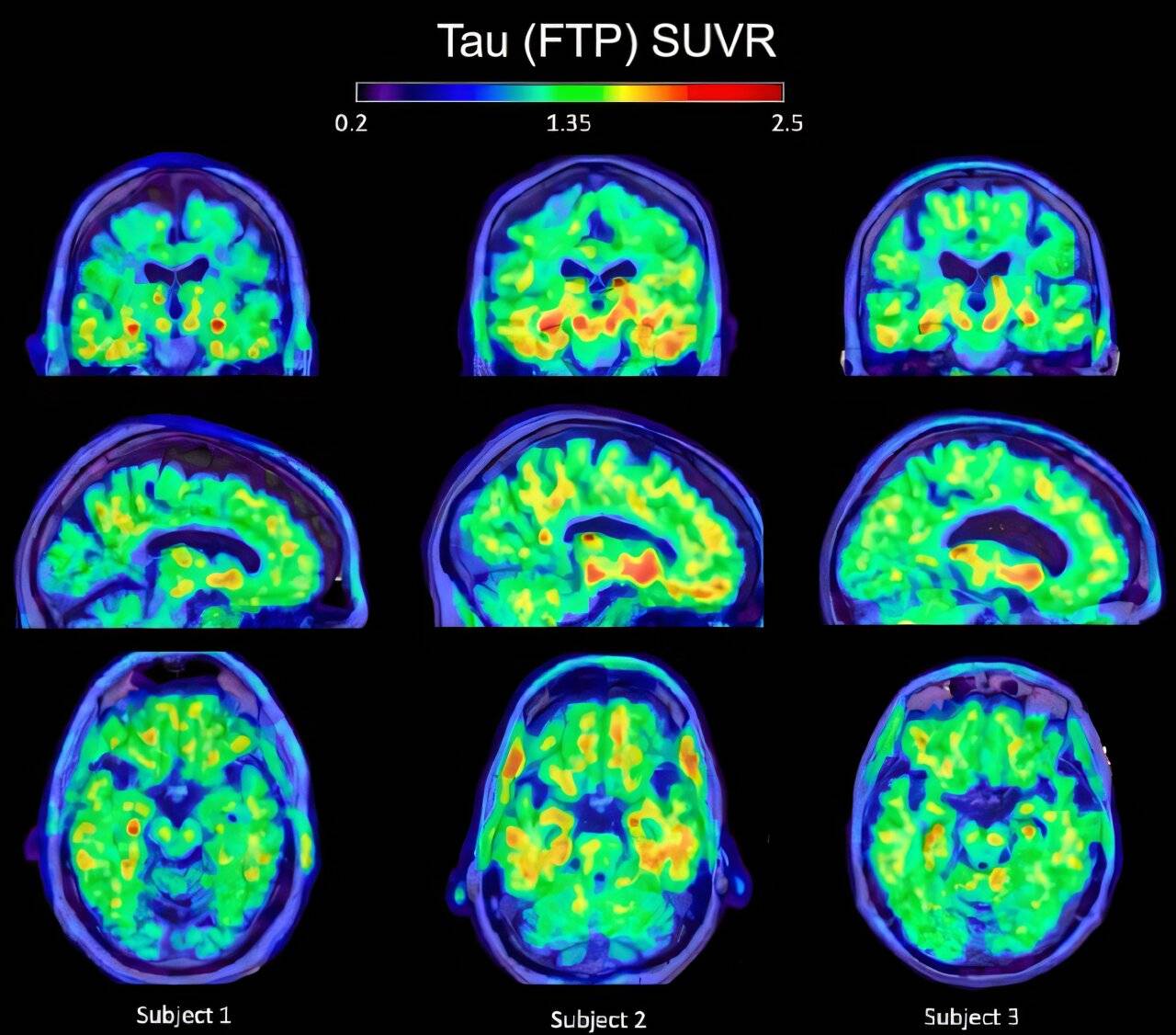
A new study conducted by researchers at the University of California, Berkeley in the United States has revealed a link between a lack of deep sleep and one of the most prominent causes of Alzheimer’s disease, the accumulation of tau protein.
In a study published Friday in the journal Nature Neuroscience, researchers found a link between changes in brain wave patterns during deep sleep, the formation of poor episodic memories, and the accumulation of tau protein in the frontal cortex.
“Episodic memory” is an important form of memory. It is an important part of how we form long-term memory; They can refer to events that happened a long time ago, such as the first day of elementary school, or recent and mundane events, such as where you parked your car before entering the store. As we age, our episodic memory declines, although scientists don’t yet understand why.
A study by neuroscientist Omar Sharon and colleagues at the University of California, Berkeley may help explain this relationship. “This is the first time we’ve shown this connection between tau protein and how it negatively affects the process of memory consolidation,” Sharon said in a statement Friday.
Deep sleep and memories
Many of us are familiar with non-rapid eye movement (REM) sleep, especially deep sleep. At this point, neurons stop firing in slow, synchronized waves that travel throughout the brain, starting in the frontal cortex. “Each slow wave reflects a large group of neurons that stop and then resume their activity together,” Sharon explains.
He adds: “Our research shows that the sequence of these events in large parts of the brain is essential for the memory process, and this coordinated stopping process is only observed during deep sleep.”
As we age, tau proteins accumulate in the brains of many people. In this case, these waves become irregular, less synchronous and travel shorter distances. This defect in slow waves, in turn, is associated with impaired memory consolidation, cognitive decline, and Alzheimer’s disease.
To examine this relationship, researchers used electroencephalography (EEG) to measure brain waves during sleep and compared the results between cognitively healthy participants in their early 20s and those in their 60s and 70s. In young adults, groups of slow brain waves traveled about an inch across the scalp during non-REM sleep, while in older adults the waves traveled shorter distances and appeared more unique and isolated.
Using positron emission tomography (PET), researchers tracked radioactive markers that were injected into the blood to measure brain function. The scans confirmed that accumulation of tau protein in the frontal cortex of older participants was associated with these long-wavelength disturbances.
The researchers measured corresponding changes in the process of memory consolidation, or the process of turning information into long-term memory, and found that people with more discrete, short-term slow waves remembered less information.
A few years later, a subset of participants was retested; The results showed that those whose frontal protein levels increased over the years experienced a deterioration in slow-wave coordination and a reduced ability to retain information throughout the night. This suggests a link between this protein and the loss of event-related episodic memory.
