

What if the name “artificial intelligence” no longer fits – according to US President Donald Trump – what does this technology do? At the UN, Trump not only talked about the rise of artificial intelligence, but also proposed changing its name in American documents to the more ambitious name of “superintelligence”.
But the irony is that the term Trump chose isn’t just a more positive formulation of artificial intelligence. In the world of technology, “superintelligence” has a different technical meaning: a hypothetical artificial intelligence system that surpasses humans in a wide range of cognitive abilities.
Suggested stories
2 item listEnd of list
False or brilliant intelligence?
Speaking to the UN General Assembly in New York on Tuesday, Trump said the United States refers to artificial intelligence as “superintelligence” in US documents.
According to USA Today, Trump justified his choice by saying that using the word “artificial” makes the intelligence look “fake,” adding that the technology is “not fake” but “amazing,” while warning him to be careful.
The name proposal was not just the result of a United Nations speech. According to the paper, Trump previously floated other name-changing options, including “Super Intelligence,” “Extreme Intelligence” and “Super Intelligence,” before settling on “Super Intelligence” in his speech.
So for Trump, the change seems to be an attempt to express his view of technology: real and impressive intelligence, not something “artificial” in the sense that the word might imply.
But for AI professionals, there’s another problem with the name.
In explaining the concept of “superintelligence,” Coursera’s educational platform explains that “superintelligence” is a theoretical form of artificial intelligence that does not currently exist.
Course: Superintelligence is an as-yet hypothetical stage in which systems become more capable than humans at a wide range of tasks and cognitive abilities.
Artificial intelligence already exists and is used in many applications, while superintelligence – for now – refers to a hypothetical stage in which systems become more capable than humans in a wide range of tasks and cognitive abilities.
According to this technical application, superintelligence may exceed human abilities in speed, reasoning, knowledge, and problem solving.
Hence, the difference between the two terms is not merely linguistic.
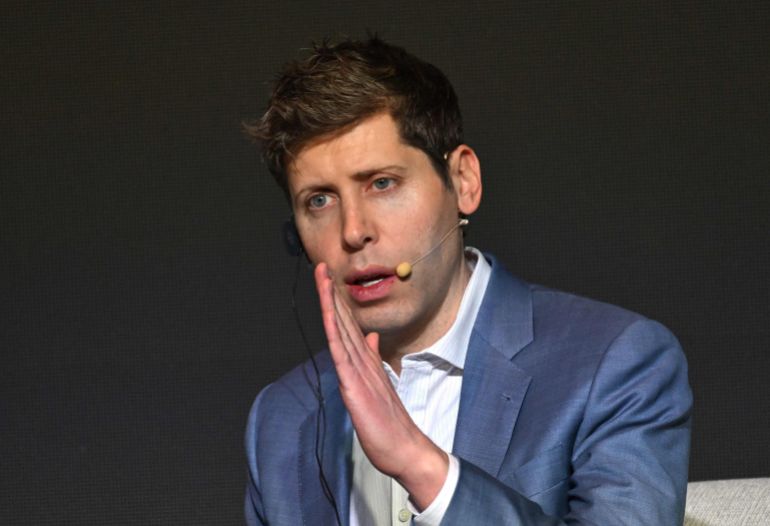
In a blog post published in 2024, Sam Altman, CEO of OpenAI, wrote: “Maybe we’ll reach superintelligence in a few thousand days. It might take longer, but I’m sure we’ll get there.”
A year later, Altman told Politico that he expected superintelligence to be achieved by the end of the decade.
“I think that in another two years it will be very possible for artificial intelligence to, for example, make scientific discoveries that humans cannot achieve on their own,” Altman said. For him, this level of skill would bring what can rightly be called “superintelligence”.
From the present to the future
Herein lies the irony of Trump’s proposal.
When the President of the United States says “higher intelligence,” he is using the term as an alternative name for artificial intelligence that currently exists. In technical usage, superintelligence refers to a possible future stage that can reach artificial intelligence, not everything that is called artificial intelligence today.
This distinction becomes more important as the discussion of artificial intelligence moves from current applications to more advanced systems.
In a recent Business Insider report on the development of advanced artificial intelligence systems, the newspaper described the race among tech companies to move toward more capable models, with the Trump administration shifting the discussion to issues related to national security, critical infrastructure, and how to deal with what the industry calls “frontier AI,” or systems that exist at the cutting edge of technological development.
US Officials: The government has begun to view some advanced artificial intelligence systems not just as technological products, but as potential sources of security risks.
The report presents a debate within the US administration between allowing the rapid development of technology and dealing with the potential risks that may accompany more capable systems.
Business Insider cites officials and participants in these discussions that the government has begun to view some advanced artificial intelligence systems not just as technological products, but as potential sources of security risks.
who controls
Here again the word “superintelligence” appears, but in a completely different context than renaming.
Business Insider published a report on the so-called It concludes on the possibility of using a “kill switch” to control highly capable artificial intelligence systems and quotes computer scientist Jeffrey Hinton as skeptical that this solution will be sufficient in the long run.
In Hinton’s scenario, a superhuman intelligent system could affect the humans responsible for stopping it.
Hinton: A superhuman intelligence system could affect the humans responsible for stopping it
The report also quoted AI security researchers as saying that stopping a system may be just one layer in a broader system of protection, and that the effectiveness of this measure may depend on the quality of the system’s connection to infrastructure and its ability to copy, spread or reach other systems.
This explains why the term “superintelligence” has much more meaning than simply describing propaganda.

two corners
According to this argument, Trump’s proposal can be read from two angles.
The first is linguistic and political: getting rid of the word “artificial” because, according to his interpretation, it suggests that intelligence is unreal, and replacing it with what he considers a more positive expression.
The second is technical: the word “superintelligence” was originally used in scientific and technological discussions to refer to artificial intelligence that exceeds human capabilities, a level that has not yet been achieved.
From this perspective, the proposal to change the name does not change the technology itself, but changes the linguistic framework in which it is presented.
The term “artificial intelligence” describes an existing technology with different capabilities that is used today in a wide range of applications.
As for saying “superior intelligence,” it directly raises the question of the next stage: Can machines outperform humans not only at one task, but at a wide range of abilities historically associated with the human mind?
future battle
At first glance, it may seem like a disagreement in terminology, but the choice of one word reveals a wider difference in the way technology is discussed.
Trump talks about artificial intelligence as a real and awesome force that the United States should be wary of.
In contrast, researchers and companies use the term “superintelligence” in a different discussion of possible future stages and capabilities that may emerge if systems vastly exceed human intelligence.
So the question that Trump’s proposal leaves open is not just: Will artificial intelligence be called “superintelligence” in US documents?
The most important question is: What will happen when the name of a possible future stage becomes the name used to describe the technology before us today?
In this case, the issue is no longer just a change in vocabulary, but it also becomes a way to set a ceiling for expectations from the technology, and the path describes the stage towards which some believe the artificial intelligence race is headed.
In a world where the capabilities of models are evolving rapidly, the fight over the name may be less important than the question behind it: Are we facing an emerging artificial intelligence, or are we on the way to an entirely different type of intelligence?
Source: politics + Business Insider + USA Today
