
The world is fighting for the development of technology; Which way will Vietnam choose?
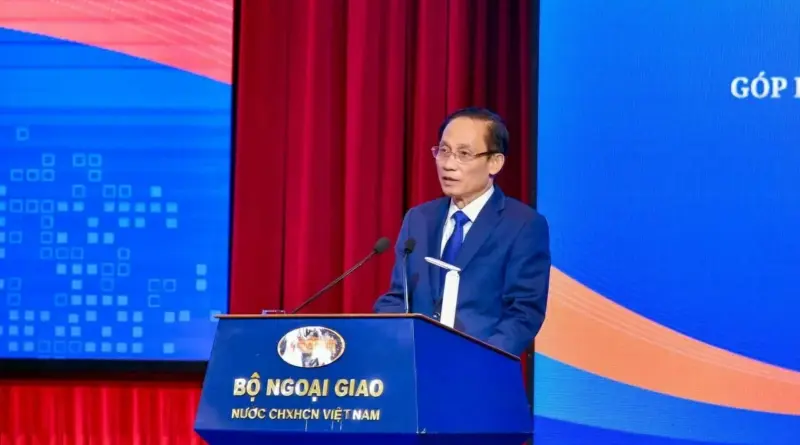
| Politburo member and Foreign Minister Le Hoai Trong chaired a discussion session titled “The Contribution of Science and Technology Diplomacy to Building National Development Capabilities” held on August 5 within the framework of the 33rd Diplomatic Conference. (Photo: Kwang Hwa) |
In this process, local authorities, companies and the Ministry of Foreign Affairs need close coordination. Local authorities identify needs and problems to be solved; Companies introduce technology in production and business; Vietnamese representative agencies abroad have early access to technologies, experts, companies, research institutes and innovation centers around the world. Effective linkage of these resources will help Vietnam bridge the gap between domestic needs, technology and international resources.
It is not enough just to implement technology; On the contrary, we must master it.
There has always been a question: Where is Vietnam located on the world map of science and technology? More importantly, what value do we create from technology? Artificial intelligence, semiconductors, biotechnology, robotics, new materials, energy and green technologies are entering manufacturing at an accelerated pace. If we limit ourselves to the purchase of machines, the use of software or production lines, Vietnam will remain only a customer.
Technology creates real value only when companies learn about it, master it, innovate, and then gradually participate in higher value stages of the supply chain. This is a gap that Vietnam needs to fill to improve its position in the value chain.
Vietnam already has a science, technology and innovation development strategy until 2030; In April 2026, the Prime Minister issued a decision to amend and finalize the 604/QD-TTg strategy.
In July 2026, the National Digital Transformation Strategy for 2026-2030 was published, with a future vision up to 2045. The current challenge is to translate these policies into real opportunities, products and revenues for companies.
Each area requires its own unique technological solution.
Science and technology are no longer limited to major centers, but technological capabilities increasingly determine the development potential of each region. However, not every region needs to be an innovation center or a high-tech zone, or to pursue many new technologies at the same time. The first and most important step is to determine the needs of the area.
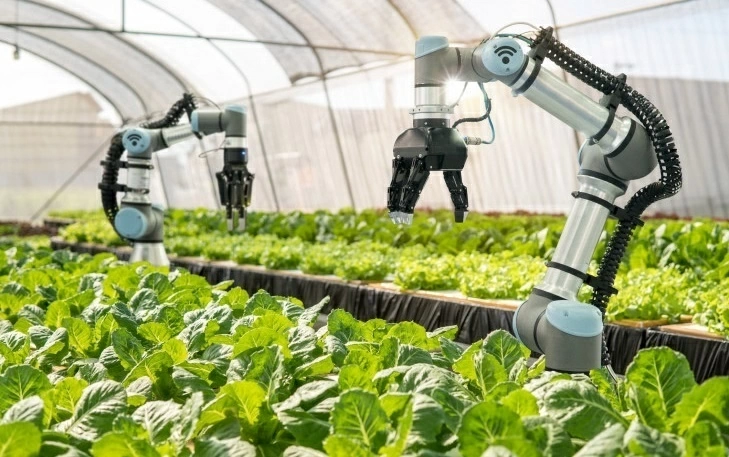 |
| The question should not be: “What technology projects exist in the region?”, but rather: “What technology is most suitable for solving development problems in the region?” (Source: VnEconomy) |
Countries with strong agricultural sectors may need technologies related to seeds, automation, preservation, advanced processing and traceability. Advanced industrial zones will be more interested in robotics, new materials, supply chain management and energy efficiency. For regions with a strong tourism sector, data, digital technology and destination management solutions can be more effective.
This approach also helps to avoid investing based on prevailing trends. A laboratory or technical center will find it difficult to be efficient without the companies providing its services, skilled manpower and defined delivery. Therefore, the question should not be: “What technological projects are available in the region?”, but rather: “Which technology is best suited to solve the development problems in the region?”
Delivering world-class technology where it is needed most.
You might like it
Vietnam cannot independently develop all the technologies that its economy needs. Even scientifically developed countries must cooperate, acquire technology, attract experts and participate in global research and production chains. The main thing is for Vietnam to know its needs and choose appropriate technologies.
Therefore, a high-tech foreign investment project should not be evaluated only by the amount of capital or labor, but also requires in-depth study on the creation of local suppliers, training of human resources, experience exchange, R&D support and deeper integration of Vietnamese enterprises into the production chain. It is the intersection of science, technology and external relations.
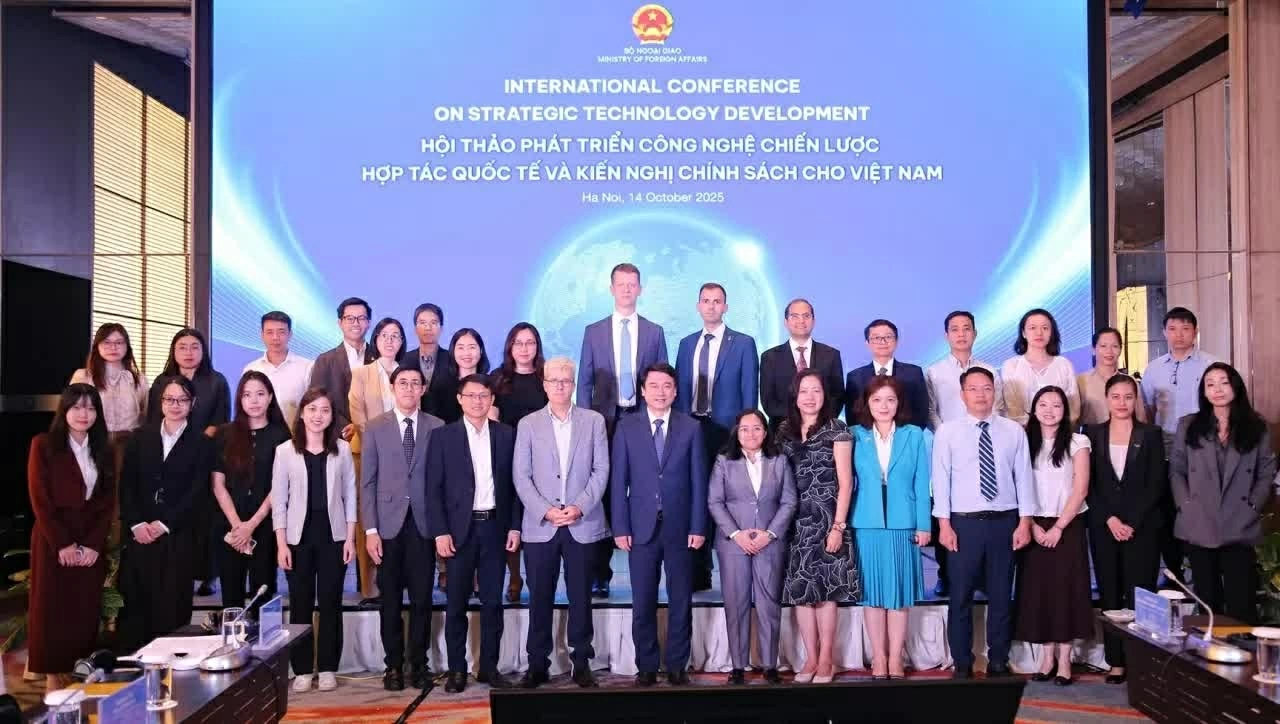 |
| An international workshop organized by the Ministry of Foreign Affairs titled “Strategic Technology Development: International Cooperation and Policy Recommendations for Vietnam” will be held in October 2025. (Photo: Thanh Long) |
In 2025, the Ministry of Foreign Affairs will strengthen science and technology diplomacy by connecting companies, investments, experts, knowledge networks and international cooperation. Many international companies have expanded their operations in Vietnam in the fields of research and development, training, artificial intelligence development and semiconductor manufacturing. This is an area that needs further research, and most importantly, local actors and businesses need to achieve tangible results from these connections.
Vietnamese representative offices abroad should proactively follow new technologies, models and policies around the world, not only provide information but also actively implement opportunities. Each representative office will become a technological “antenna” for Vietnam abroad, closely monitoring changes in technology, policies, supply chains, capital flows, human resource needs and new standards in the international market.
Technology changes at a constant rate, so by the time a trend gains popularity, the opportunity may be gone. Timely analysis of this information will help Vietnam to be more proactive in facing the changes. For example, chip export policies can affect companies; New green technology standards may affect exports; Although the trend towards robotics opens up new horizons for companies that supply components, software and services. In this context, science and technology diplomacy not only links resources, but also becomes an early warning channel that helps Vietnam identify external opportunities and risks.
Don’t follow every trend.
New technologies will continue. If each sector is prioritized separately, resources will be dispersed. Vietnam should choose technologies that match its current capabilities, economic needs and market development potential. At the same time, it is important to avoid the belief that digital transformation simply means buying more equipment or software. Technology is only effective if it is linked to changes in operations, human resources and management practices.
Another risk is over-reliance on a single technology, platform or vendor. Technological competition is increasingly intertwined with geopolitics, which means that access to technology can change rapidly.
Vietnam should open up to global technologies, but it should also maintain its ability to independently select, replace and develop technologies in key areas. Technological self-sufficiency does not mean doing everything on your own, but rather the ability to remain active when external conditions change.
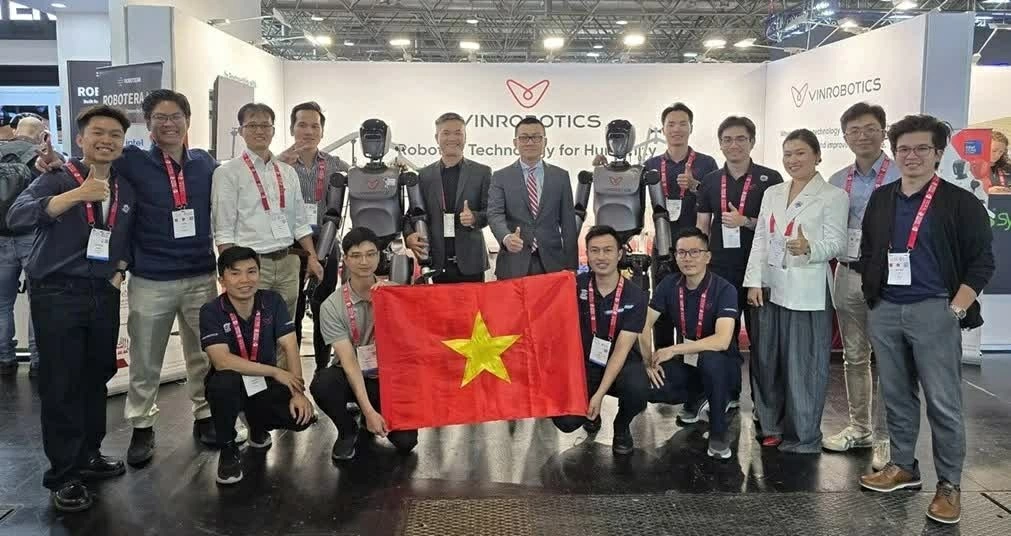 |
| The Vietnam Robotics Technology Day event will be held in Austria in June 2026 as Vietnam accelerates the implementation of its strategic directions in the fields of science, technology, innovation and digital transformation. (Source: Embassy of Vietnam in Austria) |
The relationship should produce results.
In order for science and technology to become the engine of development, there is a need for close cooperation between the state, local governments, companies, research institutes, universities, and Vietnamese embassies abroad. Local authorities identify needs, companies offer solutions, universities and institutes provide research and human resources, and representative offices seek technology, experts, partners and funding. The decisive factor is the final efficiency.
You might like it
A business trip or memorandum is only important when it leads to the transfer of technology, implementation of a project, finding company partners, bringing products to market or solving a specific local problem.
At the 33rd Diplomatic Conference, Foreign Minister Le Hoai Trong asked diplomatic missions to “proactively identify and communicate with entrepreneurs, scientists and experts; at the same time, clearly define the needs of local areas and prepare a list of projects and mechanisms for accessing resources.” This can be considered an important direction of scientific and technological diplomacy in the near future.
From technologies to development opportunities
Ultimately, the measure of technological transformation is not the number of cars imported, the number of projects signed or the number of centers built. What is more important is what Vietnam gains from each cooperation, the extent to which companies improve their capabilities and the added value the economy creates.
The region is well aware of its technical needs; Companies define problem solving; Universities find the right partner; Representative agencies find the right technologies, experts and resources at the right time. When these elements are combined, science and technology become effective in economic life. Regions and companies do not necessarily have to be leaders in all technologies. The main thing is to identify technologies that have the potential to radically transform the economy at an early stage, select appropriate areas for investment, appropriate partners to cooperate and quickly use this opportunity.
Abandoning technology in the competitive world is not the biggest hurdle. Even more worrying is that I don’t know where to go and how to prepare for the future.
Source: https://baoquocte.vn/the-gioi-chay-dua-cong-nghe-viet-nam-chon-duong-nao-432945.html