
The Lion’s Roar… “Religion” is Israel’s weapon and pillar of war against Iran.
Occupied Jerusalem From the “Jewish shield” to the “roar of the lion” this is how the title of the war with Iran has changed, just as Tel Aviv wants to change the face and characteristics of the region geographically and politically in this war, thus relying on the wall of religion and its slogans to achieve its goals.
The name and its connotations mean a lot to the Israelites, and its content goes beyond linguistic meanings to biblical religious symbolism, and its dimensions are substantially beyond the limits of traditional military calculations. In fact, the government dropped this new name as if reforming the event to suit its interests, the demands of the scene, and the circumstances of the time and place.
It is noteworthy that the date of the military operation coincided with the night of Purim, known as the “Festival of Purim”, which the Jews celebrate to celebrate the deliverance from the conspiracy of Haman, the minister of the Achaemenid emperor Xerxes, who cast lots to determine the suitable day for the massacre of the Jews. According to biblical belief, Esther, the wife of the Jewish king, under the leadership of Mordecai (her guide at the court of King Ahasuerus) was able to save her people and destroy Haman and his followers, making this day a symbol of victory and salvation.
why a lion
The choice of this time reflects the echoes of historical and religious symbolism and gives the operation a tactical and strategic dimension, as well as connecting it to a narrative of survival and protection of Jewish existence.
This tradition is not new. Since the Palestinian Nakba in 1948, Israel has been keen to choose names with a biblical or historical dimension for its operations to establish a symbolic legitimacy that connects the present to an extended historical narrative.
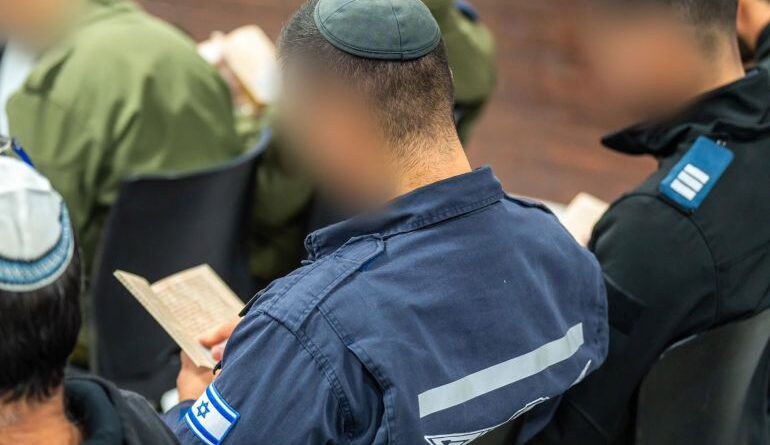
When military operations are given names derived from religious texts, the Israeli army is seen not only as a modern occupation force, but as an extension of biblical history to reinforce an internal discourse that combines security, political and ideological aspects.
The symbol of the lion in Jewish heritage is associated with the tribe of Judah, one of the tribes of the children of Israel, which represents power and sovereignty according to the biblical narrative.
Therefore, the choice of the name “Lion’s Roar” reflects the image of an offensive force, not just a defensive one. “The Roar” makes a statement of prestige, attack and presence in line with Israeli discourse, which portrays the operation as a strategic necessity to protect national security and contain the existential threat of Iran, which has been unequivocally expressed by Prime Minister Benjamin Netanyahu, who is wanted for international criminal war crimes.
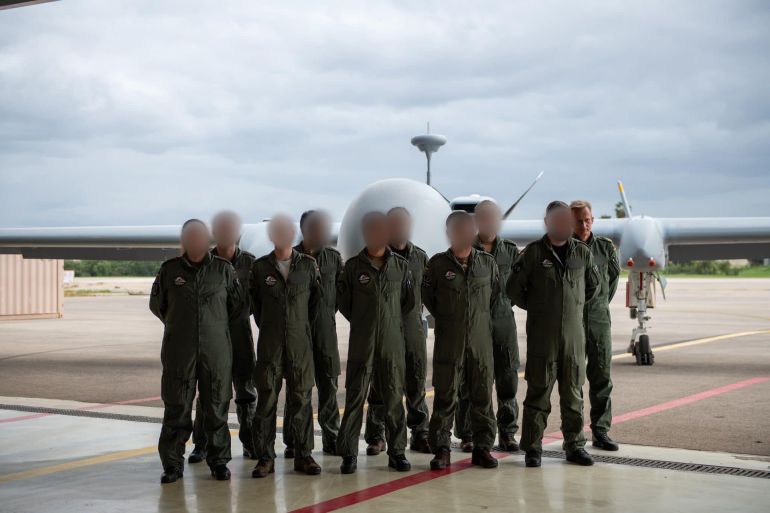
This symbolic dimension was reinforced in other military descriptions, as the commander of the Israeli Air Force, Major General Tomar Bara, called the squadrons of warplanes carrying out raids “Genesis”, a direct reference to the first book of the Torah.
Such a designation gives military action a fundamental dimension that signals the beginning of a new phase or “the creation of a different reality,” according to the biblical religious narrative, in which theological symbols overlap political discourse. Israel tries to present its operations against Iran as an existential struggle that cannot be postponed and a strategic necessity dictated by national security considerations and deterrence equations in the region.
In this context, the statements of the Chief of Staff Eyal Zamir after the attack confirmed that what is happening is not a passing military operation, but a move aimed at protecting the state and preventing the security establishment from becoming a growing strategic threat.
“War of Wills”
The designation “Lion’s Roar” and “Genesis” squadrons appear to be more than just titles for military operations. They are symbolic tools that illustrate how Jewish religious heritage is used within the existential and historical narrative of the conflict with Iran, while also raising regional questions about the intersection of religion and politics and the limits of the use of biblical symbols in contemporary conflicts.
Entitled “This is a War Based on Commandments,” Israeli writer Ben Dror Yemin – associated with the National Religious Movement – published an article in the newspaper Yedioth Ahronoth in which he approached the war from a moral and religious perspective.
He explained that war is inherently bad, but this case is an exception because hesitance to attack early is costly and its subsequent losses heavy, stressing that the goal goes beyond self-defense to be a decisive step in changing the face of the Middle East.
Yamini believes that there is no choice in war, but it is the defense of the Jewish people and the security of the state, and is a moral and religious responsibility that cannot be abrogated. This religious dimension intersects with broader concepts within the religious Zionist movement, particularly the idea of the “Greater Land of Israel,” which is seen as a biblical promise connected to historic Palestine and possibly beyond.
one trench
In the days leading up to the operation, talk of Israel trying to control an area stretching “from the Euphrates to the Nile” sparked widespread controversy following statements by US Ambassador to Israel Mike Huckabee who supported the idea of wider Israeli control.
In this regard, the national religious audience website “Kiba” asked opposition leader Yair Lapid about his position on this proposal. He responded by referring to the Jewish people’s “ownership agreement” over the land of Israel, emphasizing that this vision is based on biblical texts and that the borders are biblical in this sense.
He has also expressed support for the idea of a “Greater Israel,” which includes expanding the state’s boundaries to include the region between the Nile and Euphrates rivers, as part of a religious and historical vision that he sees as guaranteeing a secure future for the Jewish people. Lapid emphasized that his principled position is based on Zionist and religious foundations and emphasized his support for any approach that gives Jews a large and secure land and ensures a stable future for them and their children and grandchildren in the region.
Duality of the concept
In a post on Facebook, Palestinian human rights lawyer Mustafa Mohamed explained Israel’s tendency to use biblical names and symbols in wars and military operations, saying what is happening goes beyond a traditional political or security conflict.
He saw that the Iran war is presented in Israeli discourse as a war with a religious religious dimension, which derives from the biblical question that he considers to be the basis of the “Greater Israel” project, citing the statements of US Ambassador Huckabee, in which he speaks of Israel’s “biblical right” to occupy large territories in the Middle East.
He also pointed to Netanyahu’s speech in which he talked about a post-Iranian era that could include other parties in the region, which Mohamed interpreted as part of a larger narrative of remapping regional influence.
He also referred to statements by retired American and Israeli military personnel where they talked about possible regional alliances, indicating that all these proposals are framed by an ideological vision that aims – in his opinion – to prepare the way for the formation of a “Greater Israel” that extends according to this discourse from the Nile to the Euphrates.
Mahamid concluded that war, in this sense, is not just a military confrontation, but a conflict with overlapping religious and political dimensions. He also compared what he saw as the overt presence of religion in Zionist discourse and some influential evangelical Christian movements in the United States, and calls for the Arab and Islamic world to separate religion from politics, explaining that there is a ambivalence on the issue.