

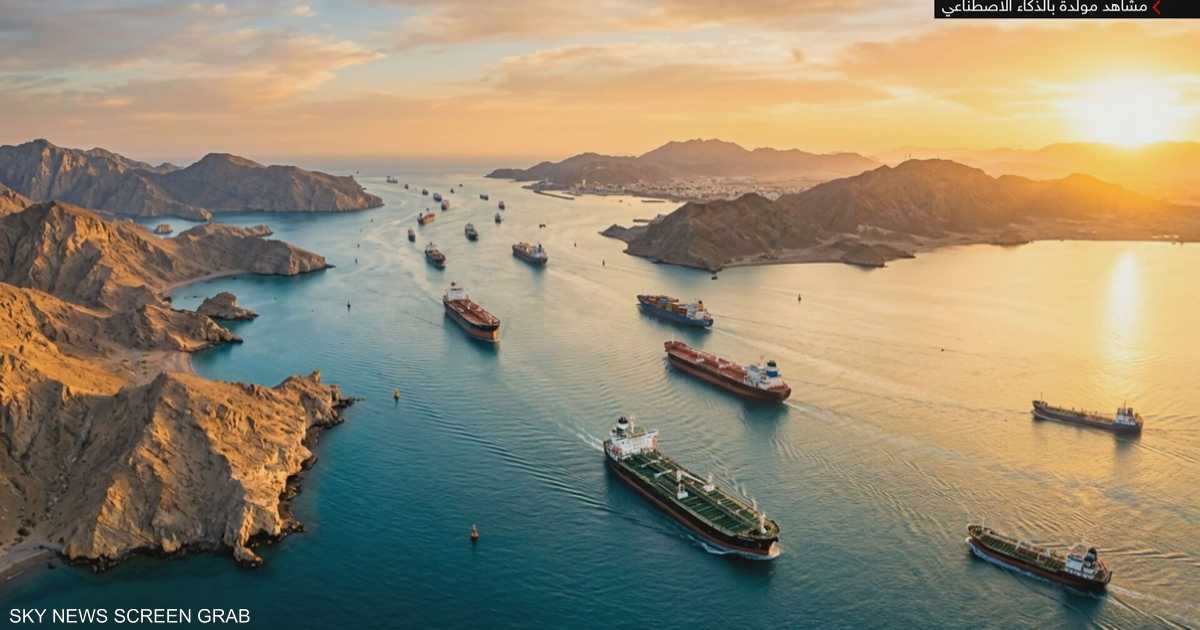
According to a Wall Street Journal report, the United States reimposed a naval blockade on Iranian ports in July after a brief truce between the two sides collapsed. Since then, according to the newspaper, Iran has been unable to supply oil.
Data from Tanker Trackers reveals an imbalance in the equation on which Tehran based its calculations. For 28 days, about 5 million barrels of oil per day crossed the strait, almost none of which was Iranian, and an additional 2.5 million barrels passed through ports in the Gulf of Oman.
Thus, more than 40 percent of pre-war regional oil flows have continued and global crude oil prices have remained below $100 a barrel, contrary to expectations that the closure of Hormuz would trigger an energy crisis that would paralyze the global economy.
The picture is consistent with a Reuters report that said Iran’s oil exports fell from about 1.7 million barrels a day to just 260,000, a direct hit to Tehran’s most important sources of hard currency.
Channels to circumvent sanctions have also become more expensive and difficult, with Washington stepping up its pursuit of institutions and parties that continue to have financial ties to Iran.
But the heaviest loss is not seen on naval charts, but in the markets and homes of Iran. Official annual inflation hit 66 percent in July and food prices rose 128 percent year-on-year, according to data from Iran’s statistics center, reported by Reuters.
The riyal also fell by more than two million riyals against the dollar, and President Massoud Pezeshkian admitted that exports and imports had fallen by about 35 percent due to the sanctions and blockade.
Iranian officials believed that the country could withstand the siege for about five months before serious economic consequences became apparent, according to the Wall Street Journal. As that deadline approaches, indicators show that the margin for maneuver is narrowing: oil revenues are falling, the currency is depreciating, imports are becoming more difficult, and losses are being passed on to commodity prices.
These numbers mean that Iranian families are paying a price for the political stakes in order to buy food, pay their rent and keep their jobs. Due to falling incomes and import financing, risks of fuel shortages and increases in transportation and production costs are rising, while reports speak of families being forced to cut back on basic needs or seek additional work.
Despite this pressure, Iran’s leadership does not yet appear ready to make concessions that would end the standoff.
Iranian-American researcher Wali Nasri believes Tehran is stuck between two stark options: accepting the terms it considers surrender, or escalating militarily in the hope of improving the terms of negotiations. The looming US midterm elections may tempt the regime to prolong the war to weaken President Donald Trump politically, but each additional month doubles the burden on Iran’s interior.
Thus, the Strait of Hormuz turns from a pressure card that the regime wanted as a weapon against its opponents to a burden that falls back on its own people. The longer Tehran prolongs the conflict without a political solution, the more its resources will be depleted and the circle of rising prices will widen, and Iranians will be asked to pay the price for a war they did not choose and whose end they have no right to decide.
