

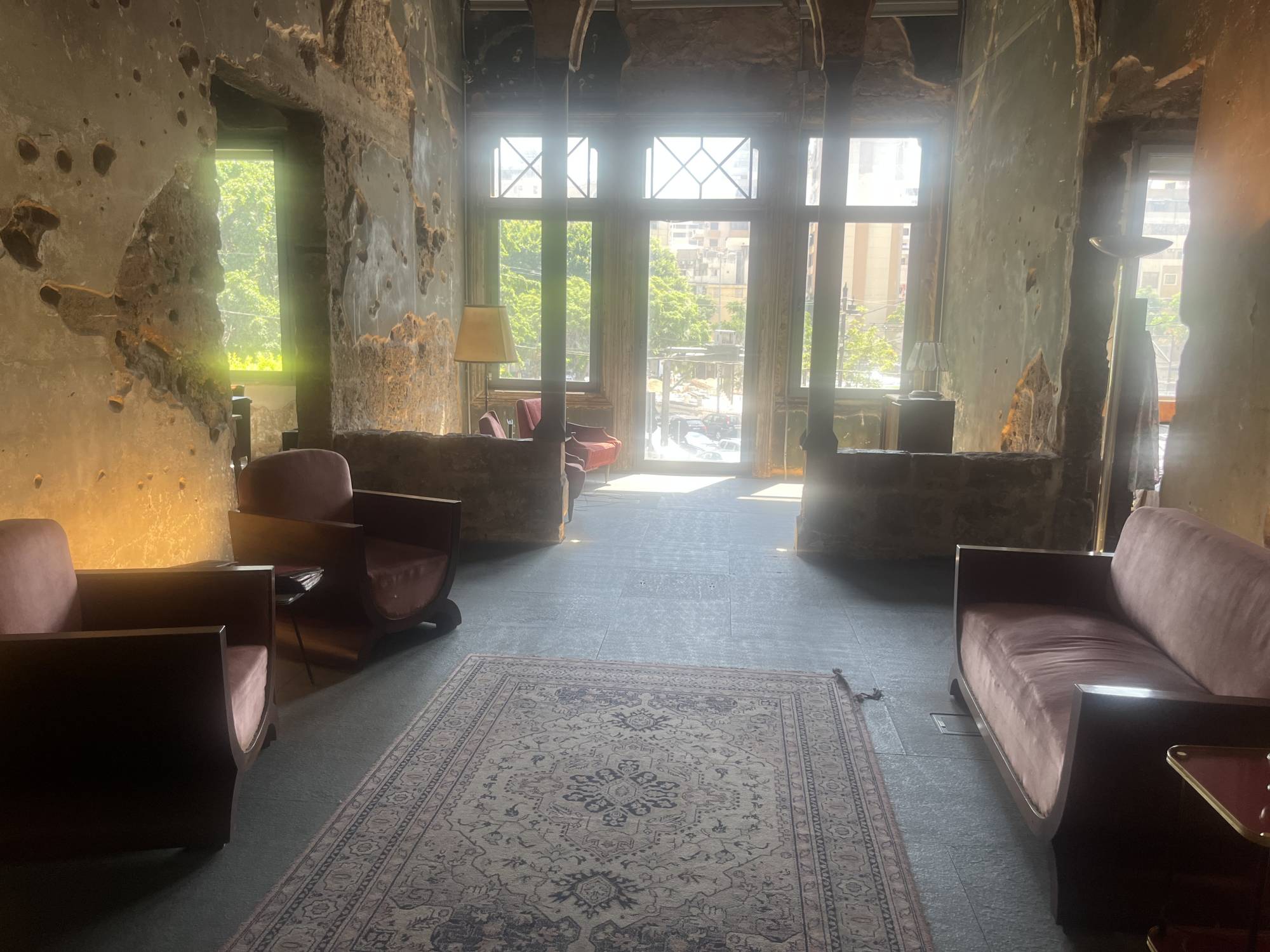
At the exhibition “Tell Me, South” the visitor is required to listen. The walls here are the ones that speak and tell the stories of the people of the South and their memories of their villages, on a journey that restores the human relationship with place and its feelings and belonging.
Through the visual and audio archive spread over two floors of the “Beirut House” in the Sodeko district of Beirut, the visitor embarks on a humanitarian tour, listening, watching and reading moving stories about the connection of the people of the South to their land. It is a deep-rooted love affair between them and their villages that remained strong during the war.
The exhibition was produced and coordinated by the Tell Me Project in Beit Beirut, in collaboration with photographer Adib Farhat, and brings together artistic and research works that come from different backgrounds and experiences and revolve around the collective memory of the people of South Lebanon.
It includes a variety of materials and artifacts, including home archives and family photographs from the rural and urban South, in addition to artistic and research works, films and audio-visual equipment, as well as rare historical documents, letters and photographs. Some of the works also refer to maps and digital archives, while interactive spaces are dedicated to invite visitors to share their stories and memories and add them to the exhibition.
In addition to Adeeb Farhat, a number of visual artists will participate, including Batoul Faour, Farah Barro, Rabab Shams El-Din, Rawan Mazeh and Sama Baydoun.
From the first minute of entering the exhibition, the visitor feels the importance of this meeting documented by collective memory. Sometimes she communicates with him through a photograph, and sometimes through household items, mortar, house keys and drawings. Through videos and artistic installations, he embarks on a visual journey in which the details of everyday life intersect with the memory of a place. All elements of the exhibition were collected from the ground and became witnesses of the stories of their owners. Between a tanned stone here, a handful of dirt there, and a broken coffee cup, the visitor finds himself in front of small details that hold a big story, as if he were visiting the villages of southern Lebanon, which have witnessed successive wars, while he is still in the heart of the city.
The exhibition covers the long era of wars experienced by the region and its people, from the 1980s to the present day. The visitor wanders between the remaining traces of those years and what survived their brutality and vicissitudes.
The contents of the exhibition are like a handful of relics of the past life, which people collected from ruins and ruins and kept as if it was the last thing that connected them to their places. On the surface, they are simple objects, but in the details they carry the stories of houses and villages and preserve the moments of life that the war could not completely erase.
Between sections we look at examples of Southern homes and read newspaper clippings and letters collected by Adeeb Farhat in his art archive. With various titles including “Lines of Westernization”, “But the Pomegranate Season is Coming”, “Keys Without Homes” and “After Dinner”, the visitor explores the nooks and crannies of the stories.
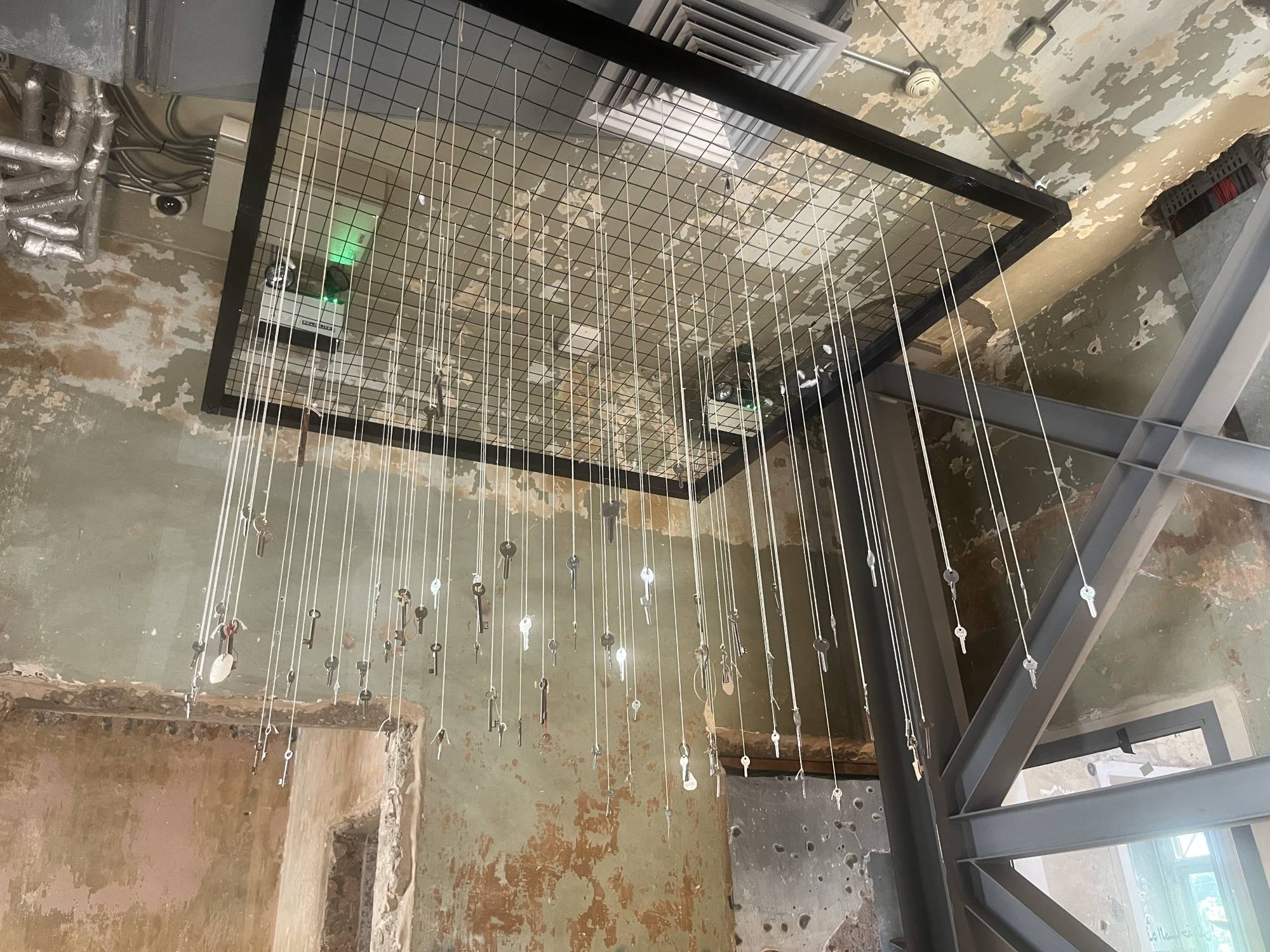
Each participating artist was committed to distinguishing his relationship with the city and its land, based on the stages he lived in, and translating this relationship through family photos or a dinner table empty of people. We also focus on the importance of losing places and homes through huge art installations, one of which hangs a set of keys, representing homes whose owners can no longer return to them.
In a corner that artist Rabab Shams El-Din dedicated to the jubilee of the pomegranate harvest season, he uses photographs of the people of his town harvesting its fruit, recalling a season linked to their land and customs. As for the artist Fara Berro, she created a living room made of simple furniture and a set of tools and objects that she brought from her home in the south, and surrounded by an atmosphere that recalls the customs and traditions that she shared with her neighbors every day in the morning. These include an ornate Arabic coffee cup and images of his home with its arched facade, images of eating “meat with dough” and olive trees reminiscent of his hometown of Kafr Qila.
In the special corner of the southern kitchen, the visitor encounters household items and tools that recall the rural character that distinguishes Lebanese village kitchens. From the “ant” cabinet to the aluminum pots and the sink curtain made of yellow fabric, another journey begins in the details of everyday life associated with southern homes.
The exhibition includes an interactive aspect that allows visitors to directly participate in the construction of the archive, writing stories, letters and details of life related to their villages and places. It is accompanied by a program of tours, meetings and dialogue activities that are announced in sequence to expand the space for participation and create space for more voices and stories.
