

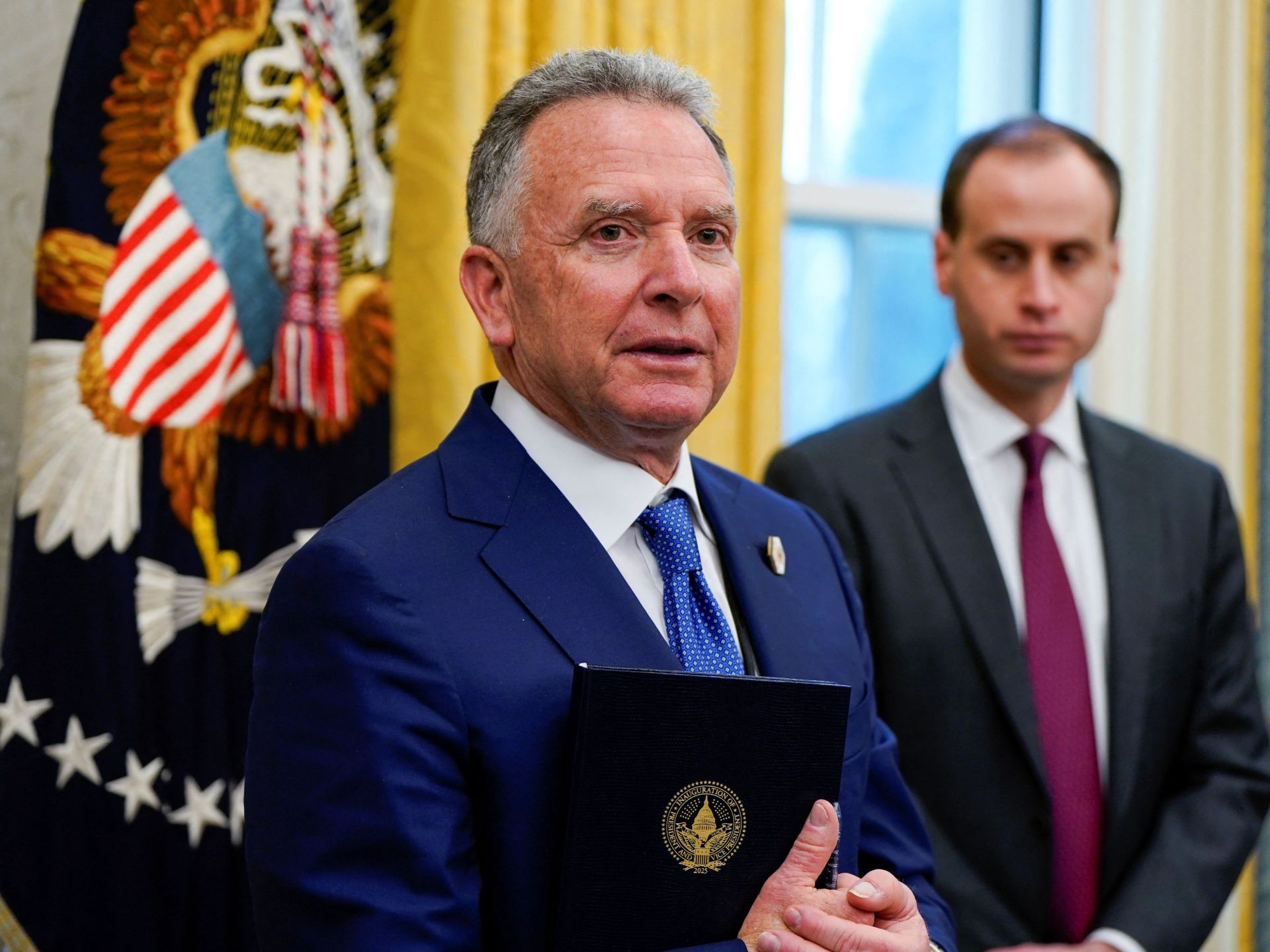
Washington After he received much praise for pressuring Israeli Prime Minister Benjamin Netanyahu to agree to a cease-fire deal in the Gaza Strip last January, the focus is once again on Trump’s Middle East envoy Steven Witkoff’s efforts to resolve the impasse after Israel refused to start the second phase of the agreement and violated the first phase of the deal.
With US President Donald Trump repeating almost daily his talk about Gaza and the ideas he presents that seem strange and abnormal, many are counting on Witkoff as a reliable and influential representative of the American side, away from the noise of Trump.
The progress of the Gaza agreement has been complicated after Washington supported Israel’s refusal to start the second phase of the deal, and Witkoff proposed the idea of extending the first phase until the end of the holy month of Ramadan and the end of the Jewish Passover holiday in the middle of next month in exchange for the release of the remaining prisoners and detainees. that it clearly contradicts what was previously agreed upon.
It is worth noting that in the first phase of the agreement, which Trump called an “epic deal”, Israeli forces were withdrawn from the populated areas to the border buffer zones and 33 Israeli prisoners were released in exchange for hundreds of Palestinian prisoners held by Israel and hundreds of aid vehicles were allowed in daily.
Various parties are looking forward to Vitkov’s visit to the region in the next few days, as it will have a direct impact on the Gaza Strip, be it in terms of reaching a ceasefire agreement, the release of remaining prisoners and reconstruction plans.
Is Witkoff getting tougher?
Speaking to Al Jazeera Net, international relations and US policy expert Adam Shapiro expected Witkoff to deliver a final ultimatum to Hamas and to publicly show his full support for Netanyahu during the visit, suggesting that “at a time when Trump wants to make a deal where he only releases Americans, he is not ready to give Hamas back.”
For his part, Dr. Osama Khalil, head of the international affairs program at Syracuse University in New York, believed that reaching an agreement on the cessation of hostilities is not in the current interests of the Israeli prime minister.
Speaking to Al Jazeera Net, Khalil noted that Netanyahu has no interest in fulfilling the terms of the cease-fire agreement and carrying out the second phase of the prisoner exchange, after he was repeatedly embarrassed by Hamas in the first phase of the exchange and strongly criticized by the families of the hostages for his actions.
Khalil added that the situation worsened after the failure of Israel’s army and security services was revealed on October 7, 2023, as well as “its inability to defeat Hamas after 15 months of aggression, and Netanyahu also faces pressure from the far-right wing of his coalition to continue fighting, expelling the Palestinians and the Gazan population.”
Trump’s lawyer and supporter of Netanyahu
While a Trump spokesman defended the president’s administration’s decision to enter into direct talks with Hamas, a violation of long-standing American policy not to negotiate with groups Washington designates as “terrorists,” Witkoff declined to say what Washington is offering Hamas in return.
Speaking to reporters outside the White House, Witkoff said that Trump’s spokesman for the hostages, Adam Boehler, has held such talks in recent days — not weeks — and that those tasks are within his jurisdiction, stressing that the essence of the Trump administration is “to confirm that we are ready for dialogue. The alternative is not good.
At the same time, reports indicated Netanyahu’s displeasure with Washington’s direct talks with Hamas, despite Washington informing Israel of the details of those discussions.
Witkoff supports Netanyahu’s proposal to extend the first phase of the deal, which would see a resumption of aid flows and a continued cessation of hostilities in exchange for the release of remaining prisoners. Reports indicated that the plan was one of several options discussed as a possible way forward during recent talks between US officials and Hamas.
Hamas’ fear of renewed fighting after the release of the rest of the prisoners is consistent with what is coming from Israel’s top supporters in Washington, where Democratic Senator John Fetterman of Pennsylvania, a strong supporter of Israel, laid out what Hamas fears in stark terms.
the senator wrote on Twitter
good behavior
While Witkoff expressed hope yesterday for good behavior next week, Hamas is weighing the benefits of reaching a direct deal with the Trump administration, stressing that the ultimate goal of the talks should be a complete Israeli withdrawal from Gaza and a permanent end to the war with the eventual release of prisoners.
Witkoff is scheduled to travel to the region next week, and it is not yet clear whether he plans to meet directly with Hamas to try to narrow the gap between the two sides.
