
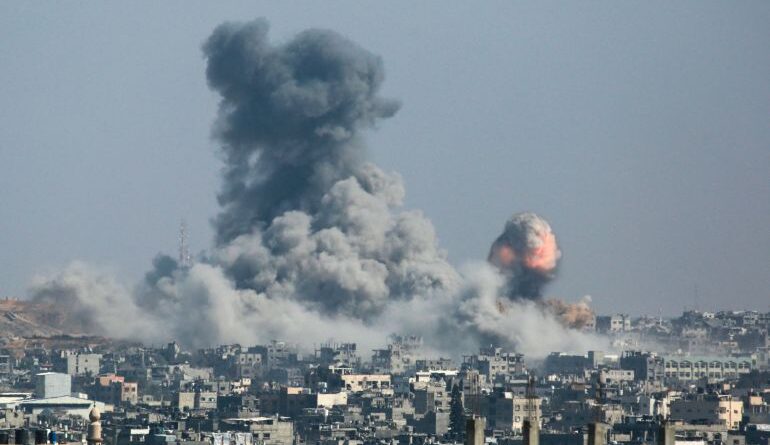
What do theories of liberation wars say about victory and defeat in Gaza?
The concept of victory in people’s consciousness acquires a symbolic meaning, a subjective description based on opinions and priorities, and a complex content that combines material and moral factors, according to the opinion of many theorists in the military and political spheres.
Although the determination of the winner from the losers leads to differences of opinion, it acquires a special character in the case of liberation wars, due to their duration and the growing importance of the moral dimension in them, against the background of the imbalance of material power, usually in favor of the occupier.
Against the background of the ongoing war in the Gaza Strip, this issue is gaining importance due to the wider debate about the future of the conflict and the implications of the struggle for the future of the Palestinian liberation process.
colonial effort
The colonial effort was not limited to a military dimension. Rather, it is a hegemonic project that begins with thought and uses culture, science, economics, and military power to achieve its goals. In contrast, wars of liberation confront him in all these areas.
Many intellectual works have dealt with the concept of victory and defeat and the factors of their achievement, and the centrality of the cultural and psychological dimension is clearly visible in the sum of these works, in terms of the strength of will and the subjective perspective of each side in determining the outcome of any conflict, especially in wars of liberation.
Among those who addressed these themes were the military theorists Carl Clausewitz and André Bover, the Chinese leader Mao Zedong, and the Italian thinker Antonio Gramsci.
Disarmament
The concept of national will arises in the initiation and termination of war, in the traditional military perspective, as the famous military theorist Carl Clausewitz defines war in his book “War” as “an act of violence, the purpose of which is to compel our adversary to do our will. Therefore, violence, or physical force, is the means, and the forced submission of the enemy is our goal.”
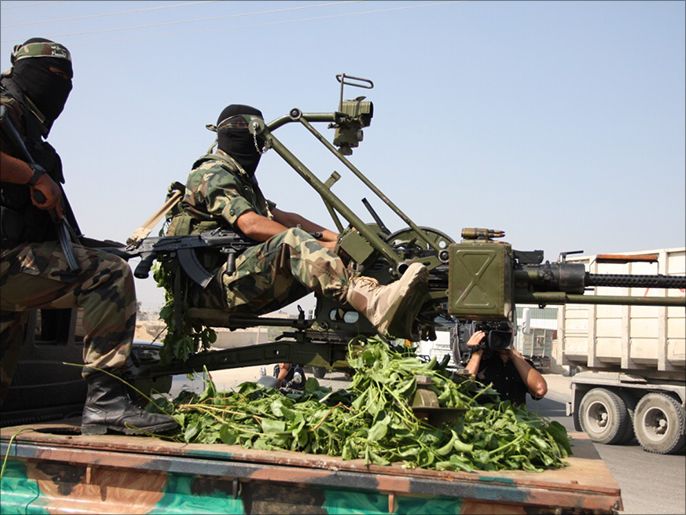
To fully achieve this goal, it is necessary to disarm the enemy, and thus disarmament theoretically becomes the immediate goal of hostilities.
This concept is evident in Israel’s position, which seeks to arm the Palestinian resistance in Gaza, as it considers it the epitome of the victory it seeks and guarantees a weakening in the quantity and quality of resistance work in the future.
A battle of wills
The role of feelings in war is also emphasized by Clausewitz, who says: “If war is an act of force, it is necessarily connected with feelings. If it does not come from feelings, it interacts with them to one degree or another, and the extent of this interaction depends not on the degree of civilization, but on the importance and duration of interests.”
This perspective sheds light on the centrality of the moral dimension to the initiation and termination of war and to people’s assessment of whether they are winners or losers in any war.
On the other hand, Andre Bouvre, a military theorist and former NATO Chief of Staff, in his book “Introduction to Military Strategy” sees war as a conflict of wills, the result of which is “a psychological event that we want to happen to the enemy in order to convince him that engaging in or continuing the conflict is futile.”
Thus, Bouver’s definition of defeatism is that it is primarily a psychological state, and therefore anyone who seeks liberation and refuses to submit to the will of the occupation or recognize its legitimacy cannot be considered a defeatist according to this definition.
victory and sacrifice
Based on his long experience in warfare, Mao Zedong, the leader of the Chinese People’s Revolution, presented a theory of revolutionary warfare in his book Guerrilla Warfare, in which he defined victory as “the overthrow of the old regime and the establishment of a new regime compatible with the aspirations of the masses.”
Such a victory is usually not achieved quickly, but is the result of “a prolonged war that exhausts the enemy’s strength and gradually increases our strength.” In this long journey, the war must not be separated from the masses, lest “they lose their spirit and become only a helpless military force… This is the beginning of the end.” People are water, guerilla warfare is the fish that swim in it, and without water the fish dies.
According to Mao, the principle of war and the basis of all military principles is self-preservation and the destruction of the enemy.
Although “every war requires a price, and this price can sometimes be very high”, this does not contradict the principle of self-preservation, but is united with it, “since such sacrifices are inevitable not only for the purpose of destroying the enemy, but also for the purpose of self-preservation”.
In the case of a war in the Gaza Strip, it seems that the ultimate goals of the occupation are the liquidation of the Palestinian people in the Gaza Strip, their displacement and land control, as Israeli Prime Minister Benjamin Netanyahu has repeatedly stated.
If he fails to do so, the minimum goal is to establish a new regime in the Gaza Strip in accordance with the occupation’s interests, in addition to disarming the resistance and displacing hundreds or thousands of its leaders and cadres.
With the resistance continuing and the occupation unable to stabilize the Gaza Strip, isolating the resistance from its territory has become a priority for occupation projects such as “humanitarian bubble” projects, or linking humanitarian aid distribution to security checks and calls for movement into the Palestinian territories. The case of the Yasser Abu Shabaab-founded militia in Eastern Rafah.
In addition, direct propaganda efforts or through friends or allies of the occupation and countries normalized and at peace with it, which created a front for cultural and psychological confrontation in the arena of various types of media.
Front of the culture war
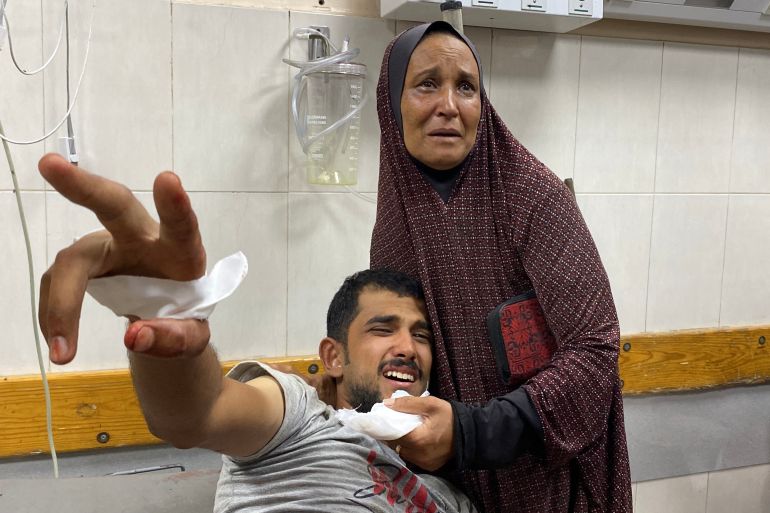
The Italian philosopher Antonio Gramsci offers a special concept of victory, or political hegemony, as he observed it through participation in political action in Italy in the 1920s.
Gramsci adopted the concept of “cultural hegemony” as a methodological criterion for studying the nature of political conflict, noting that “the superiority of a social group manifests itself in two ways: in terms of control and in terms of intellectual and moral leadership.”
The Italian philosopher – according to a group of his letters published in the book “The Prison Notebooks” – believes that revolutionary victory is achieved through a combination of military and cultural actions, calling the first “war of movement” or “war of maneuver” and the second “war of position”.
It focuses on the centrality of the role of long-term cultural and intellectual struggle in achieving victory, which complements and replaces military warfare, and therefore the achievement of “cultural hegemony” is a prerequisite for achieving and maintaining military victory.
Although Gramsci believes that a war of military maneuver is most appropriate for confronting tyrannical regimes, which corresponds to the case of confronting colonialism, as theorized by the French philosopher Frantz Fanon, he believes that a war of cultural positions is most appropriate in the efficient and influential civil society of the West.
Although Gramsci’s observations are mainly presented to explain cases of popular revolution against tyrannical regimes, they provide conclusions that can be applied to other cases of conflict, such as wars of national liberation.
A battle for consciousness
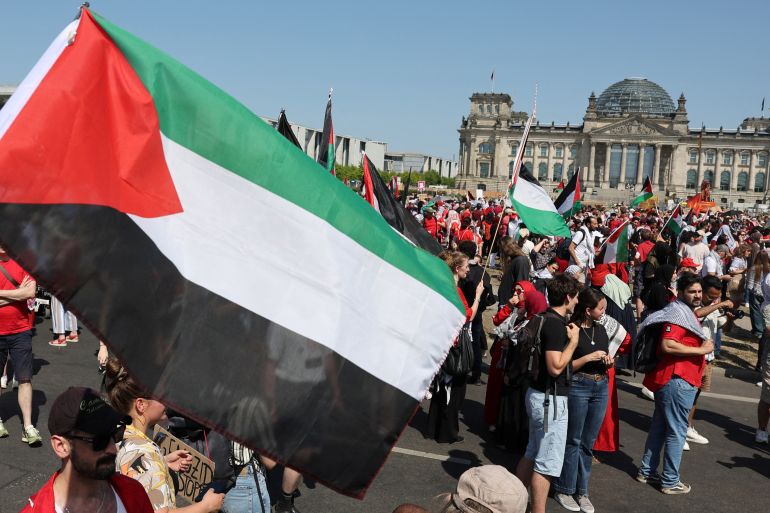
In the ongoing war in Gaza, the scale of the struggle to appeal to the masses inside and outside Gaza to determine the outcome of the conflict in the various conflict zones is evident in the conflicting and conflicting narratives between the occupation and its supporters on the one hand, and the resistance and its supporters on the other.
The extent to which these narratives are disseminated and accepted will have a significant impact on the behavior of peoples and political forces within Palestine and beyond.
Although the occupation’s popularity is declining worldwide according to many polls, especially in countries that have traditionally supported it, it is focusing on changing consciousness in Gaza to produce acceptable political and military results.
Thus, its focus is on establishing hard facts in which it excels in the “war of maneuver” while its behavior causes greater losses and deeper impact in the “war of position” or culture and consciousness around the world. This is an extremely damaging and sensitive issue for a country that relied on this support for its establishment and relies on it for its protection and survival.
On the other hand, the intensification of war crimes against the people of the Gaza Strip, the prolongation of the siege and the media hostile to the resistance are gradually affecting the public opinion in the Gaza Strip about the feasibility of the war and its prospects, as shown by the survey of the Palestinian Center for Policy and Survey, that the support for May 2025. among the residents of Gaza has decreased compared to March 2024.
As for the West Bank, the results are different, although their direction is influenced by the same factors that affect Gaza, as the percentage of support for the Al-Aqsa flood resolution has decreased since December 2023.
These results come amid intense media coverage of the occupation and the countries that support it, tolerate it, and are at peace with it, while simultaneously tightening the screws on various forms of support for the resistance and criminalizing actions that support it.
All this had the desired effect of creating a consciousness of the occupation as complicit and subject to its will, even though statistics and polls around the world indicate deepening occupation losses and declining support, reflected in international positions rejecting the continuation of the war and the siege of Gaza in recent months.
In early June 2025, 14 out of 15 countries in the Security Council voted for a draft resolution to end the war in Gaza, and only the American veto stopped it.
Freedom or obedience?
In conclusion, the final outcome of the liberation war is limited to two things: either gaining independence and freedom, or abandoning the dream of freedom and submitting to the will of the occupier.
Except for stability in one or two cases, the outcome of any military war is neither absolute victory nor absolute or final defeat, according to Clausewitz, “the defeated state often sees what has befallen it as nothing more than a passing evil which can later be remedied by political decisions”.
In contrast to the military and cultural actions of the occupation, the persistence of the narrative of the Palestinian people in general and their resistance to the war and its justice in particular is essential to sustain the cultural war’s advanced positions, on the one hand, by the military action of resistance, on the other hand, by the crimes and atrocities of the occupation.