

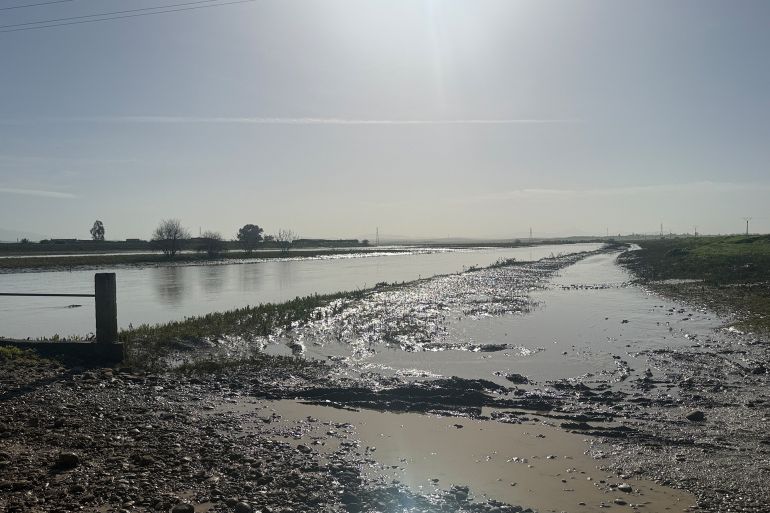
Rabat- The Moroccan government has announced the classification of 4 provinces – the most affected by the floods, including Larache, Kenitra, Sidi Kachem and Sidi Slimane – as “disaster zones”.
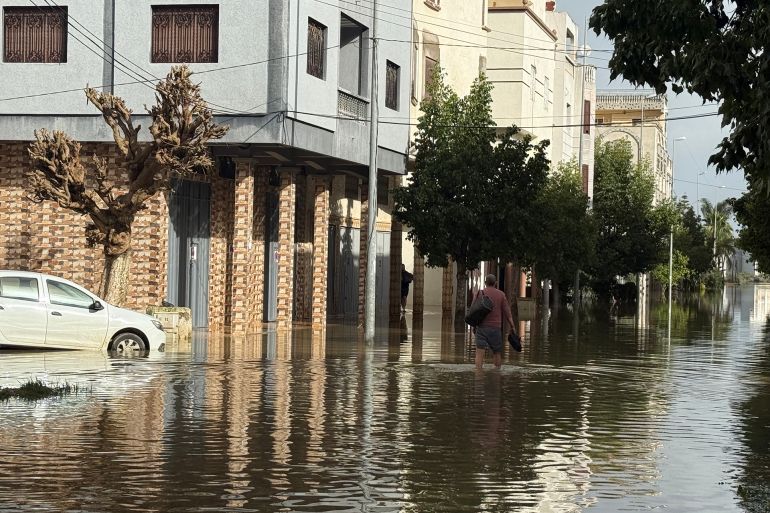
The exceptional weather disturbance that hit the kingdom since January 28 caused floods that covered more than 110,000 hectares and caused the evacuation of about 188,000 people from these regions.
Prime Minister Aziz Akhannouch announced the decision to declare the unrest a “state of emergency” and set up an aid and support program with an expected budget of 3 billion Moroccan dirhams ($327 million), according to the prime minister.
Support axes
The King of Morocco, King Mohammed VI, instructed the government to develop a comprehensive program of aid and support for the benefit of the affected families and the population and to take the necessary regulatory measures in such a situation.
In the Prime Minister’s statement, it is mentioned that the flood aid and support program is based on 4 axes:
- Assistance for resettlement, particularly for loss of income, rehabilitation of damaged housing and small shops, and reconstruction of destroyed housing, totaling 775 million dirhams (about $84 million).
- In-kind and other assistance to strengthen emergency field interventions to meet the basic and immediate needs of the population, approximately 225 million dirhams (approximately $24.5 million).
- 300 million dirhams (about $33 million) in aid to farmers and ranchers.
- Investments in the rehabilitation of road infrastructure related to water management in agriculture, such as dams, agricultural drainage networks, reservoirs and water basins, and the rehabilitation of basic networks of about 1.7 billion dirhams (about 185 million dollars).
Civilians and human rights activists have expressed their satisfaction at the decision to classify the areas as a “disaster”, given the significant loss and damage to property, infrastructure and agricultural land.
Abdel-Ilah Al-Masmoudi, the head of the Sidi Slimane group, said that the residents of these regions, known for their agricultural activities, especially in the villages, suffered heavy material losses as a result of the floods, explaining that they lost their agricultural crops, livestock and property after the water flooded.
This region, located in western Morocco, is known for growing grains and vegetables, in addition to fruit trees such as oranges and other fruits.
Al-Masmoudi added that heavy rains and flooding in the valley caused water levels to rise by about three meters in some areas, causing extensive damage to infrastructure.
special situation
The declaration of an area as a “disaster” is a special status that gives the government special powers to intervene quickly and activate unusual legal, institutional and financial mechanisms to cope with the consequences of disasters, to ensure the protection of the population, to expedite assistance and to compensate victims outside the normal control of public administration.
The Moroccan government took a similar decision after the 2023 Al Hauz earthquake and named 6 provinces among the affected regions: Al Hauz, Taroudant, Chichoua, Ouarzazate, Azilal and Marrakesh.
After the territory is declared a natural disaster, the procedures and measures provided for in Law 14-110 on the creation of a system for covering the consequences of catastrophic events issued in 2020 will be implemented, which opens the mechanism for compensation of the affected population and infrastructure repair.
This law defines a disaster as “any accident causing direct damage in Morocco, the decisive cause of which is the action of an extraordinary force of a natural agent or a violent human action”.
In order for an incident to be declared a “disaster”, a number of specifications are required, including that the incident causing the incident must meet the conditions of suddenness or unpredictability and that the usual precautions taken should not prevent it from occurring. These are specifications that apply to floods in the north of the kingdom.
The occurrence of a “disaster” is declared after the review of the conclusion of the special investigative committee, with an administrative decision specifying specifically the affected areas, the date and duration of the catastrophic event, which is the subject of the announcement and is published in the official newspaper within a period of no more than 3 months.
The publication of the administrative decision leads to the start of the process of registration of victims in the census register, the activation of the guarantee of the consequences of catastrophic events and the process of issuing compensation by the special fund “Solidarity Fund against Catastrophic Events”.
severe injury
For his part, Noufal Al-Boumar, a lawyer and head of the Moroccan Human Rights Organization, said that classifying the areas most affected by the floods as “affected” is an acknowledgment that the damage there is severe and has affected economic life and other activities, especially agricultural activities. The announcement was also related to the massive evacuation process witnessed in the town of Ksar el-Kebir in the province of Larache, with the material damage it entails.
Al-Bumari explained – to Al-Jazeera Net – that this announcement opens the door for affected citizens to benefit from financial compensation mechanisms for the various losses observed in the cities and villages affected by the decision.
He noted that the next stage is the formation of committees at the level of each region to count the affected population and establish compensation standards according to the type, size, value and nature of damage, which is defined in the law regulating the natural disaster compensation fund.
Following this announcement, there have been calls to expand its scope to include other regions in northern Morocco that have been affected by recent weather disturbances.
The opposition Socialist Parliamentary Group has sent a written question to the Prime Minister asking if the government intends to review the scope of the support and aid program in other affected regions, particularly the Chefchaouen region.
The parliamentary team said in its inquiry that Chefchaouen province also experienced heavy rains and severe weather disturbances that caused severe and multi-dimensional damage, noting that it witnessed soil erosion and damage to housing and public and private properties, besides direct impact on local economic activities, especially agricultural activities.
strategic importance
On the other hand, Reduan Amimi, professor of public law at Mohammed V University of Rabat, considered that this decision of the government establishes a special phase of management, in which special mechanisms will be put into action that go beyond the usual administrative management and have a direct impact on the mobilization of financial resources, the expansion of the powers of local authorities and the acceleration of the level of intervention, assistance and accommodation.
Amim added to Al Jazeera Net that the strategic importance of this decision is enhanced when it is framed by royal directives, which play a crucial role on three main levels:
- The first is to accelerate the pace of response by giving national priority to the intervention, which mandates the immediate and integrated mobilization of all concerned sectors, civil, security and financial.
- The second is to provide coordination and tracking. Royal directives provide a frame of reference that ensures harmony in the interventions of different actors and prevents the dispersion of efforts or conflicts of competences.
- The third level, according to the speaker, is the framework of the post-crisis phase, as the issue is not limited to relief, but extends to reconstruction and reparation and shaping a future preventive approach in the field of reconstruction and risk management.
Amemi emphasized the role of the Solidarity Fund against Disaster Incidents as an institutional mechanism embodying the principle of national solidarity. According to him, it does not operate with the logic of good faith or situational support, but with the logic of framework legal compensation based on specific criteria for identifying beneficiaries, assessing damages and ensuring a minimum level of justice.
