
The war frees the Lebanese from sectarianism
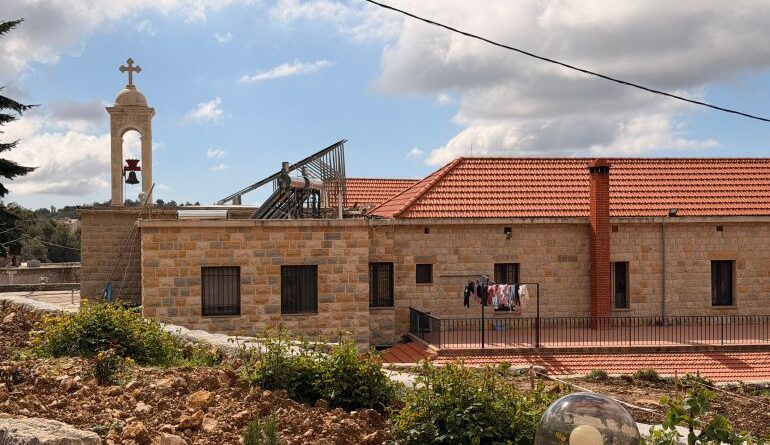
Beirut – At the Monastery of Saints Peter and Paul in Qatan, Lebanon, Muhammed Mouenis sits leaning against a cold stone wall, reminiscing about his moving journey that never left him to forget.
Muhammad took refuge in a monastery after being stranded in search of a safe place. In Lebanon, mosques and churches are no longer just places of worship, but have become open shelters for displaced people fleeing the inferno of shelling. There the voices of calling mingle with the church bells, but what unites all is need and safety.
Families who have lost their homes find a roof over their heads and strange faces that quickly become family. In these simple spaces, the meaning of solidarity and coexistence is rediscovered, where differences recede in the face of one humanity that resists the brutality of war, remaining in solidarity and cooperation.
similar faces
Speaking to Al Jazeera Net, Muhammad recalls a night that was anything but normal. Children’s cries preceded everything. The sound of explosions broke the darkness. They left their homes as they were, with only their clothes, leaving memories that carry only what was stuck in their hearts. They were not alone on the road, but many faces were similar to them, and one concern resided in all of them.
Muhammad adds that the road to Sidon was more than just a distance, it was a long time, hours that lasted from dawn to noon that day, exhausting waiting and slow steps among the crowd that resembled a collective escape, each step punctuating the silence of fear and each second doubling the fatigue.
When they finally arrived, they did not feel that they had really arrived. There was no clear destination, no place to welcome them, only deep exhaustion and unanswered questions.
Then suddenly everything changed. The door opened without asking for ID, asking for nothing but entry. Simple words, but there was a rare sense of security in them: “You are in God’s house.” Then Muhammad felt the heaviness of the road disappear, as if his heart had found a place where it was not afraid.
Days pass, life gradually starts a simple rhythm: one table unites them and dishes are prepared by several hands. Food is shared, anxiety, waiting and stories are shared with hands and hearts.
Being human alone is enough
As for Nabil Lama, his life was divided between more than one place, from Achit to his work in Nabatieh, to his home in Kafr Rouman, 3 stations that made up his normal day before they suddenly turned into distant, unreachable distances.
By sheer coincidence, they got the number of the monastery. They picked up the phone and the answer was decisive: “Come on, damn it.” They didn’t know what awaited them, but what they found there was different from what they expected. Acceptance alone was enough to suppress any preconceived notions of difference between people.
About a month has passed since their stay. Nabil says that they will not forget what they experienced. They left everything behind, but solidarity eased the burden of the experience. What stuck in his mind the most: they never asked who they were or where they came from, despite their religious differences. They lived normally in the details of their daily lives, prayed Ramadan and observed fasting and prayer without feeling alienated or embarrassed. Here, according to him, only humanity was enough.
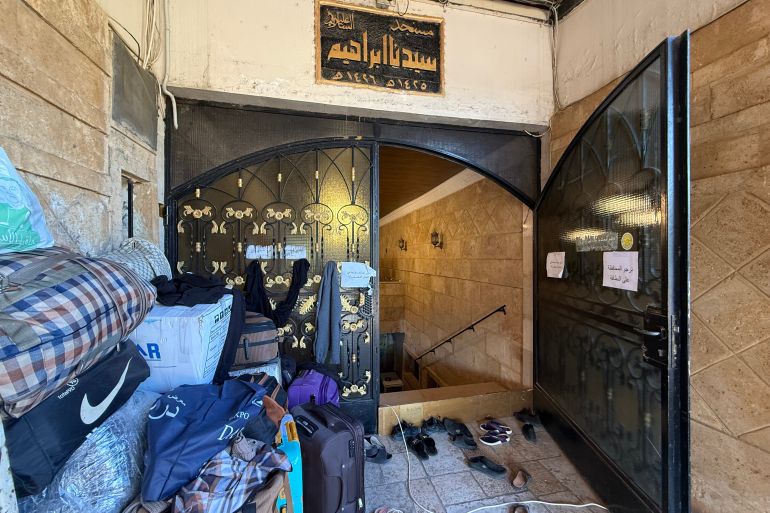
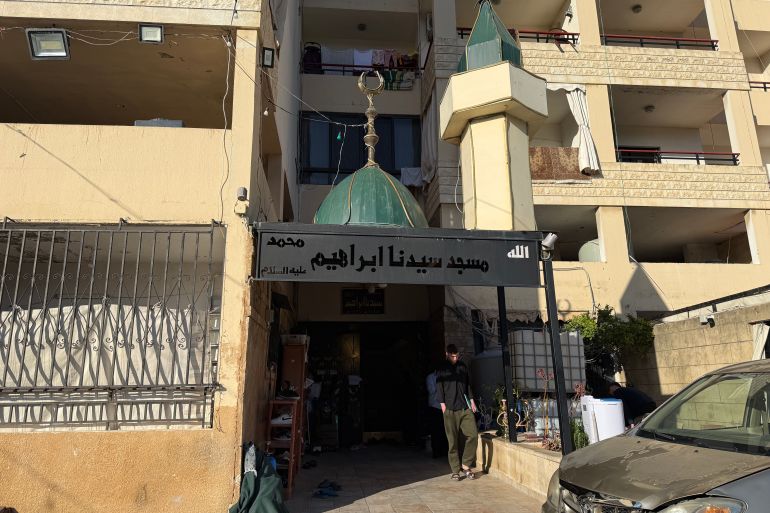
And in the mosque of our master Ibrahim, peace be upon him, in the city of Al-Qarya – in the district of Sidon, the scene of containment and security is complete. Umm Ali says, “Praise be to God, we are comfortable and all housing matters are completely settled.” Regarding the reason for choosing a mosque instead of a shelter, he explained: “The relationship with the sheikh was old after the martyrdom of my son, and he stood by us, respected us and brought us here.”
Joint humanitarian initiatives
Solidarity in the mosque and monastery has become a habit, and the humanitarian initiative transcends religion and sect. Food is prepared by many hands, sorrows and joys are divided, as prayers are divided side by side.
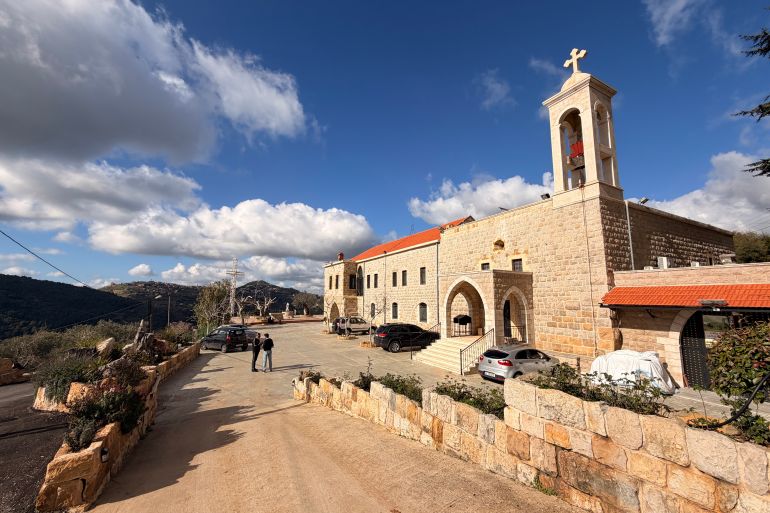
From the very first minute of the war, Father Boutros Akouri, minister of the monastery of St. Peter and Paul in Yezin, realized that the Lebanese needed shelter, so he opened the doors of the monastery wide to all those in need, regardless of religion or sect.
Speaking to Al Jazeera Net, Father Boutros said: “The fountain from which a person drinks does not ask him about his sect or gender. Churches, mosques and Hussainis must remain open so that each person can find shelter and warmth and realize that only humanity is enough.”
Two houses are united
In the Mosque of Prophet Ibrahim, Sheikh Suhaib Habal quotes the words of Jalal al-Din al-Rumi, who says: “A law that does not give a person mercy is not a true law”, emphasizing that all laws have become a source of mercy and guidance for people.
Sheikh Suhaib concluded his speech on Al Jazeera Net by saying that the people of the South are their brothers, not exiles, but part of the family, and that their duty is not limited to just a kind word, but extends to sharing pain and alleviating it, and opening doors to all those in need, so that individuals are rewarded with God and love provided at every moment.
While the wars intersect with the details of everyday life, the ability of the Lebanese to stand together, transcend religious and sectarian affiliations, and form a living web of giving and solidarity was evident.