
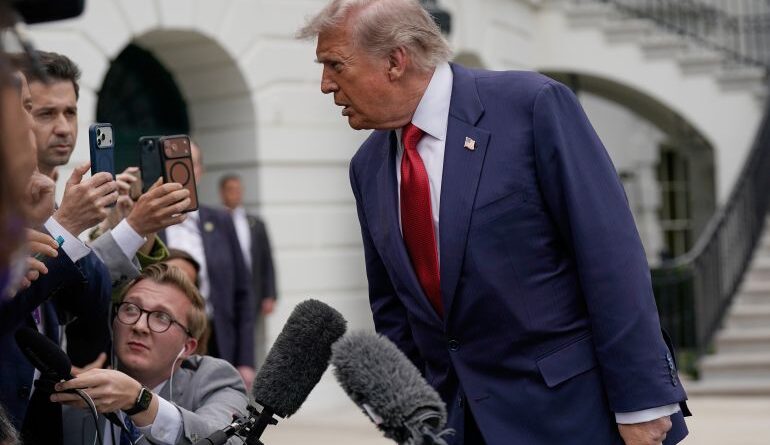
Trump and the 2026 election… an early war for constituencies, trust and funds
The United States is entering the 2026 midterm election season long before the official date, and the battle—as portrayed in America’s newspapers and magazines—is no longer waiting for polling day, but has begun in district maps, courtrooms, congressional conflicts, and most importantly, over early confidence at the ballot box.
Between Republicans’ rush to reshape the electoral map, Democratic concerns about vote-rigging, and popular divisions over the meaning of “stolen” or “rigged elections,” 2026 looks like an early war before its outcome due to the playing field.
Also read
List of 4 itemsEnd of list
According to Newsweek magazine, President Donald Trump and Republicans have scored a major victory in their redistricting battle after the Virginia Supreme Court struck down a voter-approved electoral map that would have given Democrats a clear advantage in the House of Representatives.
The magazine believes the ruling has sped up a turnaround in the mid-decade redistricting battle, giving Republicans additional leverage months before the 2026 election.
These changes don’t stop in Virginia, as Newsweek says that new Republican movements in Tennessee, Alabama, Florida, Louisiana and South Carolina could give the party 6 to 7 additional seats in the House of Representatives before voters go to the polls if the new maps hold and the Democrats’ bid fails.
War of the Circle
Voters in Virginia narrowly approved the new map, which Democrats saw as a response to Republican tactics in states like Texas, Missouri and North Carolina.
However, according to Newsweek, the court did not look at the partisan impact of the map, so much as it focused on a procedural flaw in submitting the constitutional amendment to voters, noting that the violation nullified the referendum’s legal effect.
The Journal reported Democratic outrage over the decision, as Virginia House Speaker Don Scott said voters voted “yes” because they wanted to resist what he called “Trump’s power grab,” and Democratic National Committee Chairman Ken Martin accused unelected judges of putting partisan politics ahead of voters’ will. in the setup.
The fighting in the south seemed more intense. he says Newsweek: Republicans in Tennessee have approved a map that splits Shelby County, where Memphis is located and has a large black majority, into 3 districts, which could eliminate Steve Cohen’s Democratic seat and make the state’s House delegation all Republican.
Republicans in Alabama are asking the Supreme Court to intervene to circumvent judicial restrictions based on the new maps, at a time when other states have opened the door to similar moves.
Newsweek linked the push to the Supreme Court’s decision in Louisiana v. Callis, which limited the scope of racial considerations in enforcing the Voting Rights Act.
Voting rights groups saw the ruling as one of the biggest loosenings of the law in decades and perhaps the precursor to the biggest decline in black representation in Congress in a generation, the Journal said.
The problematic majority
However, winning the map does not mean that Republicans enter 2026 from a completely relaxed position. The Hill newspaper has observed – in a report on the Republican battles in Congress – that anxiety over the midterm elections is putting pressure on the party from within, and that there are those who are trying to use the maximum degree of Republican control, while representatives of swing districts fear the reaction of voters.
“The Hill” presents several lines of conflict in the party over the summer, including a row between Republicans entrenched on spending issues and representatives of purple or swing districts over spending cuts, a battle over intelligence oversight powers, a clash between the Make America Healthy Again movement and traditional advocates for easing restrictions and a standoff over Cornet oil. between states.
However, the division most closely tied to the 2026 election — according to the report — is the Republican dispute over the Iran war. Trump’s political rise has been linked to his rejection of “perpetual wars” in the Middle East, but the Iran war has tested that promise, dividing his supporters between those who defend the war in the name of national security and those who accuse him of abandoning his “America First” slogan.
The newspaper reported that some Republicans in Congress have begun to look for tools to reduce Trump’s authority to continue the war, with fuel prices rising, a clear solution to the inability of senior administration officials and the conflict to exceed the 60-day deadline associated with the War Powers Act of 1973.
That division, even if it is limited within Congress, adds a new burden to the Republican leadership, which is trying to protect its narrow majority ahead of crucial elections.
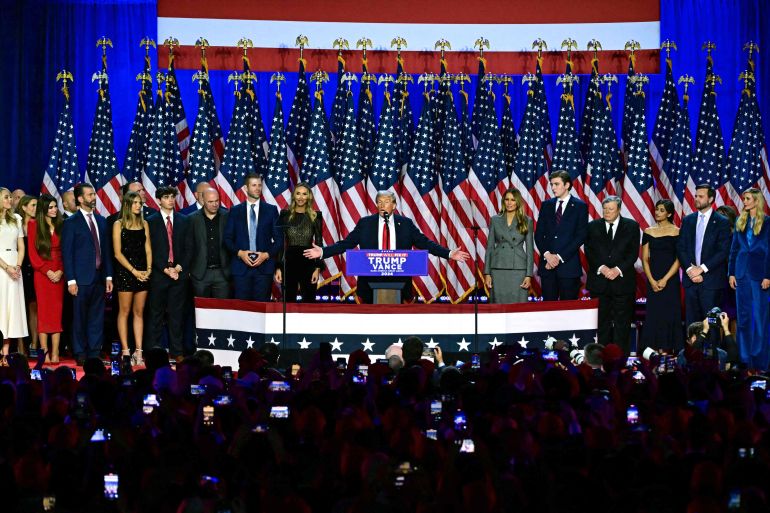
A crisis of confidence
As for the politician, it opens a deeper front, a crisis of confidence in the elections themselves statement An April 11-14 poll by the newspaper in collaboration with the Public First Foundation found that more than a third of Americans believe the 2026 election will be “stolen” or “rigged” and 1 in 4 do not expect the election to be fair.
Most importantly, however, according to Politico, Americans don’t even agree on the meaning of “election theft,” as Democrats fear voter suppression and barring qualified people from voting, and 58% of those who voted for Kamala Harris said they were concerned about disenfranchising qualified Americans.
As for Republicans, their concerns focus on illegal voting, as 52% of Trump voters said they were concerned about allowing the unqualified to vote.
The numbers reveal a wider divide over the election tools, which have often been viewed as administrative procedures, with a majority of Trump voters believing the expansion of mail-in voting could be a gateway to election fraud, while most Harry voters see it as a fair part of the electoral system.
On the other hand, for the majority of Harry voters, placing Immigration and Customs Enforcement agents near the polls is a potential way to influence the results, while a large number of Trump voters see it as a normal or fair security measure.
Politico quotes Stephen Richer, a former Maricopa County Republican official in Arizona and a legal scholar at the Cato Institute, who says the United States no longer has an agreed-upon working definition of what makes an election free and fair.
He also quotes David Baker, of the Center for Election Innovation and Research, as saying that divisions deepen in “media bubbles,” where each side hears the reality that supports its beliefs.
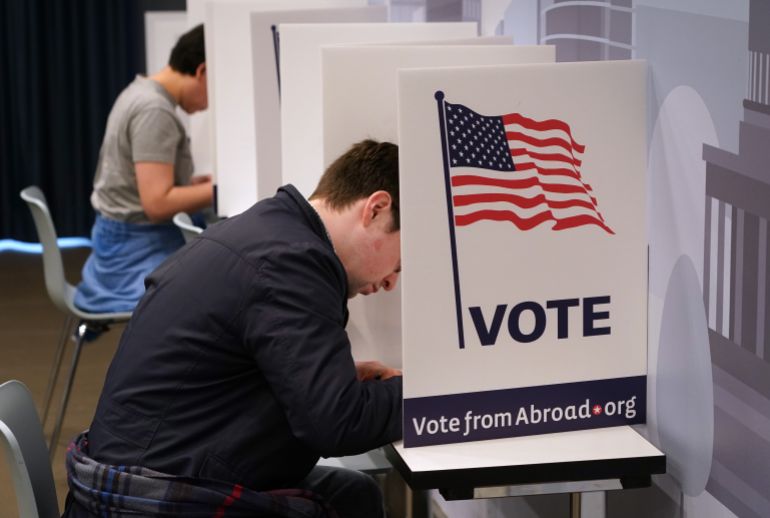
Allegations of interference
In this context, The Hill published an opinion piece by attorney David Wipman and professor Glenn Altshuler, who believes that “Trump’s election offensive has just begun,” in which they presented a critical hearing accusing the Trump administration of expanding the federal role in managing elections, changing voting rules, and reducing the participation of Democrats who vote.
The authors cited a number of measures, including a Justice Department requirement in 2025 that states and Washington turn over voter registration lists, voter cards, driver’s license records and partial Social Security numbers, in addition to filing lawsuits against states that refuse to comply.
The authors also point to the seizure of ballots from Fulton County, Georgia, the subpoena of voting records from Maricopa, Arizona, and the request for ballots from Wayne County, Michigan.
The writers believe the moves are inseparable from Trump’s repeated claims of rigging the election when Republicans lose, nor from his drive to – in their view – transfer more electoral power to the federal government, despite the fact that the US Constitution gives states the primary authority to determine the “times, places and manner” of elections.
Hill’s article also notes that the administration — according to the authors’ reading — has weakened institutions charged with protecting election integrity by making changes to the Department of Justice and Homeland Security, reducing the role of the Cybersecurity and Infrastructure Security Agency, and closing divisions within the FBI that monitored public corruption on Election Day and abroad.
These are harsh accusations, but they dovetail with Politico’s polling on a central issue: Confidence in the election is waning before the official battle begins.
Here is the danger of an early war in the 2026 elections. If winning starts with the districts that are drawn, the rules that are enacted, and the trust that is built or destroyed before the vote, then the battle between Trump and the Republicans is not just about who will control the House of Representatives after November, but it is a battle about whether the next result will be accepted as a legitimate expression of the will of the voters.