
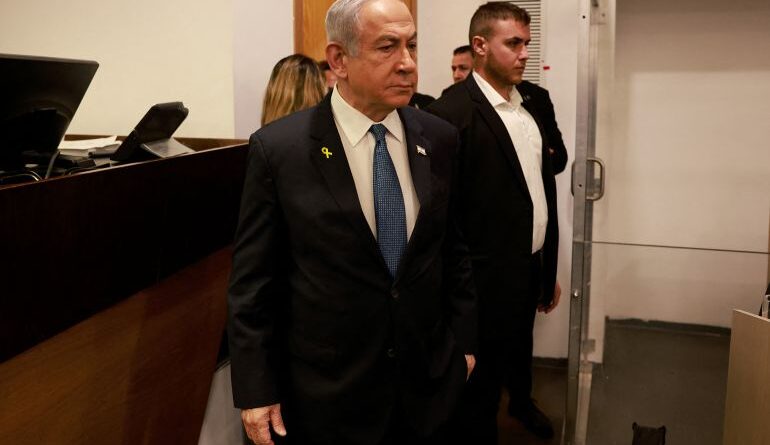
The consequences of the “al-Aqsa flood”… The Knesset dissolution project confuses Netanyahu’s calculations
Occupied Jerusalem Israel’s Knesset (Parliament) on Wednesday afternoon approved the dissolution bill in a preliminary hearing., The move reflects the depth of the political crisis in Israel’s ruling coalition, led by Prime Minister Benjamin Netanyahu, who is wanted by the International Criminal Court over the genocidal war in Gaza.
The bill was approved by 110 members of the Knesset without opposition, with the provision that the law would later be discussed in the relevant parliamentary committees and resubmitted to the Knesset General Assembly for approval in three readings to become law.
The law was voted on in Netanyahu’s absence, while Defense Minister Israel Katz, National Security Minister Itamar Ben Gvir and Haredi Shas leader Arie Deri were also absent.
The opposition supports the solution
The vote comes amid escalating disputes with ultra-Orthodox parties over the conscription law and mounting political pressure over the ongoing war and the October 7, 2023 results.
The head of the ruling coalition, Ofir Katz, coordinated with the leaders of the coalition parties to present a special bill to dissolve the Knesset, and the opposition blocs demanded to support the proposal in the next session in an attempt to topple the government and move towards early elections.
Although the next legislative elections were to be held on October 27, 2026, Netanyahu is trying, in Israel’s political estimation, to avoid the date, which coincides with the third anniversary of the “al-Aqsa flood”, which has become in the Israeli consciousness a symbol of the greatest security, intelligence and military fear in history. Accountable to him.
The proposed bill is private rather than governmental, meaning it needs to go through several legislative stages, starting with a preliminary reading, then a first reading, then a second and third reading, which could take weeks or months, depending on the extent of political maneuvering in the coalition and opposition.
The most outstanding scenarios
According to the text of the project, elections will be held no less than 90 days after the final approval of the dissolution of the Knesset, which opens the door to complex political scenarios:
First scenario: The success of the opposition, backed by angry Haredi parties, in passing the preliminary hearing would deal a direct political blow to Netanyahu and signal the breakdown of his ruling coalition. But even then, the coalition could still work to derail the project or slow its course at later stages, through negotiations, political pressure and last-minute deals with the Haredim.
Second scenario: It is the Knesset dissolution vote in the next stages that may temporarily favor Netanyahu, as it will give him more time to rebuild the coalition and contain the recruitment crisis. It will also allow him to continue to manage the war and security files from a position of strength, especially since he realizes that any election held now could turn into a direct referendum on his responsibility for the failure of October 7 and the consequences of the multi-front war.
Netanyahu’s obsessions
In this context, Antoine Shalhat, a scholar of Israeli affairs, says: “Netanyahu’s political concerns seem to be related to three central factors:
- The memory of October 7 and the “Al-Aqsa Flood” is still strongly present in Israeli society.
- Its inability to achieve a “decisive victory” in Gaza or on any open front.
- People’s confidence in his repeated slogan of “absolute victory” has plummeted.
Despite the political and media discourse that promotes military achievements, large sectors of Israel – Shalhat added to Al Jazeera Net – believe that the war has not achieved its declared goals, whether related to the elimination of the Hamas movement, the return of prisoners or the full restoration of deterrence, in light of the disarmament of Hezbollah and the failure of the war against Iran.
These conditions are believed to be unsuitable for Netanyahu to go to the ballot box, as he cannot present to the Israeli electorate results described as “strategic” in anything related to multi-front wars, which puts Netanyahu in a difficult equation, as he does not want to go to the polls with the image of an indefinite defeat, but at the same time exacerbates his domestic crisis.
Political assessments indicate that Netanyahu will not go to the polls unless he is guaranteed, or feels that there is a real possibility, of forming the next government. Therefore, Shalhat says that “he prefers to stop the scene between the threat of elections and the option of postponing them”, continuing to use the discourse of war and security to unite the right-wing camp behind him, and thus the election date is linked to the results of wars on multiple fronts.
Early elections?
The opposition realizes – as an Israeli researcher says – that any further delay could give Netanyahu an opportunity to rearrange his political and security cards, and is therefore seeking early elections before he manages to change public sentiment or achieve a political or military achievement that restores his image, since Netanyahu’s main goal is to stay in power.
Against these assessments and readings of the opposition, Shalhat adds, “a scenario emerges in which the existing government remains, but in a more fragile form,” through a temporary understanding with the Haredim that postpones the political explosion without ending its causes.
In this case, it is believed that Israel will practically enter a stage of chaos and open political exhaustion, accompanied by legislative paralysis and escalating internal divisions, at a time when the war still continues without a clear resolution, which Netanyahu seeks in order to remain in the prime minister’s seat and cancel the trial and corruption cases.
As for AFor the most dangerous scenarioIn Shalhat’s view, it includes using security escalation or widening military confrontations, deepening wars and declaring a general state of emergency to justify postponing elections or disrupting any political path that threatens Netanyahu’s survival. It’s a possibility that’s increasingly being talked about in Israeli political circles, especially in light of the connection Netanyahu has repeatedly drawn between his rule and what he describes as “protecting Israel’s security” and preventing the creation of a Palestinian state.
In conclusion, the battle to dissolve the Knesset, according to Shalhat, is more than just a partisan dispute or a coalition crisis, as it reflects a struggle over the shape of Israel’s political system in the post-October 7 phase and the future of Netanyahu himself, between an attempt to stay in power and a growing fear that reflects a long-term crisis in Israel.
Manipulation of elections
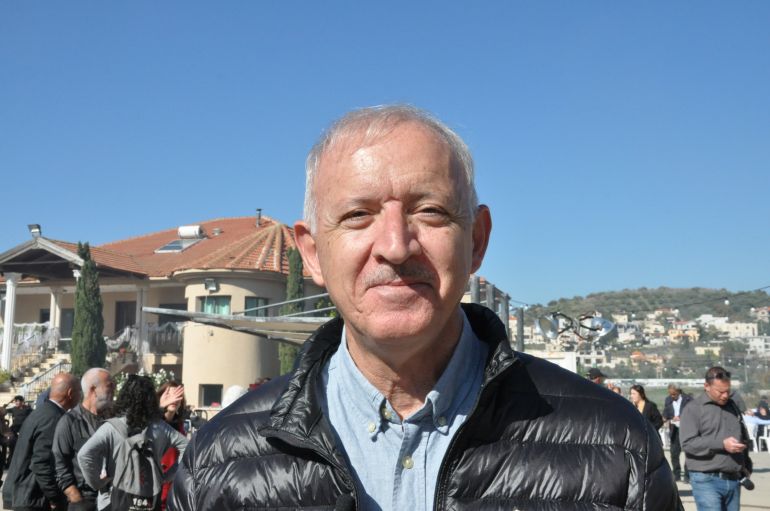
For his part, Amir Makhoul, a political analyst and researcher at the Takaddam Policy Center, believes that the upcoming Israeli elections are no longer just an internal issue for Israel, but have become a turning point that intersects the future of the entire Palestinian issue, amid the emergence of a Zionist right-wing project that seeks to resolve and resolve any conflict. State of Palestine.
When asked about Netanyahu’s options, Makhouli believes that the possibility of postponing the elections remains under the pretext of the security situation or expanding the scope of the war. He cites former Prime Minister Ehud Barak’s warnings about the possibility of a military confrontation that would allow Netanyahu to extend his political presence.
Makhoul suggested to Al Jazeera Net that Netanyahu, after resolving or achieving the failure of October 7, 2023, a multi-front war and “overwhelming victory”, began to link his personal future to the state and political system.
It is worth noting that at a press conference on May 21, 2025, Netanyahu refused to hold elections on the legal date of 2026 if the war continues, which increased the fear of tampering with the electoral process or the possibility of its postponement.
According to Makhouli, Netanyahu’s attempt to set an official date for the elections does not necessarily guarantee they will be held, but may be part of a strategy aimed at finalizing legislation that gives him greater ability to control the future of Israel’s political system.
He believes that Netanyahu gives his presence in power an ideological dimension based on a Zionist nationalist discourse that sees his political presence in Gaza and the West Bank as a guarantee for the creation of a Palestinian state.
The future of Netanyahu
As for Netanyahu’s personal future, Makhouli presents several possible scenarios.
First scenario: It involves staying in power and tying Israel’s fate to its political fate, which could open the door to the possibility of interfering with elections or postponing them on the pretext of security and war.
Second scenario: It is based on the possibility that he will step down because of his health, which has already started to cause succession conflicts in the Likud party.
He believes that Netanyahu may not really be concerned about the fate of Likud after him, recalling what happened after his 1999 election loss to Ehud Barak, when he left the party in collapse and stayed away from political life for years. However, he rules out a “temporary retirement” scenario, given his advanced age and the deep transformations society and politics are witnessing in Israel.
Makhouli concludes that Israel faces several open possibilities:
- Toppling the Netanyahu government in favor of a center-right government.
- Formation of the Zionist National Unity Government.
- Divisions persist, preventing either camp from forming a governing coalition.
In the latter case, the incumbent government would turn into a caretaker government, which he described as “most dangerous” because it would be virtually free of actual parliamentary oversight amid weak accountability mechanisms.