
South Korea considers ‘contributing’ to safety of navigation in Strait of Hormuz – BBC News Arabic
image source, Reuters
was published
Reading time: 4 minutes
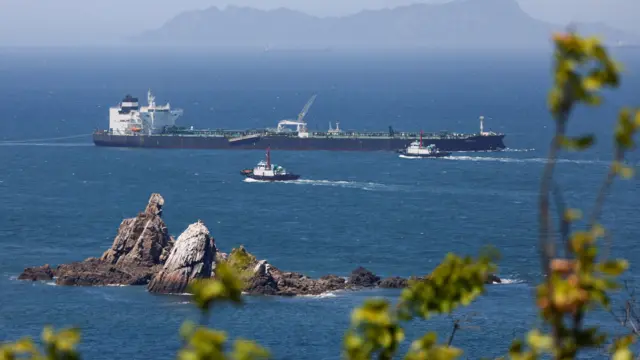
South Korea’s presidency announced Friday that Seoul is considering “contributing” to securing navigation in the Strait of Hormuz, which has witnessed rising tensions since the outbreak of war between the United States and Iran.
A presidential spokesman said that “any contribution related to the Strait of Hormuz can be managed within limits that do not affect South Korea’s military preparedness for the threats it is exposed to,” noting that the issue is still under review.
South Korean broadcaster JTBC confirmed on Thursday that the government was ready to deploy military resources to the Strait of Hormuz, but the defense and foreign ministries later said no decision had been made.
On August 16, US President Donald Trump announced the reduction of US participation in annual joint military exercises with South Korea, linking his decision to the then South Korean president’s refusal to participate in the US-Israeli war with Iran.
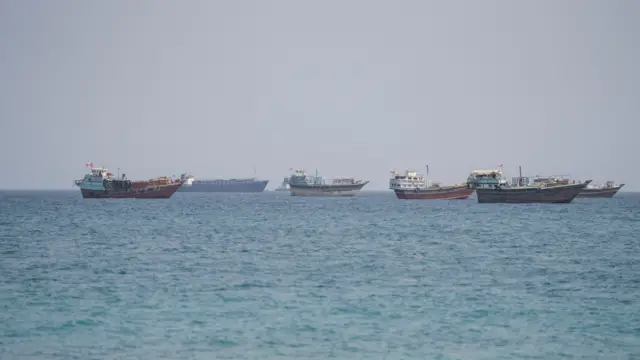
image source, Reuters
Preliminary shipping data on Friday showed four cargo ships transited the Strait of Hormuz on Thursday, down from nine the day before and below an average of about 15 ships over the past 10 days.
Kpler data showed the vessels included, as of (04:55 GMT), two medium-range tankers, a Kamsarmax tanker and a Handy-sized vessel.
The number of vessels crossing the water may vary as some vessels turn off their transponders while sailing.
The United States has been trying for months to persuade its allies to participate in military navigation through the Strait of Hormuz, through which a fifth of the world’s fuel consumed before the war passed, and Tehran targets ships that try to cross the strait without permission.
“US clampdown on Iran’s economy is tougher.”
Reuters, citing three senior Iranian sources, is reporting that the US campaign to strangle Iran’s economy by curbing oil exports and halting sanctions evasion has “become tougher on Tehran”.
The United States recently expanded the scope of secondary sanctions to countries that trade with Iran, seeking to deprive it of the use of the dollar to settle oil sales transactions and to finance its imports of vital goods and raw materials.
The sources added that “attempts in other countries to cut off access to Iran’s international financing networks have become a real and urgent threat,” after Tehran has long relied on it to keep its economy afloat.
The sources also explained that the financial pressures themselves are affecting Tehran’s efforts to circumvent the sanctions regime, as they leave it with less cash to pay the high premiums needed to avoid illegal sanctions, they said.
The Iranian Rial has fallen to unprecedented lows in the past few days.
One Iranian source said the country has only two months’ worth of gasoline, which must be imported despite domestic oil production due to limited refining capacity.
As for curbs on oil exports, a senior official source commented on Tehran’s claims that it has tens of millions of barrels stored in tankers outside the blockade zone that it can sell, saying “the new sanctions will push middlemen to back off or demand larger quantities.”
Kpler data showed that Iran’s crude oil supply fell to about 260,000 barrels per day this month from about 1.7 million barrels a day a year ago.
Iran’s President Masoud Pezeshkian says total trade has fallen by 25 to 35 percent, with imports more affected than exports. Pezeshkian is one of several senior officials who have warned in recent weeks that the situation in Iran is rapidly deteriorating.