

Published on 5/9/2026
|
Last update: 13:44 (Mecca time)
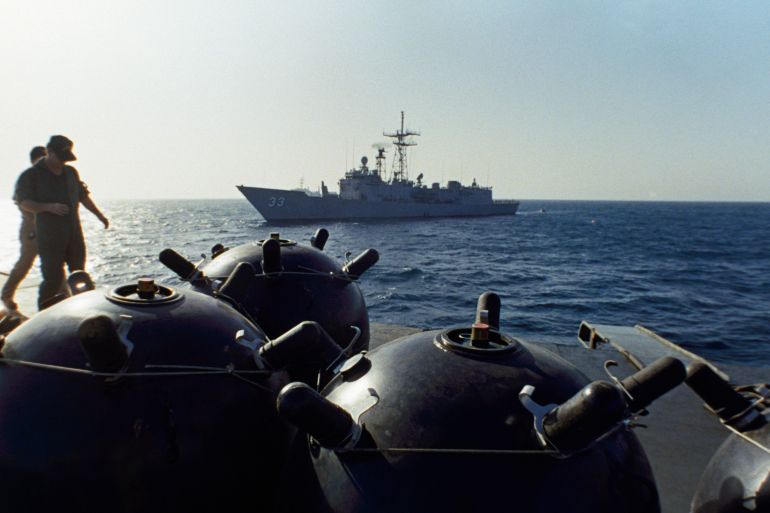
In a quiet and complex military operation that lasted for months, US forces managed to secure a safe navigation corridor for them in the strait, raising an important question: Has Tehran lost its most powerful pressure card in the strait? In an Al Jazeera report, Salam Khader tried to answer him.
According to the report, the United States does not aim to clear the entire area of the Strait of Hormuz from mines, but has applied a strategy to protect a specific shipping lane, which allows the Central Command to ensure the passage of commercial ships and tankers.
Regarding the details of the operation, the American colonel added that achieving this goal in the most dangerous strait in the world and in an active combat environment forced Washington to resort to operational-technical tactics that have never been fully tested.
Military expert Elias Hanna breaks the scene from inside the strait and digital technology, noting that the operation relied on the integration of human elements with unmanned systems, as a “mother ship” was used from which submarines and underwater drones were launched. These drones survey specific areas and collect data and images that are later analyzed in centers that rely on artificial intelligence to determine the types of mines and their dangers.
At a later stage – according to Hanna – underwater suicide planes were sent to destroy these mines, and all this was done under the umbrella of intensive protection from air and naval combat surveillance patrols, to ensure the safety of the implementing personnel.
Lark Island Junction
Tehran, on the other hand, stuck to its traditional narrative, and this was evident in the statements of Mehdi Aziz, an Iranian military expert, in which he confirmed his country’s full control of the strait and that it would not allow ships through without coordinating with its forces. Tehran has continued to assert that America’s capabilities are being eroded by the targeting of its bases and drones in the region.
But the developments on the ground that followed Washington’s announcement of the completion of the demining of Hormuz clashed with the Iranian narrative. Days after the announcement, US forces targeted two Iranian platforms on Lark Island in the Strait, confirming that the Revolutionary Guards were preparing to plant new mines on them.
The field development raised a question that deconstructed the Iranian narrative: Why is Iran forced to deploy new mines if it claims its control is complete and that the old mines were not removed in the first place?
Corrosion of Iranian pressure card
The report answers this important question by saying that Washington’s success in removing the mines and securing the shipping lane means – technically and practically – the erosion of one of the most important pressure cards in Tehran’s hands, which is the ability to control and directly influence navigational traffic in the strait.
Military experts confirm that Iran’s capabilities in this context are declining over time, and this decline is evident in Iran’s shift in tactics to attempt to remotely deploy missiles from Lark Island (at a distance of 75 kilometers), reflecting a reduction in the ability to disrupt traffic.
Iran’s appeal to target neighboring countries and attempt to strike ships with drones has also been interpreted as a reaction that indicates “desperation” to try to extend control over its only trump card that eludes it.
