

image source, Getty Images
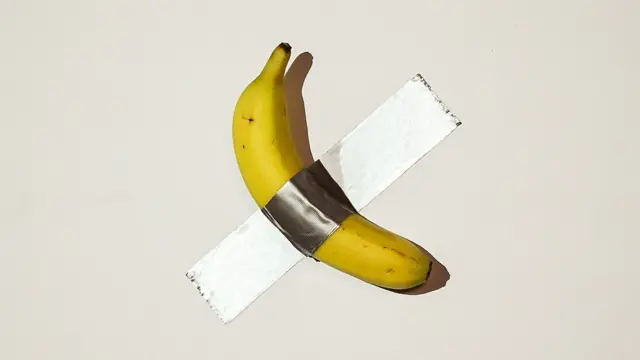
When Maurizio Cattelani taped a banana to a wall with silver tape and called it a work of art, he sparked one of the biggest cultural debates of recent years. But the story behind “The Comedian” reveals a story that continues to debate the centuries-old use of trauma in art.
Leonardo DiCaprio, Michael Bay and Travis Scott were among the celebrities who attended a special VIP opening at Art Basel Miami Beach on December 4, 2019, the day Comedian Bananas debuted.
That morning, a huge price surrounded everyone in the art gallery, which included many expensive works of art.
A Helen Frankenthaler painting sold for around $1.65 million (equivalent to $2.16 million in today’s value), while a William de Kooning painting was offered for $8 million (equivalent to $10.5 million today).
For Sara Casconi, a reporter for Artnet News, the main attraction was Maurizio Cattelani’s latest work: a banana taped to the wall.
Later that day, Cascone wrote his first detailed news report on it, informing readers that two copies of the fruit-themed work had sold for $120,000.
A few days later, the third and last copy was sold for $150,000. Each buyer received a certificate declaring it to be an original work of art and instructions on how to display the work, including changing the banana regularly.
Throughout the duration of Art Basel Miami Beach, hundreds of visitors took photos of the works and posted their reactions online.
Within days of its release, the work of the “comedian” became a widespread phenomenon, a source of mockery, surprise and laughter, and even spawned new types of jokes and imitations that revolved around ribbons and bananas.
In newspapers, as well as blogs and YouTube clips, debate erupted over the work’s aesthetic and intellectual value, and ironically, the most “comedian” haters were happy to write about it.
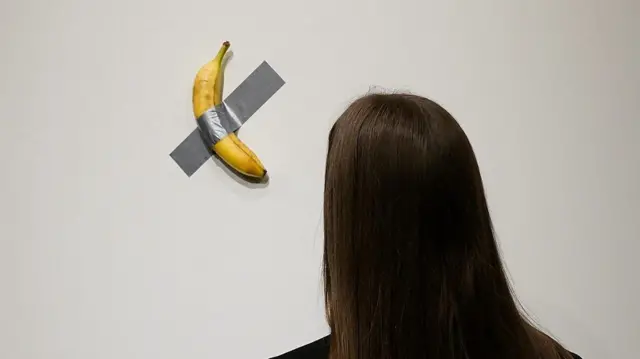
image source, Getty Images
If Cattelani’s goal was to draw attention to himself, the work was an absolute success. Few contemporary works of fiction have achieved the success of The Comedian within hours of its release.
The greatest achievement of this work was the popularity that crossed the walls of the art world, leading to international fame. This popularity helped to raise the market value of the work to a huge level.
In 2024, the second of three copies of “Comedian” was sold at auction for $6.24 million.
This once again drew the ire of opinion writers who attacked what they saw as a waste of large sums of money on Cattelan’s work.
However, the irony of “The Comedian” is that everything that shocked him had already happened.
When the layers are peeled back from this work of art, we discover the tactics of a seasoned troublemaker and a devoted student of the art of negative fame that stirs controversy.
400 years of satirical tradition
Provocation is one of the strategies of the artist Maurizio Cattelani.
He seems to have realized a long time ago that skill or intelligence alone does not guarantee success in the highly competitive creative industries. But generating controversy also attracts attention, which means a larger audience and more opportunities for artistic commissions.
Several events in the history of art proved the validity of this idea.
For more than 400 years, Caravaggio’s contemporaries have been divided over the unprecedented levels of violence, sexual tension and darkness in his religious paintings, factors that contributed to his international fame.
As for nineteenth-century artists who are highly regarded today, such as JMW Turner, John Constable, Manet, Monet, Gaugen, Whistler, and Cézanne, they invented new methods of creating art that drew ridicule from critics.
By the turn of the twentieth century, artistic innovation and disdain for the mainstream were increasingly seen as two sides of the same coin.
Some contemporary visual artists, some musicians, authors, and filmmakers have seen popular rejection of works of art as a necessary partner in all original, experimental work.
Others have confused a lack of critical acceptance with genius, not realizing that it might be a warning sign of a lack of talent.
However, both teams realized the unparalleled power it had in self-promotion.
Therefore, Maurizio Cattelani has always firmly assumed the role of a provocateur in the art world, doing everything to cause trouble and provocation.
But Cattelan’s controversy differs from his predecessors in that it is not about artistic process or artistic theory.
His most famous and controversial works, such as “La Nona Ora” in 1999, which depicts Pope John Paul II being hit by a meteorite, and “Ma” in 2001, which depicts a schoolgirl with the face of Adolf Hitler praying, rely on familiar themes that even non-gallers can recognize.
Neither of the two works can be considered elitist or difficult to understand. They also use humor in their art, use sarcasm to “attack the powerful” and question powerful people with humor.
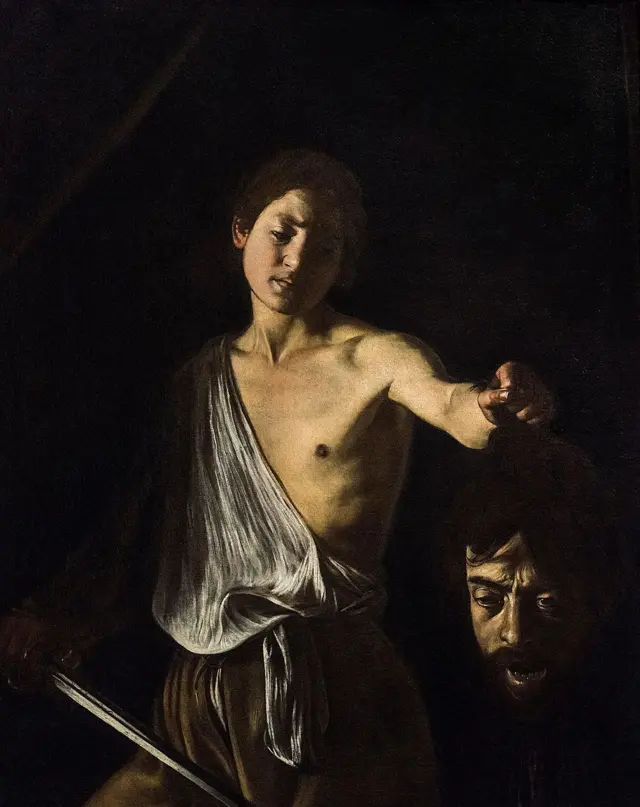
image source, flag
In doing so, Cattelan follows in the footsteps of an art historical tradition based on satire, in the footsteps of pioneers such as James Gillray (1756-1815) and Honoré Daumier (1808-1878), who targeted established institutions to question and mock their authority.
Cattelan addressed his work (A Perfect Day), completed in 1999, to the art market itself.
Instead of mounting the work on the wall, the Italian artist taped his commercial agent, Massimo De Carlo, who is responsible for selling and marketing his work, to a wall in Milan.
The commercial agent himself became the main subject of the work.
As for the “comedian”, who came out about 20 years later, he used the same silver ribbon.
This choice was a signal to all who have followed Cattelani’s career that “Comedian”, like “Great Day”, aims to mock the values of art world events such as “Art Basel Miami Beach”, in the spirit of a satirical comedian who makes a crude joke directed at the medium itself.
“The shock of an old acquaintance”
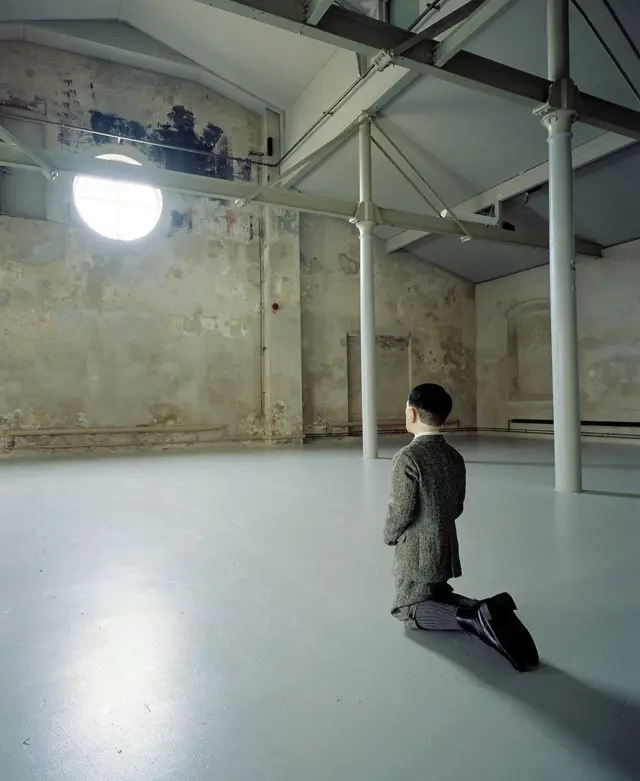
image source, Attilio Maranzano
So why bananas?
In addition to its metaphorical form and as a familiar tool in physical comedy, many artists before Catellani, including Giorgio de Chirico, Andy Warhol, and the Guerrilla Girls, depicted the banana in their work.
It’s comfortingly familiar, on many levels.
The idea of photographing an edible item as a work of art is comfortable and familiar in itself. It has a long history as still life, which has remained an established artistic approach since the sixteenth century, even if traditionally considered inferior.
Works of this type, such as Jacopo de’Barbari’s Still Life with Partridge and Mittens, one of the earliest post-classical still lifes, were meant to make viewers think about the short lives of natural creatures and how art allows them to live on after death.
Despite being more than 500 years apart, De Barbari and Cattelani’s works share essentially the same artistic approach: hanging objects on the wall to make the viewer think, which is why we describe Cattelani’s trick as “the shock of the old”.
The only difference is that the comedian is showing a real banana (which can and does rot in about seven days) instead of a fictional one.
Here, too, tradition preceded Cattelan. The idea of using “ready-mades” – objects in the real world that are not created by the artist, but displayed as art – dates back more than a hundred years, when the comedian appeared.
The most famous pioneer of this method was Marcel Duchamp, who in the 1910s depicted everyday objects such as bottle holders, bicycle wheels and urinals as works of art.
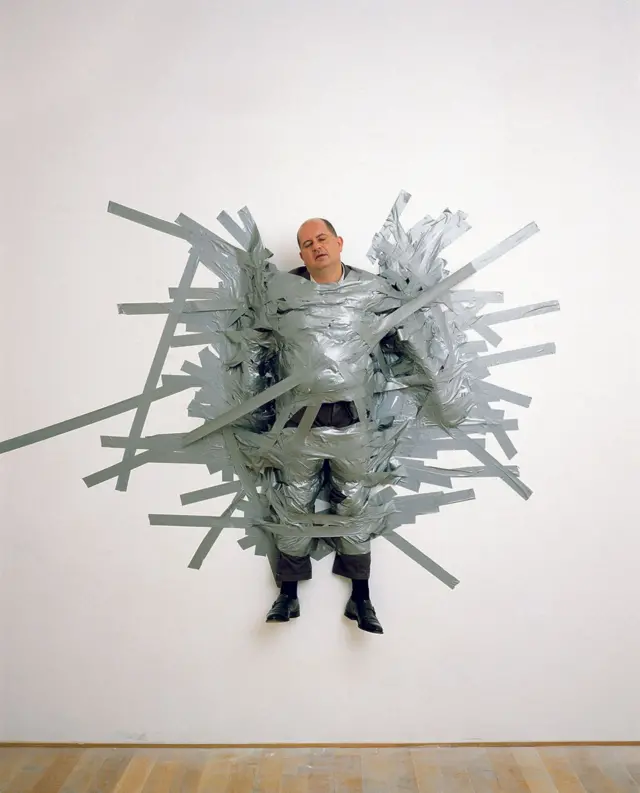
image source, Photo by Armin Linke
But even Duchamp’s aim to question the basic principles of art as an independent category, despite the radical nature of his early twentieth-century proposal, was in turn part of a long debate dating back to ancient Greek philosophy, most famously Plato (428-347 BC).
It is likely that the use of the concept of the “finished product” is a somewhat traditional gesture on Cattelani’s part, and it is an authentic, traditional approach to art history.
The uproar caused by the “comedian” was expected.
At the age of seventy-one, the wily Maurizio had become quite the provocateur, capable of causing controversy and consternation using bananas, walls and tape.
But beneath the surface are other essential ingredients: confrontation, irony, simplicity, pantomime, and the “off the shelf” concept.
While the exorbitant prices of “The Comedian” may irritate some people, it was not the most expensive work sold in Miami Beach in 2019, nor was it the most expensive “finished” work ever sold at auction.
The simple truth about the comedian’s work is that there is nothing radical about it.
