
The Black Sea crisis also reaches Arab bakeries
Bread is one of the most sensitive components of food security in the Arab world, the world’s largest wheat-importing region, making disruptions at Black Sea ports more than just a distant trade crisis. Every increase in the cost of imported wheat is passed on to consumers either through higher prices or through larger support bills to governments.
The sensitivity of the crisis increases in 2026 as Russia and Ukraine, two of the region’s most prominent wheat suppliers, simultaneously experience disruptions in export capacity, at a time when Europe’s ability to play the role of an alternative supplier has been reduced due to the weakness of its crop due to heat and drought.
Also read
2 item listEnd of list
Egypt, the world’s largest wheat importer, clearly shows the extent of Arab exposure, as more than 82% of its wheat imports in the first half of 2026 came from Russia and Ukraine, according to Standard & Poor’s Global Commodity Insights.
More expensive wheat and bigger taxes
The pressure first showed in prices as Chicago wheat futures hit a three-year high before falling to around $7.79 a bushel in late August.
According to the International Food Policy Research Institute, wheat prices are about 25% higher than in January 2026, the highest level in two years.
Russian wheat with a protein content of 12.5% was offered at around $298.5 per ton on August 26, compared with $282.6 in early July, according to Ukr Agro Consult, a Ukrainian company specializing in analyzing agricultural markets.
For countries that import millions of tons of Russian wheat annually, an increase in this volume means a direct increase in import taxes, even if the amount purchased does not change.
Here, the most sensitive equation appears in the Arab economy, as households receive the increase due to rising bread and food prices, or governments receive part of it through increased support.
Egypt – the world’s largest importer of wheat – reflects the scale of this pressure, as a ration card system provides subsidized bread to around 70 million people, according to media reports.
In June 2024, the Egyptian government increased the price of subsidized local bread from 5 piastres (10% of US cents, 100 of which equal one dollar) to 20 piastres (0.39 cents). This is the first increase since 1989. The Institute for International Food Policy Research attributed high import prices and weak decision making at the time. pound.
Cairo is already trying to limit the pass-through of pressure to consumers, as media reports say Egyptian authorities have imposed price controls on non-subsidized bread since March, and in mid-August expanded the cash assistance program to include more food items.
The Libyan Center for Strategic Studies reports that Arab countries collectively import about 60% of their grain needs from Russia and Ukraine, and include Egypt, Lebanon, Yemen and Tunisia.
Two major suppliers are under pressure
The main problem is that the supply crisis hits Russia and Ukraine at the same time.
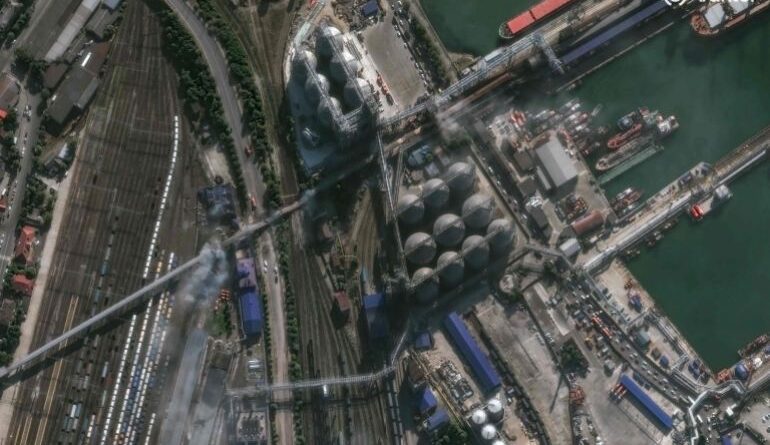
According to Bloomberg, Russia’s strikes on Odesa and other Ukrainian ports prompted Kiev to more than halve expectations for Ukrainian agricultural exports.
On the other hand, the Russian “Moscow Times” website reported that Ukrainian attacks on Russian ports and ships have caused about 90% of Russian grain export capacity through the Black Sea to be disabled, and major facilities in Novorossiysk and Taman have been shut down.
Ship traffic has also become more expensive and dangerous with higher risks for commercial shipping and insurance companies, and land and river alternatives cannot fully compensate for port capacity.
Standard & Poor’s Global notes that Ukrainian exporters dependent on the Danube River also face delays and capacity constraints.
The result for Arab buyers is that one of the world’s closest and cheapest sources of wheat has become less stable and more expensive at the same time.
There are alternatives, but they are more expensive
Compensating for Black Sea wheat is not so easy, as supply disruptions from Russia and Ukraine coincide with yield cuts from a number of the world’s major producers.
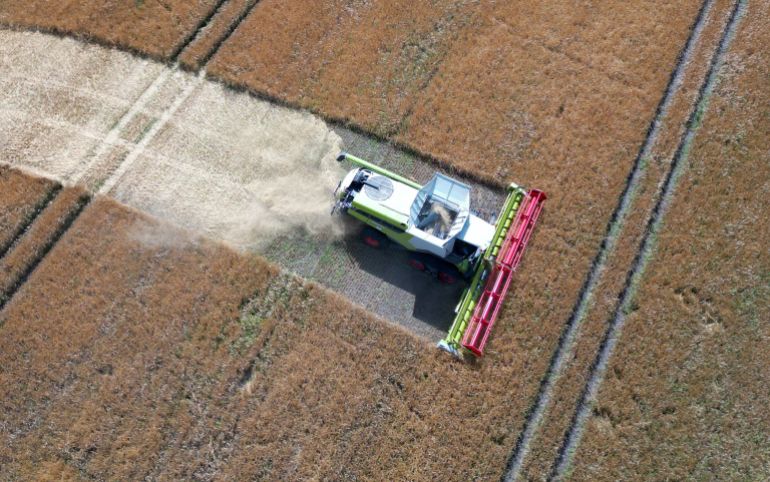
The International Food Policy Research Institute points to widespread drought in the Northern Hemisphere as an additional factor driving up wheat prices.
The US Department of Agriculture expects the combined production of Russia and Ukraine to decrease by 11% in the 2026-2027 season, while their exports will decrease by 7%.
In Europe, European grains association COSERAL cut soft wheat production in the EU and Britain to 140.8 million tonnes due to summer heat and drought, while the US Department of Agriculture cut estimates of global end-of-season wheat stocks to 272.8 million tonnes.
Canada’s wheat harvest is also expected to decline by about 13%.
As export supplies shrink in several markets simultaneously, competition among importers for available quantities intensifies, limiting the ability of alternative suppliers to alleviate price pressures.
Reuters quoted traders as saying on August 30 that two ships were scheduled to move about 60,000 tonnes of French wheat to Egypt from the port of La Balise on France’s west coast, indicating a growing priority to secure supplies, even with the rising cost of alternatives.
Standard & Poor’s Global notes that buying wheat from France, Romania, Bulgaria or Australia generally means longer journeys and higher shipping costs.
Egypt is also moving towards long-term wheat purchase contracts, as local Egyptian sources report that Emirati company Al Dahra and an Egyptian government buyer have signed a 5-year deal to supply wheat worth US$500 million.
These steps help reduce the risks of disruption, but they do not reduce costs. Rather, they shift the crisis from the availability of wheat to its price and its impact on imports and the budget.
No agreement will restore stability
In the 2022 crisis, the Black Sea Grain Initiative, brokered by the UN and Turkey, contributed to the return of a large part of the flows to the market, which helped to calm prices, but the current crisis does not yet have a similar mechanism.
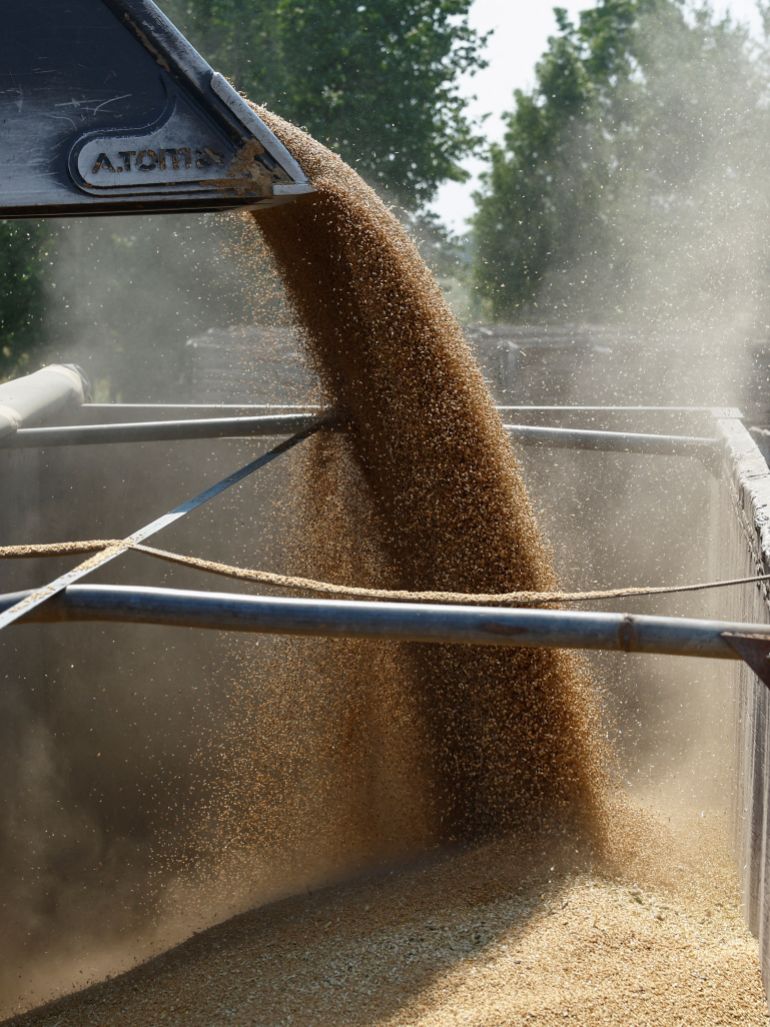
According to the Moscow Times, Russia sees no reason to revive the grain corridor amid a dispute over food and fertilizer export obligations.
Turkey, on the other hand, is trying to reopen the path to negotiations, as Reuters quoted Turkish Foreign Minister Hakan Fidan as saying that Ankara has prepared a plan to ensure the safe passage of grain through the Black Sea and is in contact with Russia and Ukraine.
But the details of the plan and the timetable for its implementation are still unclear, meaning that logistical and insurance risks will remain high unless there are real guarantees for the movement of ships.
Is the Arab table facing a crisis?
So far, the data do not point to a full-scale food security crisis, but they do show growing pressure on imports and support costs.
Standard & Poor’s Global Commodity Insights says Egypt has enough wheat to cover its needs until next February, while major buyers can wait for southern hemisphere crops from Australia and Argentina to hit the market, and that margin is what separates a price crisis from a supply crisis.
But continued unrest in the Black Sea, along with weak European harvests, high shipping costs and the absence of a safe navigation agreement, keep the wheat tax under pressure.
The economic options for Arab governments are limited: either pay more for imports, increase spending on subsidies, or pass some of the costs on to consumers.