


image source, Getty Images
was published
Reading time: 6 minutes
In today’s press release, we look at analysis that questions whether Donald Trump’s policies, from the war with Iran and the economic standoff with Canada to his support for data centers, are leading Republicans to lose the midterm elections. We pause at a report monitoring the deaths of women and children in Afghanistan, which it says are linked to cuts in American aid, before reading about a global experiment testing the possibility of using a preventive Alzheimer’s drug before memory problems appear.
We begin with Jonathan Friedland’s article in The Guardian, where he wonders if US President Donald Trump is acting like he wants the Republican Party to lose in the upcoming midterm elections, or if he doesn’t care about the possibility of the party losing its majority in Congress.
Friedland says the suggestion doesn’t seem like a completely crazy theory, because there’s reason to believe Trump is either indifferent to defeating Republicans in November, or secretly wants to.
According to the author, Trump’s series of decisions is closer to “deliberate harm”, especially the war he has chosen against Iran, which has increased fuel and food prices and increased the cost of US government borrowing, which can be reflected in the interest of credit cards and mortgages along with voters who go to the polls.
He adds that the results weaken the ruling party, which came to power on the condition of reducing inflation, and also threaten the disaffected MAGA (Make America Great Again) base, which saw Trump as a president who would end the endless wars in the Middle East.
However, according to Friedland, Iran may not be Trump’s most electorally disastrous foreign adventure. The economic standoff that Trump has sparked with Canada has prompted Ottawa to retaliate with similar measures, hitting states such as Michigan, Ohio, Maine, Texas and Iowa, which are witnessing crucial races for Senate seats.
He notes that Republican candidates are now being asked to explain the loss of a market that was essential to their states’ exports.
The author dwells on Trump’s support for data centers, despite widespread opposition to them over their energy and water use, environmental impact, and the future of artificial intelligence and jobs.
He believes that the president not only contradicted the position of the majority of voters, but also insulted those communities who reject these centers as remaining “backward and poor”.

image source, Getty Images
Friedland says Trump’s disregard for broader trends in public opinion extends to his personal projects, such as demolishing the East Wing of the White House to build a ballroom and signing the dollar, which the writer believes are moves most Americans oppose.
Friedland explains Trump’s indifference to the possibility of a Republican loss by saying that the president is not afraid of congressional investigations and subpoenas, because he believes that the legislature has no practical means to compel him to comply, and that his Republican allies in the Senate will not vote to impeach him, regardless of the allegations against him.
The writer adds that all of the above may explain Trump’s lack of fear of a Republican defeat in November, but it does not explain why he might actively seek it.
Here, the writer uses what Maggie Haberman and Jonathan Swann’s book Regime Change says: Trump can use any big Republican loss as evidence that the party can’t win when his name isn’t on the ballot.
Friedland notes that Trump’s narcissism may lead him to view his party’s defeat as evidence that Republicans can’t win without him, rather than a rejection of his policies.
How are women and children paying the price for US aid cuts in Afghanistan?
and the Independent newspaper and a report on the effects of cuts in US aid to women, children and infants in Afghanistan.
The paper begins with the story of a newborn baby who arrived at the Nangarhar Regional Hospital suffering from sepsis and suffocation during delivery. He needed a continuous supply of oxygen, but the station supplying oxygen to 50 children’s beds stopped working after American aid was frozen, and the child died.
The paper is based on research by Refugees International, which linked at least 161 deaths in Afghanistan over the past 18 months to the unrest that followed aid cuts, and half of the victims were women who died during pregnancy or childbirth, in addition to 30 deaths in newborns and fetuses.

image source, Getty Images
According to the article, the organization’s researcher Priyali Deepti Suri interviewed about 550 health sector workers, including a large number of midwives (those who help women during pregnancy, childbirth and the postpartum period), and recorded stories of health centers closing and maintaining artificial respirators, incubators and oxygen.
Suri says the death was “100 percent preventable,” warning that withholding money in hospitals is causing women and children to die.
The Independent notes that the Trump administration has abruptly ended more than $1.7 billion in aid to Afghanistan as part of its efforts to dismantle the foreign aid program and close the U.S. Agency for International Development.
According to Afghanistan’s Ministry of Public Health, the interruption of safe delivery services at US-backed centers affected about 350 births per month. The newspaper also quoted Save the Children as saying that one in ten children in Afghanistan is severely malnourished amid the closure of nearly 600 health facilities.
Sur demanded the restoration of American funding for the health sector and the return of midwives to work.
In response to an earlier challenge by Elon Musk — who last year was tasked with leading Trump’s campaign to cut spending and played a key role in efforts to dismantle the United States Agency for International Development — for critics of the cuts to mention the name of a person who died because of them, the researcher recalled the story of a pregnant woman who died while being taken to a hospital. The US State Department did not comment on the newspaper’s report.
Will an Alzheimer’s drug become as protective as cholesterol drugs?
and the Daily Mail, which reported on a global medical experiment that will test the possibility of using an Alzheimer’s drug before the symptoms of the disease appear.
The paper’s health editor Sean Waller reports that people without memory problems will receive a drug known as troninimab to see if it can prevent Alzheimer’s in people who are most susceptible to the infection.
Screening of potential participants will start in Britain from Monday, and more than 15 UK centers will take part in the global trial called ‘Preventrone’. The Surrey and Borders Partnership, linked to the National Health Service, will be the first European center to launch the trial and will also lead the recruitment of participants in the UK.
According to the Daily Mail, the study aims to involve around 1,600 people from different countries, between the ages of 55 and 80, and will run for a period of 4 to 6 years. Applicants will first undergo memory tests to ensure they have no discernible cognitive problems before being determined eligible to participate.
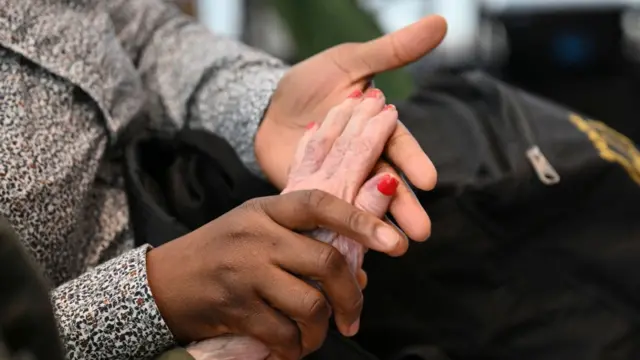
image source, Getty Images
The paper explains that the drug trontinimab, developed by the Swiss pharmaceutical company Roche, is designed to reach the brain more effectively than currently available Alzheimer’s drugs. The drug targets amyloid protein, which is a sticky protein that accumulates in the brain and is linked to the development of the disease.
Previous studies in people with Alzheimer’s disease have shown that the treatment can remove toxic deposits from the brain after just three months of dosing, but the new experiment looks at another question, whether it’s possible to start treatment before symptoms appear.
The newspaper believes that the success of the experiment could bring about a fundamental change in the treatment of the disease, because in the future it will be possible to prescribe preventive drugs for people who are most vulnerable to infections in middle age.
The trial comes at a time when around one million people in the UK are living with dementia, and expectations suggest that number will rise to 1.4 million by 2040. Dementia, which the paper says is Britain’s biggest cause of death, kills around 76,000 people every year.
