

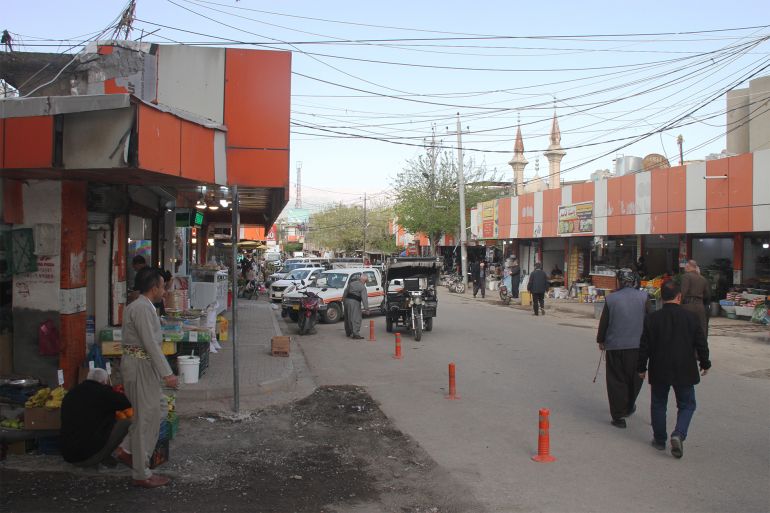
It is SuleimaniAfter a difficult battle that lasted for years, the Iraqi parliament completed the first reading of the bill for the city of Halabja, making it the country’s 19th governorate and the fourth in the Kurdistan Region, along with the governorates of Erbil, Sulaimani and Dohuk.
Although the project to transform the city into a governorship still needs parliamentary consensus and a vote, which may take time, if it is implemented, the new governor will witness an escalation of political, economic and electoral competition for privileges at the administration, security, executive and financial budget levels in the future.
Kurdish Halabja currently belongs to Sulaymaniyah Governorate and is located in its far east, about 240 kilometers northeast of the capital Baghdad and only 14 kilometers from the Iranian border. The city is located at the foot of the mountainous Horaman region that straddles the Iran-Iraq border, and most of the city’s Kurds speak the Sorani dialect.
Halabja was infamous for the tragic chemical weapons bombing in the final months of the Iran-Iraq War (1980-1988), which killed more than 5,000 of the city’s residents, most of them elderly, women and children, and injured 7-10,000 others. Thousands of civilians from Halabja also died from health complications, diseases and congenital deformities in the year following the bombing.
A new old decision
On March 13, the Council of Ministers decided to approve a bill creating the Halabja governorate, following a breakdown in political relations between Baghdad and Erbil.
The decision by the Council of Ministers was preceded by a decision by the Kurdistan government in June 2013, and then a vote by the regional parliament in February 2015 to officially transform Halabja into a governorate in the region, which annexed the districts of Halabja, Sharbazir, Penguin and Sayed Sadiq, after all of them were administratively linked. with gonorrhoea.
The first parliamentary hearing, on April 2, on the transformation of Halabja into a governorate, caused the indignation of representatives of many political blocs and parties, demanding the transformation of some districts into independent governorates, for example, Tal Afar District – the largest district of the country – in Nineveh Governorate (North), Tuz Khurmatu District (Alnormatu District in Salaver). in Basra Governorate (South) and others.
These developments come at a time when Iraq’s population is experiencing a noticeable increase, as statistics from the Ministry of Planning confirm that the population has exceeded 42 million people, which may reflect the real need for new governorates, according to observers.
Turkmen MP Gharib Askar submitted – according to an official document – a parliamentary request accompanied by the signatures of more than 30 representatives, which included an appeal to the Speaker of the Council last April 2 to raise the second item on the agenda of the 17th session and amend it to add an item calling for independent governors of Jurmatyu and Talfari in Tuz transfer.
Crisis in Baghdad and Erbil
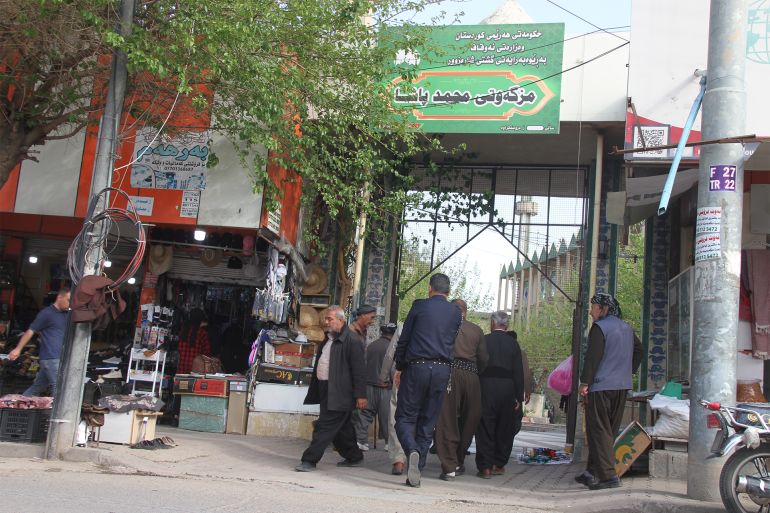
The impact of the political crisis between Baghdad and Erbil was not lost on the decision to make Halabji governor, according to his deputy, Kawa Ali Karim, who said the city would share in all financial allocations, meaning he would be in the same position as the other governorates if the final vote in Baghdad is taken to make him governor.
Although the Kurdistan government considers Halabja a governorate in its own right, approval by the federal government would mean allocating a percentage of the general budget to the governorate, like the rest of the other governorates, which could in principle mean that the percentage of the budget allocated to the Kurdistan Region would be higher than previously decided, according to Karim.
Karim also confirms that Halabja will have an independent share of medicines and petroleum products that the federal government sends to the governors of the region, in addition to investment projects in various fields, indicating that the population of Halabja is currently more than 135 thousand people, and after it is transformed into a governorate, it will be joined by administrative districts:
Speaking to Al Jazeera Net, Karim listed the advantages that Halabja will have as governor, including that the decision to create will open the door to the existence of a number of sovereign government departments linked to federal ministries, such as interior, trade and others, in addition to allocating government jobs to them, which will help pave the way for the city. The clause will be included in the Governor’s Act 35 of 2013, which includes the inclusion of privileges for victims of the regime of former President Saddam Hussein. and material and moral compensation.
At the end of the speech, Karim did not hide his expectation that Halabja – after being officially transformed into a governor – will witness an intense, unusual political competition in the upcoming elections, after being allocated several electoral mandates and as a governor, not as a district.
Political and economic dimensions
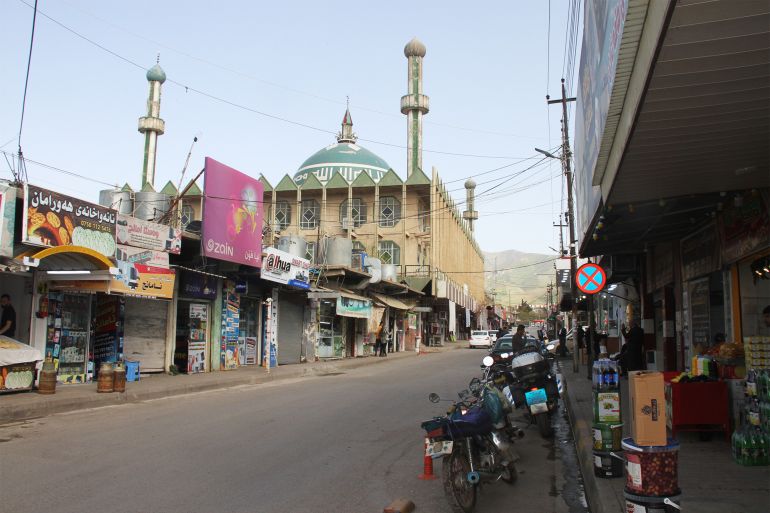
Economically, Halabja is located close to the Iraq-Iran border and is considered a strategic point for trade between the two countries, possessing several border ports, including Shushmi-Tuila and Bashta ports.
Kurdish economist Karwan Hama Salih says the decision to make Halabja governor came as a psychological and moral compensation for the injustice, exclusion and marginalization he has suffered in recent decades, in various aspects and under previous regimes.
Speaking to Al Jazeera Net, he revealed that every year around 200 families migrate from the city to other regions due to widespread unemployment, lack of jobs, investment and industrial projects and declining economic levels amid a lack of government support and declining investment, agricultural and industrial opportunities.
Saleh warns of the continued damage of immigration to Halabja, especially the disruption it will cause to the economic environment, in addition to the demographic change that threatens Halabja and other cities, he said.
For his part, Kufa University political science professor Asad Kazem Al-Shabib does not hide that the decision to make Halabja governorate has political and economic dimensions, which will benefit the city’s population and the entire Kurdistan region, he said.
He added: “When Halabja is governor, it means increasing the political representation of the city’s population in the regional government and parliament, and in the Baghdad parliament and federal government. The people will have independent representation in the governor’s administration away from Suleimaniyah’s mother governor.”
Speaking to Al Jazeera Net, Al-Shabib believes that making Halabja governorate will bring great economic benefits and income, which will be represented by increased financial revenues for the city. It will also contribute to the development of its infrastructure, the creation of new investment projects and the development of the economic and urban sectors of the governorate, which will make it equal in rights and duties to any governor of the Kurdistan Region or the whole of Iraq.
