


Published on 5/9/2026
|
Last update: 21:39 (Mecca time)
More than six months have passed since America’s standoff with Iran has turned into the most violent ongoing air campaign since the invasion of Iraq, affecting navigation, energy markets and supply chains, killing and injuring thousands across the region. As the midterm elections approach, the question that the Trump administration has sought to put off from the start is becoming increasingly pressing: When will the war Americans have been told won’t last long end?
But US Vice President J.D. Vance chose to resist describing it as a war at all when asked about it this week. He said, “I wouldn’t describe what’s going on as a war,” adding that “the actual fighting is currently on hold,” according to Newsweek.
Also read
2 item listEnd of list
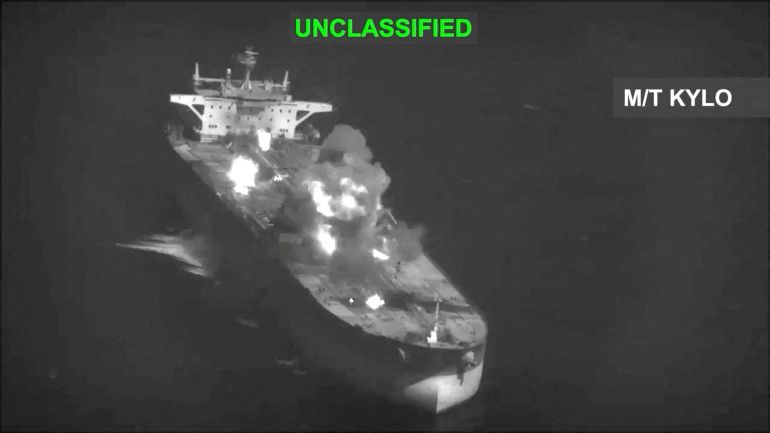
Newsweek captures the irony by directly asking, “If this isn’t war, then what is?” More than 10,000 sorties and 13,500 strikes have taken place in the first 38 days of major operations, with more than 50,000 US troops still deployed in the region, according to figures from the US military. 18 American soldiers were killed and more than 750 wounded in the conflict, with thousands killed in Iran, Lebanon, Israel and the Gulf states.
A war without a name
David Avery, the author of the report, sees in Vance’s words the fact that the Kremlin handled the invasion of Ukraine when Vladimir Putin refused to call it a war and insisted on calling it a “special military operation”. The writer does not compare the motives and circumstances of the two wars, as much as he points out the similarities in the efforts of the authorities to control the image of the conflict in the public, starting with the name.
Vance points to pauses in the fighting and argues that the United States is not fighting a sustained war. He said the main combat operations ended months ago and described the latest escalation as a new limited round. But he did not specify a date for the end of the standoff, asking the Iranians: “When will they stop firing on ships?”
At the same time, Washington continues to block Iran’s ports and exert economic pressure, leaving open the option of military strikes if its interests or shipping traffic are threatened. Therefore, Newsweek believes that dividing the conflict into separate rounds allows the administration to portray it as a series of limited responses, rather than as an open American war with no end date.
An annoying word
The American magazine Time notes that reservations about the word “war” are not new in American politics. Harry Truman called the intervention in Korea a “police act,” Bill Clinton avoided the word during the NATO campaign in Kosovo, and Barack Obama insisted that the 2011 intervention in Libya did not constitute a war requiring congressional authorization.
But Trump was more candid about why he was wary of the word. Last March, he told House Republicans he didn’t want to use the word “war” because that could open the door to requiring congressional approval, preferring to talk about a “military operation.”
This sensitivity is related to the War Powers Act, which generally requires congressional approval within 60 days of US forces entering or ceasing to engage in hostilities.
Newsweek notes that the administration previously considered a cease-fire to end the previous round of fighting, an explanation that suggests each conflict begins a new phase, rather than treating the entire six months as one continuous war.
Here the magazine sees another reason to avoid the word. Trump has built an essential part of his political identity on his promise to end “eternal wars,” and the word “war” raises questions that are hard to put aside: What is the goal? who will win How much will be the loss? And when does it end? Was it all worth it?
“simple things”
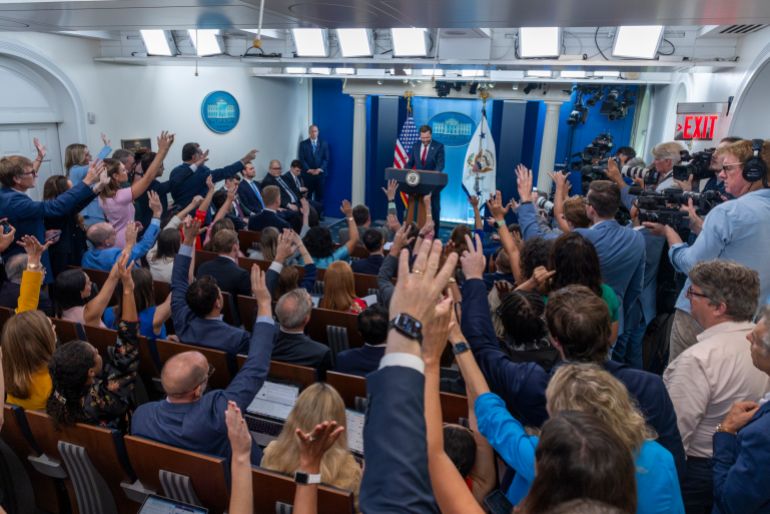
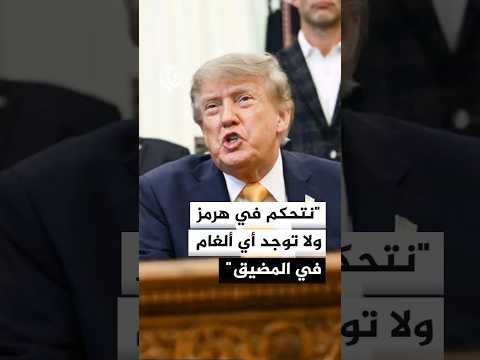
A day after Vance’s remarks, Trump, for his part, chose to downplay the controversy, but in more direct terms. Bloomberg cited it as “small potatoes” (meaning it’s a simple or trivial matter) for the United States, adding, “I call it a military conflict… it’s not a big deal,” noting that American strikes are sporadic.
The president then compared the killing of 18 US soldiers to heavier losses in Vietnam and Afghanistan, before describing what his administration had achieved as “remarkable” and saying the US had “effectively taken control of Iran”.
Bloomberg assesses the more complex political reality of this controversy. Opinion polls give Trump negative ratings for his handling of the war, and rising energy prices have increased pressure on Republicans ahead of an election that could threaten their control of Congress.
While Newsweek points out that the average American may not be following the tanker traffic in the Strait of Hormuz or the details of military operations, he does see the impact of the conflict in his daily life. The average price of diesel rose to a record high of $5.85 a gallon, while gasoline hit $4.15, up from $3.20 a year ago. Those numbers don’t change, the magazine says, by changing the term the White House uses to describe what’s happening.
Ultimately, the magazine believes, the White House can change the terminology, divide the fighting into rounds and talk about a “military operation,” a “confrontation” or a “simple matter,” but it can’t bring reality back to what it was six months ago.
After the bombings, deaths, sieges and rising fuel prices, Vance and the Trump administration may discover on the November ballot that voters don’t need an official statement to know when their country is at war.
