

image source, Getty Images
“What am I looking at? Where did we go?”
These were the questions I immediately asked myself after watching a number of promotional videos, or what we call “promos”, that were created using artificial intelligence, unusually. In many cases, it relies on human presence and human feelings, which actually makes you question what’s behind it.
It was not a single clip. For several days I have seen them broadcast a TV show, documentary or song to the point where I would walk past them not caring what they were broadcasting, just because I could see virtual people and hear voices and laughter that were not real.
It oddly reminded me of what happened with previous visual revolutions.
I was back in the early 2000s when cartoons and animation opened new doors for song and video creators. I was reminded, for example, of Hani al-Omar’s song “Every time the morning comes, I think of you”, in which Hani appeared as a cartoon character, jumping from one closet to another and changing size as the video progressed.
I also remembered the logo of the “Mirrors” series, which used animation in the late nineties, a technical and visual wave that seemed new and exciting at the time.
But there’s a difference between technology that amazes you and forces you to follow what’s in front of you.
A few days ago I sat down with some friends and we were talking about the growing prevalence of artificial intelligence “promos”. Some of them agreed with me: these passages, in their opinion, seem so artificial that they do not evoke any feeling, and therefore it is easy to skip them. As for others, they advised me not to stress the matter more than it is, and to remember that “life’s woes are greater.”
To be honest, my journalistic sense got in the way, so I began to wonder: Is AI entering the ad room just to create a prettier image, a weirder scene or character that humans can’t create? Or is the real test much more difficult than that?
In an industry that relies heavily on capturing attention in seconds, promo seems to be one of the most sensitive places to test this technology. Success in the world of television is not measured solely by the quality of the image or the speed of production, but by what those moments leave in the mind of the viewer.
The idea didn’t change much when we moved from the TV screen to the digital screen.
First we need to understand what the promo is supposed to do in the first place. It’s not just a short clip showing stills of the artwork, but an attempt to condense the entire idea, mood and story into a few seconds, leaving the viewer curious enough to click and watch.
While the controversy surrounding the AI-powered “promo” has to do with its reliability and the accuracy of its representation, the most important test remains beyond image quality:
Can a machine create real feeling? Can a digital character, no matter how professional, convince viewers to visit an archeological site as a real person can with their expressions and feelings? More importantly: Can artificial intelligence leave him wanting to know what’s coming?
“Human nature always seeks originality.”
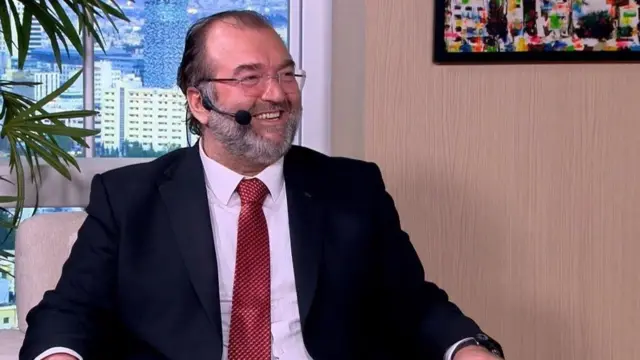
image source, social media
Dr. Salim Sharif, a professor of media psychology, believes that the ability of artificial intelligence promos to attract viewers cannot be reduced to visual blindness, as he believes that people still seek authenticity and the human touch, even in the face of a flood of machine-generated content.
Sharif told the BBC that “human nature is always looking for originality” and noted that “the brain can distinguish between work that takes effort, creativity and human experience, and an industrial product.” He believes that people see what a car produces as closer to coldness and further from emotion, because behind it, ultimately, is a car that “carries no feeling, no soul, no thought, no history, no morality.”
According to Sheriff, this does not mean that audiences will necessarily reject AI-generated content. On the contrary, curiosity may be one of the most prominent motivations for interacting with it, as viewers may stop to see “what the machine produced” and then share the clip with others out of wonder. But he notes that liking content doesn’t necessarily mean a deep emotional connection to it.
Sheriff cites the example of art to explain this difference, explaining that an addressee may be drawn to a painting painted a hundred years ago because it carries history, experience, and originality, even if it is not the most technically impressive. Hence, the brilliance provided by AI may catch the eye, but it alone does not guarantee a lasting relationship with the viewer.
On the other hand, Sherif believes that artificial intelligence has a special ability to create scenes and events that are difficult for the director to implement, even with the capabilities of the largest studios. This ability gives promos a powerful tool for generating curiosity and can keep viewers engaged with content for hours, even if the story or scenes aren’t real.
He says that “one will enjoy it even if the story is not true because of the narrative and the content”, especially when the effects are used in a way that draws them in, knowing what will happen soon. Here, AI will be able to play on the audience’s emotions and convert curiosity into viewing, interaction and participation, which are the main goals a promo creator is looking for, according to Sheriff.
But behind this pleasure there is another psychological effect: the viewer, according to Sharif, may still have an inner consciousness that repeats to him: “This is not real.”
But if the human feeling is what is missing from the artificial image, then what does the promo maker himself see? Is artificial intelligence considered a competitor to the director, or a tool that expands what he does?
“Artificial intelligence has shortened the distance between imagination and implementation.”
For Mahmoud Gomaa, a director and producer of commercials, making a promo starts with an idea, before the camera, instruments or any element of execution.
Juma told the BBC that the question he asks at the beginning, before production begins, is: “What do I want to say? What feeling do I want to get across to the audience? What makes them stop at the promo and want to know more?” Then this idea is served by image, rhythm, music and montage.
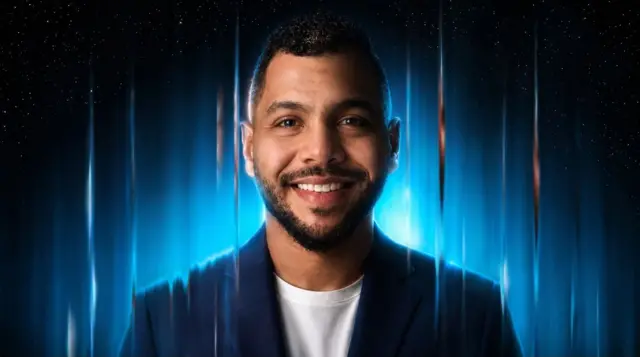
Juma believes that artificial intelligence has not changed this foundation, but it has “greatly expanded the scope of implementation” by making it possible to experiment with ideas and scenes that previously required large production facilities. Most importantly, he believes, technology has “shortened the distance between imagination and implementation” and opened up “a huge space for creativity and experimentation”.
But the abundance of possibilities does not mean that everything produced by artificial intelligence serves to promote, he explained.
Juma, who has more than a decade of experience creating promos and visual content, says, “A tool can give you many dazzling images, and this is where the real role of a director comes in: Which image serves the idea? And which image is important to the story? Therefore, he argues, ‘the idea defines the tool, not the other way around.’
Juma believes that the best use of artificial intelligence is when the work requires building a different visual world, recreating a specific time or place, or realizing a scene that is difficult to reproduce realistically. When it comes to scenes that depend on human performance, “a look, a reaction, a simple movement or a real feeling” can be more impactful than a digitally created image.
Juma does not believe that traditional photography and artificial intelligence are in a state of competition, but rather that their combination could be one of the most important creative spaces today. Artificial intelligence can create realistic images and simulate emotions, he said, but “there’s a difference between creating an image of a sad person and knowing why that moment should affect the viewer.”
He adds that the power of a promo can sometimes lie in “a look, a moment of silence, a pause in the voice or even an extra second” before moving on to the next shot, because “artificial intelligence can simulate the form of a feeling, but it’s the human who gives that feeling its meaning.”
For Jumaa, a successful promo “makes the audience feel and hide from it enough to ask.” Artificial intelligence may be able to grab attention in the first moments, but after being surprised, the audience needs an idea, a feeling or a story to keep them interested.
Therefore, he doesn’t think the question is whether the promo was done with artificial intelligence or traditional photography, but rather, “Did the promo reach the audience? Did it make them feel something?” At the end of his conversation with the BBC, Juma believes that the competition will not be between humans and machines, but between those who “only have a tool” and those who “have a vision and know how to use that tool to say something worth watching.”
A car may be able to capture the viewer’s eye, but it takes more than flash: an idea that piques their curiosity, a feeling that leaves an impact, and a story that makes them want to stay. Although the capabilities of artificial intelligence to create images are expanding, humans still decide whether the image is worth looking at.
