

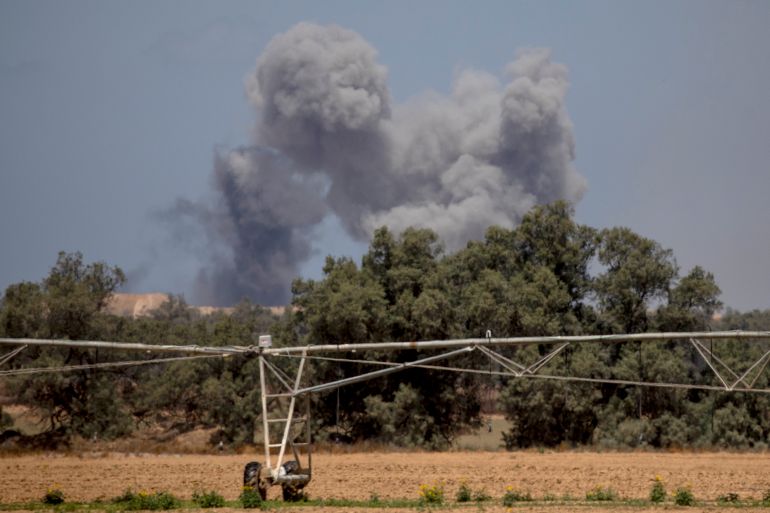
Gaza – By occupying the Rafah border crossing with Egypt, Israel reinforces its tight control over the Gaza Strip, completely isolating it from the outside world, preventing the sick and wounded from traveling for treatment, and preventing the flow of humanitarian aid vehicles. This will further worsen the humanitarian situation resulting from the 7 months of war.
Today, Tuesday, Israeli tanks and military vehicles stormed the Rafah crossing, located southeast of the city of Rafah near the Egyptian border, hours after Israel warned residents of neighborhoods and areas east of the city to be displaced from their homes, signaling a ground military operation.
The occupation army released videos of tanks and military vehicles waving the Israeli flag and rolling through the Rafah crossing squares along the Philadelphia axis (Egypt’s border with the Gaza Strip) in an unprecedented scene since Israel withdrew from the crossing and Gaza settlements in 2005.
Local and international authorities have seen the occupation of the Rafah crossing and the closure of Kerem Shalom’s only commercial crossing with Gaza as a deepening of the humanitarian and health disasters that the small coastal strip has suffered since the start of Israel’s war on October 7 last year.
Although the Rafah crossing is considered the only gateway for Gaza residents to move in and out of Gaza through Egyptian territory, the Kerem Shalom crossing is the only commercial crossing after Israel closed 6 other crossings connecting it to the Gaza Strip after it was besieged by the Islamic Resistance Movement (Hamas) after its victory on 20 in legislative elections.
death sentence
Gaza crossing spokesman Hisham Advani told Al Jazeera Net: “The occupation of the Rafah crossing will worsen the humanitarian situation, especially for the sick and wounded, and will punish the population by cutting off humanitarian aid.”
Official estimates indicate that 11,000 Israeli war-wounded and 10,000 cancer patients urgently need life-saving travel abroad after occupation forces systematically destroyed hospitals, including the only Palestinian-Turkish friendship hospital for cancer patients.
The developments in East Rafah came after the occupation army announced that three of its soldiers from the Givat and Nahal brigades were killed and 12 others wounded in a rocket attack claimed by the Izz al-Din al-Qassam Brigades, the military wing of the Hamas movement, last week on the Kerem military base in the Southern Cross. of the city.
Following this operation, the occupation forces closed Kerem Shalom’s only commercial crossing at the Rafah crossing and prevented the passage of commercial trucks and humanitarian aid.
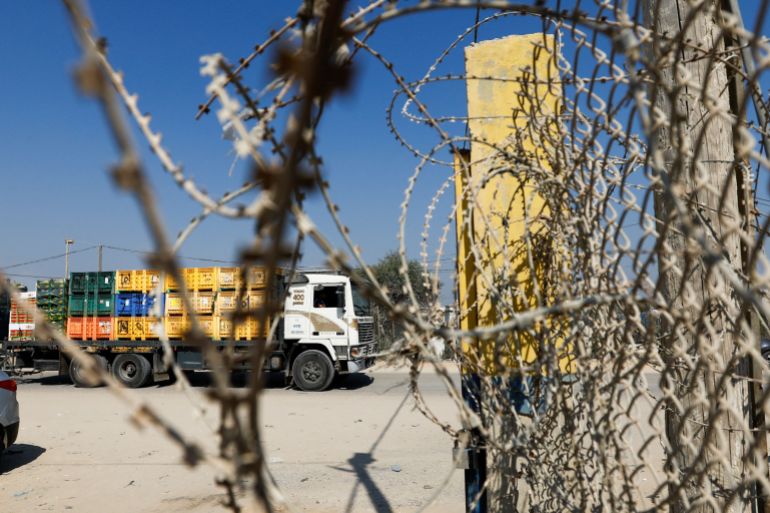
The United Nations Relief and Works Agency for Palestine Refugees in the Near East (UNRWA) said on its account on the WhatsApp platform that “the continued interruption of the supply of aid and fuel through the Rafah crossing will halt the humanitarian response in the entire Gaza Strip.”
The UN agency warned that “the catastrophe of hunger facing people, especially in the northern part of the Gaza Strip, will worsen if the suspension of supplies is lifted”, referring to the hundreds of thousands of Palestinians in Gaza and the northern Gaza Strip, which Israel has cut off from its southern half.
After a temporary truce last November, the occupation forces reopened the Kerem Shalom crossing, and according to the government media office, 190 trucks loaded with commercial goods and various humanitarian aid enter it every day.
Before the war, more than 500 trucks loaded with a variety of goods and humanitarian needs, in addition to fuel, passed through Kerem Shalom every day.
hunger
Speaking to Al Jazeera Net, Ismail al-Tawabta, director general of the government media office, called the occupation’s decision to suspend aid and close the Rafah and Kerem Shalom crossings in the context of “ending the genocidal war,” saying that “it will worsen the humanitarian reality and the catastrophic path.
The reality east of Rafah Governorate indicates a true humanitarian disaster, not only for this city, but also for all the governorates of the Gaza Strip, which is experiencing a tragic situation of systematic hunger and shortage of supplies and aid for 7 consecutive months. Then comes the occupation’s decision to cut off aid and close the crossings, which is working to make the humanitarian situation catastrophically worse, al-Tawabta reported.
Al-Tawabta reviewed Rafah, the smallest city in the Strip, and said that the occupation army’s storming and closing of crossings, decision to cut aid and impose a state of confusion for medical personnel, wounded, sick, IDPs, IDPs, abandoned schools and hospitals. Targeting them falls within the context of ongoing crimes of genocide.
Political and humanitarian dimensions
Dr. Hossam Al-Dajan, a political science professor, said in an interview with Al-Jazeera Net that Rafah is different from other cities in two respects: the first is that it shelters more than a million displaced people and is considered a center for humanitarian activities linked to international organizations, led by UNRWA, after the withdrawal of Israel from the northern military territories.
The second issue – according to al-Dajan – is related to Rafah’s geopolitical location, as it is Gaza’s gateway to the outside world, with a border connecting it to Egypt. Any war in the Rafah, especially on the Philadelphia axis, could be interpreted by the Egyptians as a violation of the Camp David agreement, in addition to the fear of an influx of masses to the Egyptian side of the crossing.
Mustafa Ibrahim, a researcher who specializes in Israeli affairs, sees the occupation of the Rafah crossing and the move east of the city of Rafah as an attempt by Benjamin Netanyahu’s government to put more pressure on the negotiating table to reach a ceasefire agreement.
According to Ibrahim, Netanyahu is also trying to reinforce the image of victory, telling the Israelis: “We entered Rafah and took control of one of the symbols of Hamas’s sovereignty and governance, and this will affect its capabilities.”
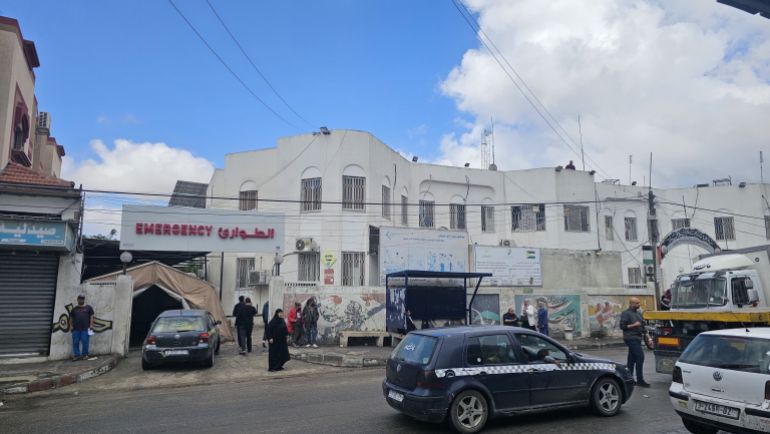
Ibrahim agrees with al-Dajjan on the specifics of Rafah, and he told Al-Jazeera Net that the Israeli military operation in the city had a quick and immediate impact on people’s lives, especially since it is home to more than half of the population of the strip, which no longer has a treatment hospital, and the only government hospital, Abu Youssef al-Najjar, is out of service.
Since the hospital is out of business, the dialysis unit and X-ray services are no longer available in Rafah town. Ibrahim expects more deaths among patients and wounded if the military operation continues and expands geographically.
