
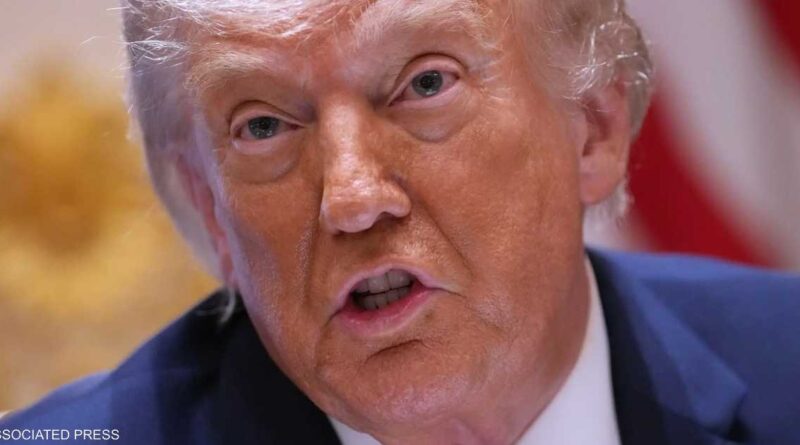
After the failure of diplomacy, Trump returns to the “Iranian regime change” option.
CNN cited informed sources as saying that Trump had been asking his national security team for months why the Iranians were not moving to topple their leaders.
At the beginning of the war, Trump appeared confident that protests would erupt in Tehran following the increased strikes, after Israeli Prime Minister Benjamin Netanyahu assured him that the scenario could play out, according to sources.
But U.S. officials relied on intelligence assessments that indicated the strikes were unlikely to lead to the downfall of the Iranian regime, prompting wide-ranging discussions within the administration before the war began in late February.
On the eve of the war, Trump urged Iranians to take action against their government, saying in a video: “This may be your only chance for generations.”
However, regime change later fell from Washington’s top priority as the US administration focused on negotiations to reopen the Strait of Hormuz.
Last June, Trump said he was “never interested in regime change” and described the Iranian officials he was negotiating with as “very rational,” given that Washington’s previous efforts to topple foreign governments “never fail.”
But on Tuesday, he returned to the same call, asking on social media: “When will the Iranian people rise up and fight back?”
Escalation back
Trump’s announcements came after three consecutive days of repeated strikes between the United States and Iran, ending a period of relative calm that had lasted for about a month.
The US president said on Wednesday that his country had launched a “very violent” offensive and underlined its readiness to carry out larger strikes when it felt like it, but he ruled out further escalation for a long period amid economic pressures.
U.S. officials say there are currently no serious efforts to resume talks after Trump ordered his ambassadors to end talks with Iran last month.
Trump said he was satisfied with the current situation, adding: “I like where we are right now, our almost total control of the Strait of Hormuz and their economy has completely collapsed.”
The escalation comes ahead of the US midterm elections, amid warnings from Trump advisers and Republican allies that continuing the war could hurt the party at the ballot box.
But the US president denied that his decisions were influenced by the election, saying of Iran: “I don’t know how much they can take, but it doesn’t matter.”
The return to talk of regime change has coincided with a shift in US strategy to strangle Tehran’s financial resources by tightening sanctions and threatening to punish its biggest trading partners.
The US administration is betting that worsening living conditions will escalate public anger against Iran’s leadership.
Tehran is facing a sharp rise in inflation and food prices, in addition to a collapse in the value of the rial and worsening financial crises. Iranian President Masoud Pezeshkian said his country was “facing an all-out economic, military and security war”.
However, US intelligence assessments do not indicate the imminent possibility of protests that could topple the regime.