

As usual, the festival offers a lot of films that no one can watch in 10 days or even two weeks. This is not limited to the Venice Film Festival, but to all the major festivals competing to land the world premiere show. But it’s not about the numbers. It is primarily about the quality and the works that the festival chooses for reasons related to the desire to draw attention to a new director or a specific theme.
All of this can be found here in Venice in programs that run from eight thirty in the morning to after midnight.
It’s up to the critic to pick and choose what to watch out of the lot and what to turn his attention to. What he feels is essential and important to write about, or he can postpone viewing until another opportunity, perhaps on his commercial show or through paid platforms.
Anger in Beirut
“Furies”
★★★
The Lebanese film “Furies” participates in the “Spotlight” section, which showcases new talents. In this regard, its director Rami Kodeihi presents his first full-length work after making short films. The aforementioned Lebanese identity to the director and the fact that the events unfold in the city of Beirut. But financing came from the American company RT Features, with contributions from Qatar and the care of many high-profile names, including George Clooney as an executive producer.
“Anger” is an action film about two sisters who decide to rob a bank that saved one of them his savings. It begins with Lebanese banks suspending exchange operations in 2022 and not paying any money to depositors. In its context, the name of Riyad Salama, the former governor of the Bank of Lebanon, is mentioned as a bigger partner in this game, who robbed hundreds of thousands of people of their money. In another scene, he illustrates how those in power can instantly revoke anything they want, simply because they are.
It’s rampant corruption in Lebanon, as the film demonstrates, and the two sisters must do something about it, as the younger sister (Rem Marwa) has early-stage cancer. After the bank manager refuses to plead with the older sister (Maria Nakuzi), the plan is to rob the bank. There is a flaw that you will find, which is that the wall between the commercial store adjacent to the bank and the bank itself is made of concrete and can collapse. This will take time and will require the help of two men (Issam Bou Khaled and Hassan Akil) to cause trouble at the bank late at night so their fight can cover up what’s going on.
The heist barely goes on, but what follows is a fast-paced series of events that manage to build suspense at a fast pace. In the last third of the film, its focus shifts to the execution of action and suspense scenes, moving away from the issue raised earlier. The director, who co-wrote the screenplay with Nora Mariana and produced the film himself, initially wanted to make a scathing critique of the situation and its impact on Lebanese society, but the issue emerges more and more as the film moves into the scenes after the success of the operation to a core of gross-out fun; This is what makes the film an action film with chases and dangerous situations.
The director’s style of work remains committed to fast cutting, fast pacing and sharp cutting shots. Although this line of work manages to create spaces for thinking, Kodeih successfully executes it. The two leading actors of the film do this with good professionalism, which gives it a new direction for Arab cinema in general, because women not only lead, but also participate in the violent process and confront it.
A destroyed house in Tehran
“be careful”
★★
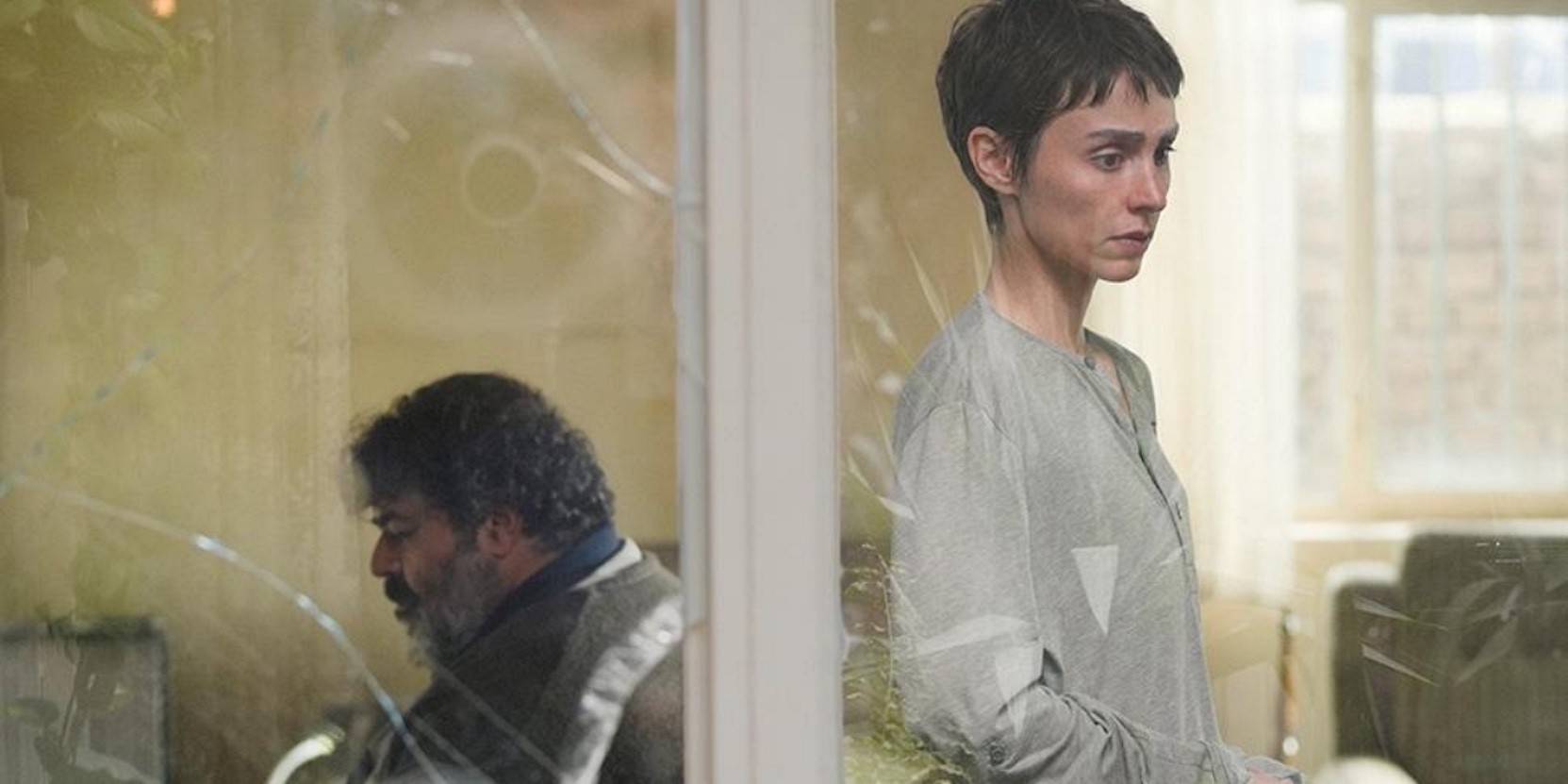
For his new film The Observer (marketing name Falling House), Iranian director Mohsen Gharai chooses to tell his story through dialogue from the beginning. There is an attempt to not interrupt the ongoing dialogue between the prison guard Rashid (Farhad Aslan) and his supervisor, who is suspected of taking bribes from the inmates to facilitate their acceptance of certain demands. Rashid denies it and we believe him, even though he has other issues. He received a notice from the court that he had to leave his house due to the construction of a new road. When we move to this house, we find that the whole area consists of ruined houses and ongoing excavations. Rashid’s house, where he, his wife and two daughters live, is the only one left.
Later the story allows us to move on to the problems inside the house. There is a lot of confusion and misunderstanding among family members regarding their demands and the position of the head of the family. For example, there is his eldest daughter who wants to leave Iran and become a model. The wife is not happy with her husband’s delay in finding shelter, and he is not happy with everything. The director translates this situation into Rashid’s attempt to get what he wants and exercise his power over everyone.
There’s nothing wrong with being over two hours long (133 minutes to be exact), but since the film relies on dialogue, the absence of silent spaces and suggestive scenes, instead of telling everything through dialogue, ruins a theme that could have served its dramatic purpose better.
Only local representation deserves attention and sympathy. He is such a fat man that he cannot hold his shoes. His physical problem coincides with feelings of frustration and helplessness. A house threatened with destruction is also similar to the situation of a family threatened by feelings that undermine its unity. The fact that most of the action takes place inside the house limits the director’s ability to use other locations and reduce the burden of this extended dialogue.
This is Gharai’s fourth film. His previous three films were financed by Iran, but this film was financed by a British company, even though it was shot in Iran.
in distant countries
“Wild Horse Nine”
★★★★
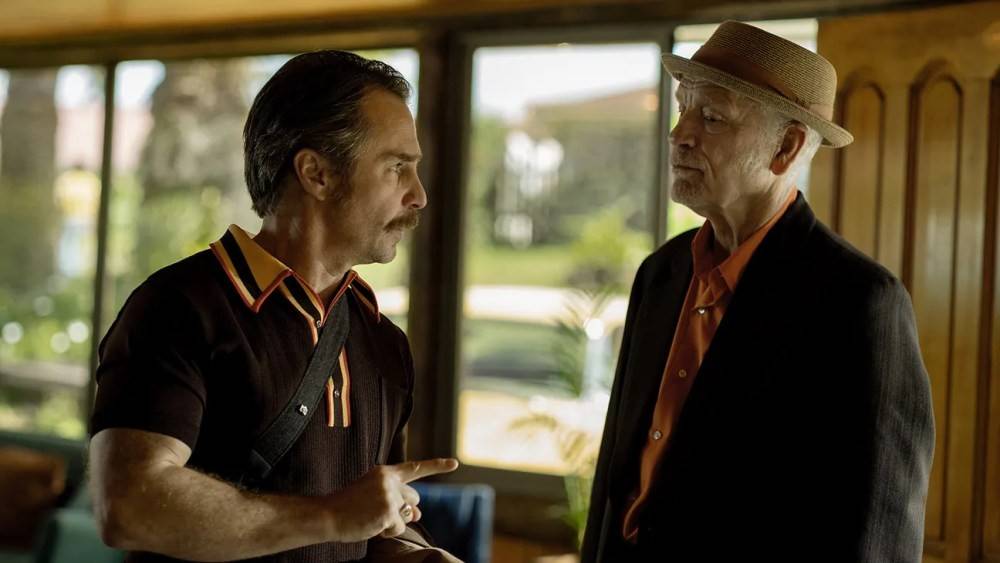
In another place that cinema rarely cares to depict, the events of Martin McDonagh’s new film “Wild Horse Nine” unfold. It is “Easter Island”, located in the outskirts of Chile, where the two heroes of the film, Sam Rockwell and John Malkovich, migrate from the city of Santiago in 1973 and the events begin. This is the period before the military coup and the end of Salvador Allende’s rule.
Malkovich stars as Chris, a CIA agent who is about to publish his memoir about his missions for the agency. This includes operations in the Middle East, Africa and Latin America, and he was involved in the Kennedy assassination. Lee (Rockwell) is another agent who accompanies him on this journey. He is younger and has the respect and love of Chris, but he must follow the orders of the head of operations of the agency in charge of them, referred to as “MJ” and played by Steve Buscemi, to kill Chris to prevent the publication of the secret he is about to reveal.
Upon arrival on the island, they meet two girls from Chile. Chris, not interested in revealing what should remain hidden, articulates his stance against Allende’s rule, attacking the left and the intellectuals who support it. This upsets the two girls, Monica (Mariana Di Girolamo) and Alicia (Eileen Salas). Later we will learn what the director kept secret about their truth.
Much of the film is a metaphor for Chris’s relationship with his past and the reflection of that past on his present. He does not regret the operations, including murder, but because he has almost reached the belief that everything in life has no meaning anymore. He has cancer and asks Lee to kill him. Lee’s position is difficult. On the one hand, he has to kill not because Chris asked him to, but in response to an order given to him, and on the other hand, he has love and appreciation.
The relationship between them is not only based on respect, human love and deep mutual appreciation, but is characterized by carefully writing the details of each of their personalities: Lee, who faces troubles with his wife and head of operations, and Chris, who has begun to live with his feelings, even if he is completely sure of his political positions.
McDonagh’s film follows his previous good film, 2022’s Banshee of Inishrein, which in turn featured two characters switching positions, albeit with a more intense tone. The new film also has a dual lead, but its subject matter remains fundamentally human and full of passion to follow the director’s stories that defy conventional themes.
