
Read Sudan Defense Council General Mobilization Statement
Khartoum- The Security and Defense Council, under the leadership of the Chairman of the Sovereignty Council and Commander-in-Chief of the Sudanese Army, Abdel Fattah al-Burhan, accepted a general mobilization to eliminate the Rapid Support Forces in the country, while public opinion was waiting for a direct response to the American proposal for a humanitarian truce that lasted for 3 months.
Observers believe that the Defense Council did not reject the peace plan of the Quartet – the United States, Saudi Arabia, Egypt and the United Arab Emirates, which it presented on September 12 last year, but at the same time did not accept the American vision of a humanitarian truce.
Massad Boulos, US President Donald Trump’s top adviser on Arab and African affairs, said last Monday that the United States is working to reach an agreement on a humanitarian ceasefire in Sudan for a period of three months, with the possibility of an extension. He stressed that separate talks in Washington with the military and the Rapid Support Force are making significant progress despite complications on the ground.
general mobilization
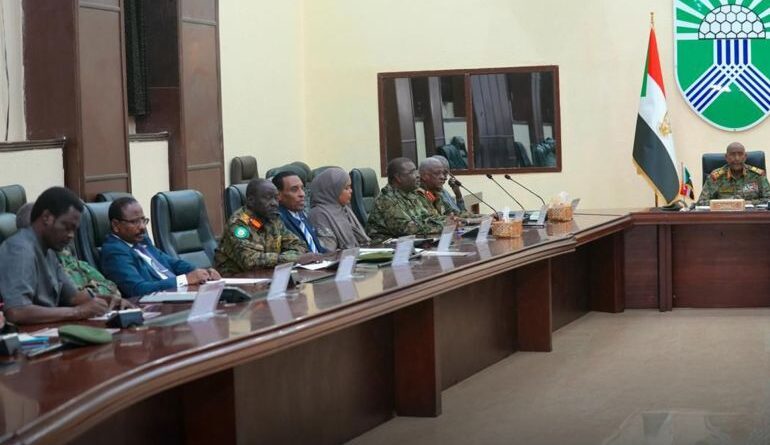
The Security and Defense Council held an emergency meeting in Khartoum yesterday, Tuesday, where they discussed military, security and humanitarian developments, details of the American proposal for a humanitarian truce, and the results of the Sudanese military delegation’s consultations with the American side in Washington.
The Security and Defense Council includes members of the Sovereignty Council, Prime Minister Kamel Idris, the Ministers of Defense, Interior, Foreign Affairs, Finance and Justice, the Chief of Army Staff and the Director General of the General Intelligence Service. The leaders of the armed movement in Darfur (United Forces) joined the extraordinary meeting.
The council announced in a statement – after the meeting – a general mobilization of the armed forces and mobilized people to help eliminate the “Rapid Support Forces militia and its mercenaries”.
Sudan’s Defense Minister Hassan Kabrun said: “We will continue to mobilize people to help the army eliminate the Rapid Support militia,” indicating that the army would continue to fight.
Kabron explained that the council discussed the humanitarian situation and the initiatives presented by some international parties and welcomed “the sincere efforts that demand an end to the suffering of the Sudanese people”.
The Minister of Defense said that the Council approved the appointment of a committee to present the vision of the Government of Sudan on facilitating the arrival of humanitarian aid, supporting humanitarian work and restoring security and peace in Sudan.
Official sources close to the Sovereignty Council told Al Jazeera Net that the Security and Defense Council has not rejected any proposal to resolve the humanitarian situation and peace efforts, but it is sticking to its directive based on the plan presented to the UN last March and the “Jeddah Declaration” signed with Rapid Support in May.
The sources, who asked to remain anonymous, considered the announcement of mobilization as a matter of course after what happened in El-Fasher and the mobilization of rapid support forces to expand into Kordofan states and besiege Babanusa, Dilling and Kadugli and attempt to impose a siege similar to El-Fasher, mirroring the siege of El-Fasher, which mirrors the Olbe of El-Fasher. the absence of the capital. peace
military escalation
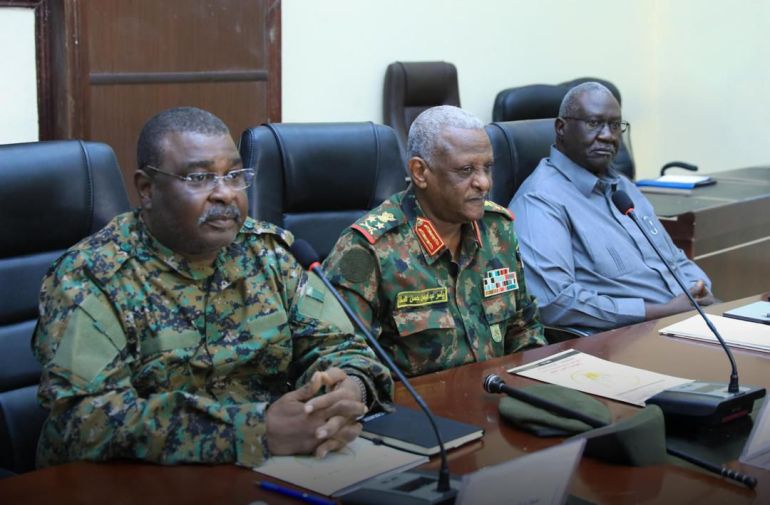
In a development that points to an imminent escalation of the military conflict, Sovereignty Council member and deputy army chief Yasser al-Atta vowed to achieve a decisive victory over the Rapid Support Forces, predicting their imminent disbandment in Kordofan and Darfur states.
Al-Ata said during a meeting with joint force leaders in Khartoum, held as part of a meeting of the National Security and Defense Council, that the Rapid Support Force “ran out of Kordofan, just as they ran out of Al-Jil, Omdurman, Bahri, East Nile, Khartoum, Al-Jazeera, White Kordo and Senar. Darfur, our beloved land.”
For its part, the United Forces of Armed Struggle Movements has confirmed its full and firm support for the will of the Sudanese people, which categorically rejects any “settlement or political solution that could perpetuate a dysfunctional reality that equates the legitimate state and its institutions with an illegal militia.”
In a statement issued today, Wednesday, the joint forces appreciated the stance of the government and army leadership in upholding the legitimate rights to protect the motherland and urged them to work by all possible means to support the all-out national mobilization “until total victory”.
political consumption
For his part, Al-Dariah Center for Strategic Studies Executive Director Makki Al-Shibli read the defense minister’s statement as an acceptance of peace as the general mobilization for war continues.
Al-Shibli wrote in a post on social media: “The truce – according to the Quartet’s plan – is a temporary humanitarian measure lasting three months, which aims to stop hostilities and open humanitarian corridors.
Al-Shibli demands that the defense minister’s statement be understood “in the context of domestic political use to neutralize supporters of the war, and not as a declaration of disregard for the Quartet’s truce terms.”
Also, according to the representative, the army’s political maneuver loses its power after 3 months, when the ceasefire phase begins, and then even verbal mobilization for war stops, not to mention military mobilization.
As for the writer and political analyst Ibrahim al-Sidiq, he believes that the statement defending the position of the Security and Defense Council was about a humanitarian truce by creating a committee to present the government’s vision. It separates the humanitarian path from the military and calls for mobilization and vigilance in response to public pressure and its interactions.
According to a writer for Al Jazeera Net, “quick support and regional parties have been using military movements for political purposes and to ensure a stressful climate” and this is evident in the escalation of attacks in Kordofan states. Therefore, “the government’s message is to remind us that we have a reserve of popular support.”
Limited options
Al-Sidiq felt that the Quartet is continuing to press without many negotiating cards, “and with public awareness rising in many European countries following the horrific crimes committed by Rapid Support Forces in El-Fasher, Bara and other areas, their options are slimmer to pressure Rapid Support and its role in the future of Sudan.”
On the other hand, he is considered an expert in the issues of the Horn of Africa Political analyst Amar al-Arki said that “the position on the ceasefire was not an absolute rejection of the principle of the ceasefire, but a rejection of the formula in which it aimed to disrupt the path of a solution on the ground and turn Sudan into an arena for international trade.”
Al-Araki explained to Al-Jazeera Net that the Defense Council’s announcement has political and military dimensions. “The council has established clear red lines that the war is no longer just an internal conflict, but a confrontation with a project aimed at saving the state,” he said.
The writer adds that the government’s position is essentially that Sudan will not accept forced settlements under humanitarian pretexts and that it is open to sincere initiatives as long as it respects its sovereignty and national will.