
Two French newspapers: Greater Israel is a vague concept and a land without fixed borders
Posted on 16/10/2025
|
Last update: 11:39 (Mecca time)
Two French newspapers discussed the Greater Israel concept, including the complex interplay of religion and politics in Zionist thought, Israel’s blurred and shifting borders, and the contemporary political and religious claims of extremist Israeli movements related to the two concepts.
Le Monde began to discuss the concept of “Greater Israel”, noting that this expression did not appear directly in the Bible, but it appeared prominently after the 1967 war, when Israel greatly expanded its borders, and then returned to the fore after the events of October 7, 2023 and the ensuing war of destruction in Gaza.
Also read
2 item listEnd of list
This concept emerged – as the newspaper writes – in the statements of Israeli Prime Minister Benjamin Netanyahu, who is wanted in the International Criminal Court, who called himself a “historic and spiritual mission” to achieve this vision, which caused widespread discontent in the Arab world.
In a report written by Virginie Larousse, Le Monde traced the biblical religious perception of the land promised to Abraham’s descendants and found that this perception was characterized by uncertainty and inequality, which later helped to adopt some expansionist and religious discourses.
Indeed, the biblical text mentions variable boundaries, sometimes extending from Dan to Bersha and sometimes from the Nile to the Euphrates, reflecting a lack of historical geographic clarity that is still used politically today.
With the beginning of the Zionist movement in the late 19th century, the concept of the “full land of Israel” took on a political character – according to the newspaper – especially among religious Zionists such as Rabbi Abraham Cook, who believed that a return to the “Holy Land” was a prerequisite for achieving religious salvation.
Later, Vladimir Jabotinsky laid the ideological foundations for the concept of “Greater Israel” in its expansionist political sense, which called for the annexation of Transjordan and beyond as part of the Jewish national homeland.
But the 1967 war was a turning point, as Israel took advantage of its military victory and occupied large areas such as the West Bank, the Golan, Gaza and the Sinai.
This victory led to the emergence of the Gush Emunim movement in 1974, led by Rabbi Zvi Yehuda Kook, to promote the settlement of all of what he considered to be the “Biblical Land of Israel”, rejecting any withdrawal from the occupied territories and establishing a state based on Jewish law.
Since the 1990s, the religious nationalist movement in Israel has grown stronger, culminating in the coming to power in 2022 of an extreme right-wing government that openly embraces the idea of a “Greater Israel” and seeks to translate it into reality by supporting settlements and rejecting any political settlement.
variable boundaries
In his book, The Lord Is With Us: October 7 and Its Aftermath, political science researcher House Seniger notes that this concept, in the eyes of its supporters, includes not only the West Bank and the Golan, but also possibly Gaza, southern Lebanon, the Sinai, parts of Jordan, and even Iraq, by biological extension.
Some scholars believe that the biblical understanding of the “promised land” does not require occupation and political control of the entire land, but refers to a vision that requires regional peace, but this interpretation is not accepted by nationalist religious movements that sanctify the settlement and reject the creation of a Palestinian state.
Against the background of this perception – as the newspaper writes – it is difficult to imagine the formation of an independent Palestinian state with Israel, whether in the short or medium term, because it contradicts the political and religious doctrine accepted by the defenders of “Greater Israel”.
The newspaper La Croix did not differ much from what was said in Le Monde, as it also addressed the question of the boundaries of the land of Israel mentioned in the biblical texts and emphasized the uncertainty and change of its definition over the centuries, pointing out that the “land of Israel” is not a purely geopolitical term, but derives from a religious concept.
The paper concluded – in an article written by Olivier Cattel of the French Biblical and Archaeological School in Jerusalem – that the borders of this land have always been variable and unstable, and that it extends at its maximum from the Egyptian river to the Euphrates, but in other texts it is less extensive, between Dan in the north and the Jordan river in the west. in the east.
Zionist movements took advantage of these differences – as the author says – and used them as an excuse to expand their claims to the land, including the United Kingdom in the era of David and Solomon, the Hasmonean Kingdom and even the Herodian Kingdom in the time of Christ.
west coast
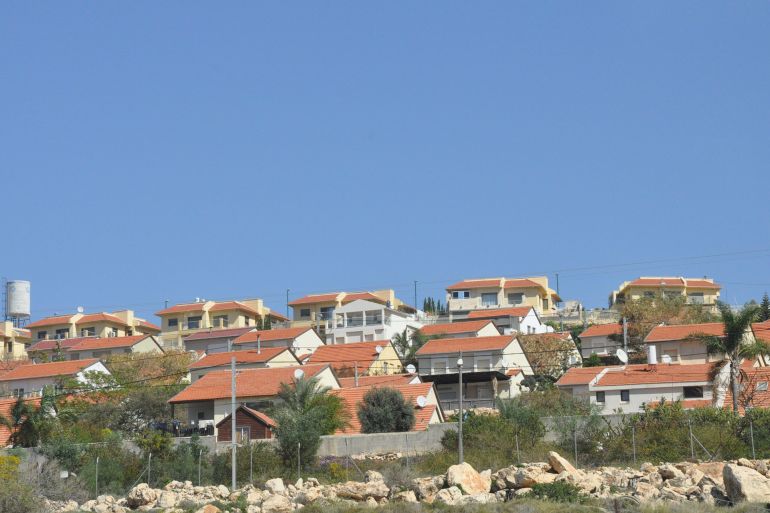
However, the paper focused on the West Bank, or Judea and Samaria – as Israelis call it – and saw it as the most important religious and historical axis in the Torah. However, it was not granted to Israel in the 1947 partition plan, but national and religious currents within Israel see it as the “essence of the biblical land of Israel”.
In this context – as the writer says – the settlers in these areas do not consider their construction as a settlement, but as a “restoration of inheritance” according to the biblical concept.
The writer noted that there is a new interpretation among some researchers, including Professor Nellie Vasana, who believe that the biblical description of the “great land of Israel” does not mean the actual occupation of these territories, but rather a reflection of the geopolitical reality in which Israel should have peaceful relations with its neighbors.
The writer concludes by stressing that peace is the primary condition for achieving residence in the Promised Land, citing the 2020 “Abraham Covenant” that sought to cement peace between Israel and Arab countries such as the Emirates and Bahrain.
Despite this trend, the West Bank remains hotly contested because it is difficult to convince those who interpret the Torah literally to give up the lands they consider central to Abraham’s divine covenant.