

Doha – Al Raya:
Every year on September 5, the world celebrates the International Day of Charity, which emphasizes the importance of solidarity and support for the most disadvantaged groups and the role of charitable initiatives in improving the lives of communities and promoting sustainable development.
The philanthropic areas supported by Qatar Charity around the world are diverse, including responding to urgent needs and implementing long-term development projects, in addition to health, water and sanitation, education and livelihood initiatives.
In Ghana, a plot of land turned into a community service project after Dr. Hakeem donated a piece of land he owned in a strategic location in the capital, Accra, to Qatar Charity in 2024 after hearing about its projects in his country.
Despite receiving offers from merchants and investors to purchase the land, Dr. Hakim chose to dedicate it to the community and this helped create a headquarters and community complex that includes educational, social and service facilities.
This initiative highlights an aspect of charity work that is not limited to financial donations, as it can include the provision of land, time, knowledge or opportunities to benefit others.
In Gaza, four-year-old Arkan Juma faced dire humanitarian conditions after he lost his parents and sister and was injured in a shelling that left him with a leg.
After evacuating to Jordan with his uncle, he began treatment, rehabilitation and preparation for an artificial limb, with the support of Qatar Charity and in cooperation with the Jordanian Hope Restoration Association.
This assistance aims to enable the child to regain mobility and continue living, within the framework of humanitarian interventions that go beyond providing medical care to rehabilitation and helping beneficiaries to regain greater independence.
In Senegal, Qatar Charity has implemented water and sanitation projects in various regions, including the construction of 246 wells and 49 water tanks for needy families in Touba, in addition to other projects in various regions, costing more than 4 million Qatari Riyals and benefiting more than 70,000 people.
These projects provide a sustainable source of water for the beneficiary families, besides helping to improve health and hygiene conditions and reduce the suffering of the population due to lack of water sources.
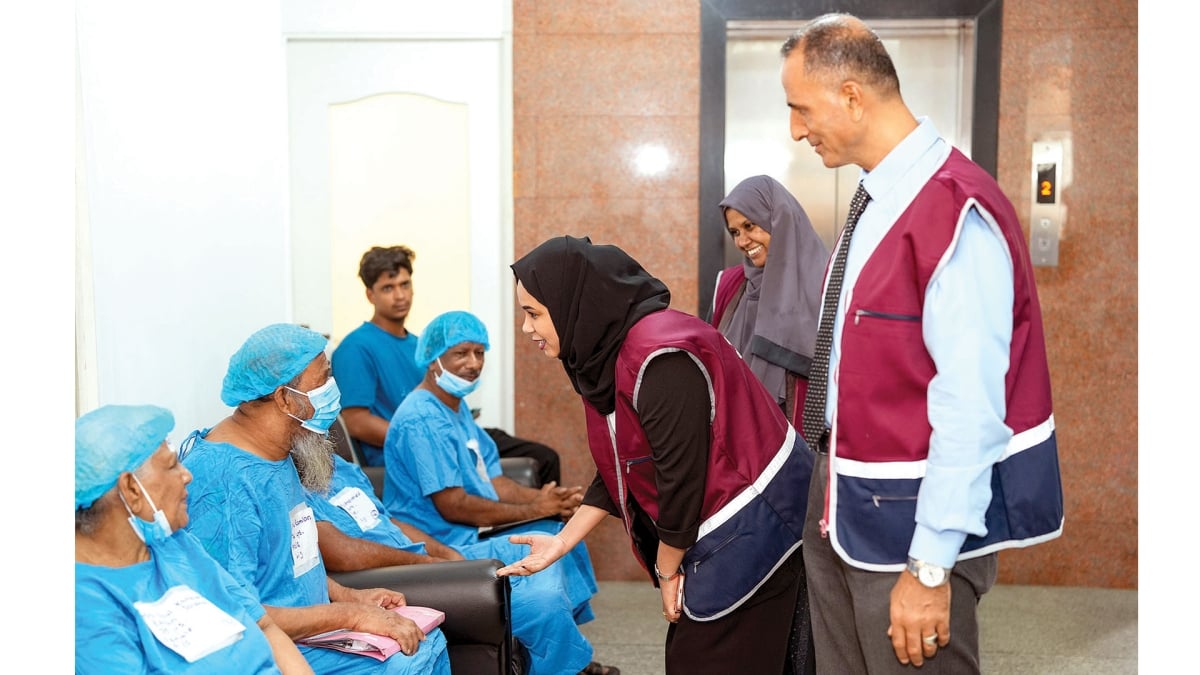
In Sri Lanka, the health initiative focused on supporting low-income families, the elderly and children with vision problems by performing 300 cataract surgeries, in addition to providing 555 medical glasses, including 150 glasses for school children.
Such health interventions help to improve the beneficiaries’ ability to use their daily life, and for children, it is a way to help them continue their studies and better integrate into the school and social environment.
In Nepal, a Qatari charity responded to the needs of flood victims by providing 30 tons of basic food, in addition to hygiene items and emergency shelter, so that aid reached thousands of victims.
Rapid response is particularly important in disaster situations, as affected families are at risk of food, shelter and basic hygiene needs, requiring immediate intervention to mitigate the effects of the disaster.
These projects reflect the diversity of philanthropic activities as they have included providing land to a community in Ghana, treating and rehabilitating a child in Gaza, providing water sources to needy families in Senegal, performing medical surgeries and providing glasses in Sri Lanka, and providing food and shelter to flood victims in Nepal.
The diversity of these initiatives proves that philanthropy is not limited to one form, but extends to many areas defined by the needs of communities and beneficiary groups, transforming donations and contributions into projects and services that help improve people’s lives and strengthen their ability to face challenges.
