Decluttering Your Closet: A System That Actually Sticks
A closet decluttering system built for real people, not for photo shoots. Four hours to reset, and simple rules to keep it that way.

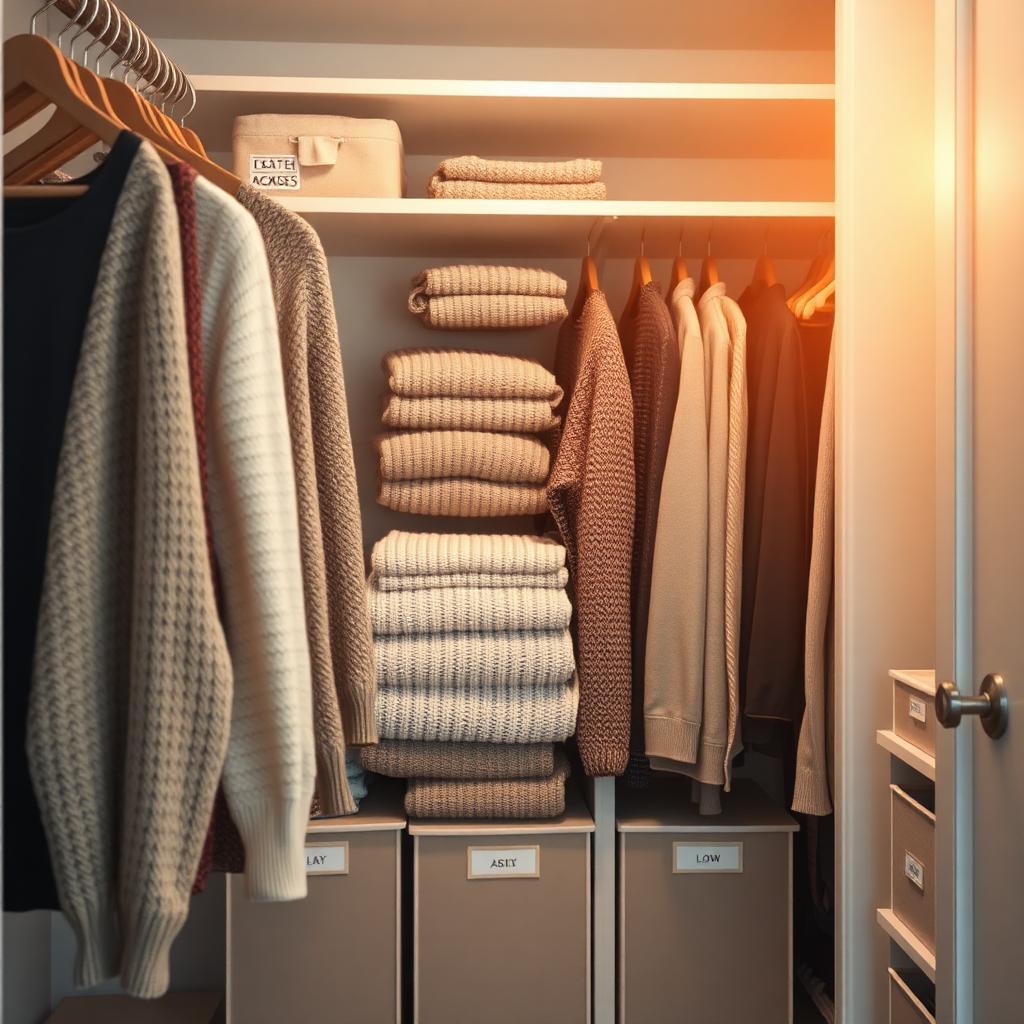
Every 'decluttered' closet on the internet was tidied for one afternoon and photographed. Real closets fall apart in three weeks because the system behind them didn't survive contact with getting dressed at 7 a.m. on a Tuesday.
What follows is the closet reset I use on my own closet twice a year, and the one I've walked half a dozen clients through. It's four hours of work, one visit to the donation bin, and a couple of simple rules that keep the closet functional for the six months in between.
Before you start: block the whole afternoon
A closet decluttered in twenty-minute bursts stays messy. You need one uninterrupted block — four hours for a typical bedroom closet, six for a walk-in — to pull everything out, decide, sort and put back. Split it across two days and you'll be living out of a pile on the bed when your motivation fades.
Have three sturdy bags ready before you start: keep, donate, and toss. Have a fourth for maybe, but keep it small on purpose — a giant maybe pile is procrastination in a bag.
Step one: empty the closet completely
Everything comes out. Every hanger, every shoe, every box on the top shelf. Pile it on the bed or the floor. This step is non-negotiable and it's the one people skip. You cannot decide what to keep by looking at things one at a time on the rod; decisions get made only when you see the whole quantity.
As you pull each item, glance at the closet interior. Wipe down the shelves, vacuum the floor, look for anything you'd want to fix (a wobbly rod, a burned-out light) while it's empty. This takes twenty minutes and you'll never have a better chance to do it.
Step two: sort by decision speed, not by category
Conventional advice says to sort by category (all shirts together, all pants together). It's fine, but I've found a faster rule works better: sort by decision speed. Start a pile of things you know instantly you're keeping. Start a pile of things you know instantly you're donating. Anything that takes more than three seconds goes on the bed for later.
You'll knock out 60-70 percent of your closet in the first thirty minutes doing this. What's left on the bed is the hard stuff, and now you have time and energy to think about it.
Step three: rules for the maybe pile
For every item you're not sure about, ask three questions in order and stop at the first no.
One: does it fit right now? Not aspirational fit. Not 'when I lose ten pounds.' Right now, this month. If no, out.
Two: have I worn it in the last twelve months? Twelve, not two years. If no, out — with narrow exceptions for a wedding-guest outfit, a black-tie option, and one nice interview outfit if you don't wear suits daily.
Three: do I actually like putting it on? Not do I like it in theory or did I love it when I bought it. When I put it on, do I feel good? If no, out.
A yes to all three, it stays. Anything else, donate. The relief of this is more emotional than practical; every item you release is one you don't have to ignore every morning.
Step four: reload the closet with visibility in mind
Put things back in the order you actually reach for them. Everyday shirts and pants at eye level. Occasional items (formal wear, seasonal coats you'll swap out) on the top shelf or in labeled bins. Shoes at foot level in matching pairs, not scattered.
Buy matching hangers. This one change makes a bigger visual difference than any other — wooden or velvet hangers in the same color, spaced evenly, make even a modest closet look considered. A pack of 50 velvet hangers is $25 and takes two hours off future organizing sessions because clothes stop slipping onto the floor.
Storage picks that earn their spot
For folded knitwear: fabric or clear boxes on a shelf, sized to fit the shelf depth exactly. Loose stacks slump; bins hold their shape and the stack stays visible.
For accessories: shallow drawer dividers, or a hanging jewelry organizer on the back of the door. Deep bins full of belts and scarves become archaeology by month two.
For shoes: clear stackable shoe boxes (Container Store or Amazon) if space is tight, or a simple slanted shelf if space is generous. Skip fabric shoe bags — they get grimy and you can't see what's inside.
Label anything you can't see through in less than one second. A dozen $2 labels is the cheapest closet upgrade there is.
The one-in-one-out rule
After the reset, the single habit that keeps a closet organized is one-in-one-out. Every new sweater means an old one leaves. Every new pair of shoes means an old pair goes to the donation bag. It sounds strict; it isn't, once you've done it for a season. It just means your closet stays roughly the size it is now instead of quietly growing back to overwhelming.
Keep a soft-sided bag on the closet floor labeled 'donate.' When you take off something that felt bad, drop it in immediately. Drop the bag at a donation site once a month.
Seasonal swaps and long-term maintenance
Twice a year — early spring and early fall — swap seasonal items in and out of easy reach. Winter coats and heavy sweaters go into labeled bins on the top shelf in spring; light layers move up in fall. This is 30 minutes of work, done consistently, that keeps the everyday closet from overflowing.
A full reset (this whole process) once a year is realistic. Twice a year is ambitious but pays off. Once every two years is fine if you're using the one-in-one-out rule in between; longer than that and you'll be back to the four-hour project you were trying to avoid.
Expert tips
- •Try on anything you haven't worn in six months. Half of what stayed in your closet 'just in case' actually doesn't fit anymore or feels wrong now, and trying it on is the fastest way to know.
- •Photograph the closet the day it's finished. Not for social media — for yourself. It's a reminder of what 'organized enough' looks like when the closet starts drifting.
- •Donate directly to a specific shelter or thrift program when possible. It changes how much you care about which items you're releasing, and often reduces guilt about letting things go.
Common mistakes to avoid
- ✕Trying to decide from the closet rod. You can't see what you have without pulling everything out.
- ✕Keeping items 'in case I lose weight' or 'in case I go back to that job.' They quietly dominate the space and make you feel bad every morning.
- ✕Buying storage bins before decluttering. Bins purchased for the pre-decluttering volume are always wrong for the post-decluttering closet.
Frequently asked questions
Sources & further reading
- American Cleaning Institute: home organization guidance — American Cleaning Institute
- Council for Textile Recycling: donation and recycling data — Council for Textile Recycling
Editor's note: Sarah has used this system on her own closet, on client closets during interior design projects, and while helping family members downsize. The rules reflect what actually holds up over years, not what looks best in an after photo.
Fourteen years designing residential interiors on both coasts, with a soft spot for warm minimalism and small-space layouts.
More in Home Organization
Decluttering and Organization Strategies That Actually Stick
Decluttering strategies that survive past the first weekend high — and the small habits that keep new clutter from arriving.
How to Organize a Small Kitchen So It Stays That Way
Zone-by-zone organization for a small kitchen — the storage that pulls its weight and the habits that keep it tidy after week one.
Garage Organization Systems That Actually Last
The garage organization strategies that survive kids, projects and weather — plus the pegboard-and-bin combinations I use in my own garage.
Related topics
Ideas from nearby corners of the site you'll probably like too.

Best Indoor Plants for Air Quality (and How to Not Kill Them)
Honest picks for indoor plants that clean the air, add real warmth to a room, and forgive a beginner's care routine.
Home Office Setup Guide: A Room You Can Actually Work In
A designer's guide to setting up a home office that supports real work — long past the honeymoon week.

Small Living Room Design Ideas That Actually Feel Bigger
Real design moves that make a small living room feel bigger without knocking down a single wall — starting with the one mistake almost everyone makes.