Garage Organization Systems That Actually Last
The garage organization strategies that survive kids, projects and weather — plus the pegboard-and-bin combinations I use in my own garage.

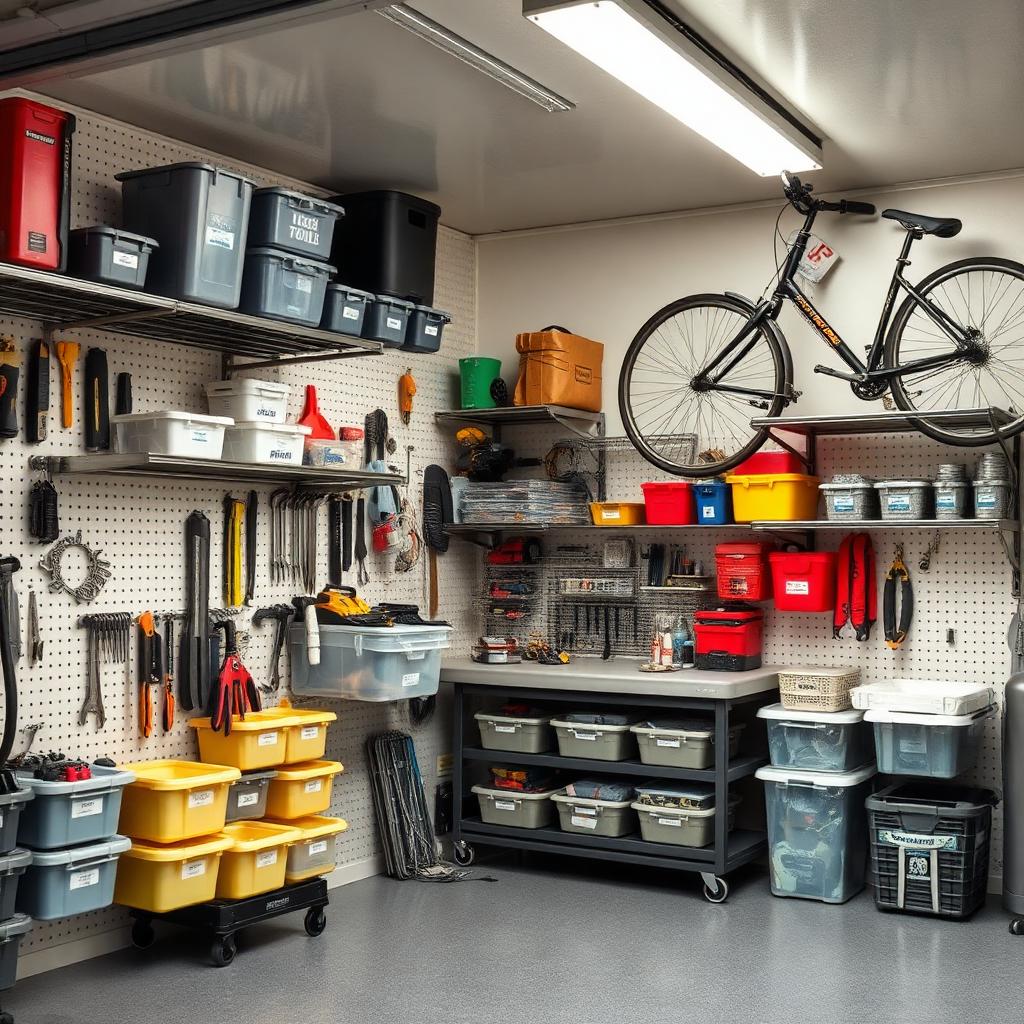
I've reorganized my garage three times in nine years. The first two times it looked great for six months and then quietly returned to entropy. The third time it stuck, because I finally figured out that a garage organization system either fits how you actually use the space or it doesn't, and no amount of matching bins fixes the wrong system.
This guide covers what has held up in my garage — an unheated space in a temperate climate that houses tools, sports gear, seasonal items, a workbench and one car. Adapt the specifics to your situation; the principles carry over.
Before you buy anything: three questions
Question one: what actually lives in this garage year-round? Not what you own, but what needs to be here. Yard tools, yes. Wedding photos in a cardboard box, probably not — those belong in climate-controlled storage. Being honest about what stays cuts the volume you're organizing by 20-30 percent before you start.
Question two: which items do you use weekly, monthly and yearly? Weekly items go in prime real estate — waist to shoulder height, within a step of the door. Monthly items go higher or lower. Yearly items (holiday decorations, camping gear) go on the top shelves or in overhead storage.
Question three: is your garage insulated, and how humid does it get? An uninsulated garage in a humid climate is the wrong place for anything paper, upholstered or moisture-sensitive. Metal shelving handles humidity; particleboard cabinets swell. Plastic bins with tight lids protect contents; cardboard boxes fail within a year.
Wall systems: pegboard vs slatwall vs French cleat
The three practical wall systems for a garage each have a different sweet spot.
**Pegboard.** Cheap, endlessly reconfigurable, works for hand tools, small equipment and organizing accessories. A 4x8 sheet of tempered pegboard, spacers, and a starter set of hooks costs under $75. Best for tool walls where the collection changes over time.
**Slatwall.** More expensive ($5-10 per square foot) but supports heavier items with hooks and baskets rated for real weight. Best for organizing yard tools, sports gear and bulky equipment.
**French cleat.** A DIY system where you screw a beveled cleat horizontally to the wall and hang custom-fit holders on it. Best for organized woodworkers who want tool holders sized to specific tools. Cheapest to build; most labor.
I use pegboard on the tool wall above the workbench and slatwall on the wall where yard tools live. Different zones, different systems.
Shelving: get it off the floor
The single most impactful garage change is getting stored items off the floor and onto shelves. Heavy-duty adjustable steel shelving from a big-box store (Edsal, Whalen or similar) at $80-150 per 5x2x6-foot unit holds hundreds of pounds and lasts indefinitely. Two or three units along one wall create the storage backbone.
Set shelf heights before you load. Put frequently-used items between 24 and 60 inches from the floor. Reserve the bottom shelf for heavy, less-used items (bags of soil, large tool boxes) and the top for light infrequent items (seasonal decorations, camping tents).
Skip flimsy wire shelving from housewares aisles for garage duty; it sags under real weight within a year. Skip plastic shelving except for very light loads.
Bins: match to shelf depth, label everything
Buy bins to fit your shelves, not the other way around. Measure shelf depth (usually 18 or 24 inches) and pick bins that fit two-deep or one-deep exactly. Bins that hang over the shelf edge fall; bins that leave inches of empty space waste storage.
For most garage storage, clear plastic bins are worth the small premium over opaque. You can see what's inside without opening them, which is the actual usability difference between a well-organized garage and a maze. When clear isn't available, label with a large paper label on two sides — every side you have to walk around to read is a side you'll organize wrong.
For long-term storage of items sensitive to moisture, choose bins with gasket seals (Iris and similar brands make them). For frequently-accessed items, cheap open-top bins are faster to use and worth having in different colors for different categories.
Overhead storage: use the cubic footage
The volume above your garage door and above your car is usually completely wasted. Overhead storage racks that mount to the ceiling joists (SafeRacks, FLEXIMOUNTS and similar) hold hundreds of pounds and add 20-40 cubic feet of storage per rack. Perfect for holiday decorations, luggage, camping gear — anything you use two or three times a year.
Install into structural joists, not just drywall. Rated ceiling racks come with lag bolts that go through drywall into the joists; use every mount hole the rack provides. The failure mode of a poorly-installed overhead rack is catastrophic — do it right or hire it out.
Bikes, ladders and awkward long items
Bikes hang from ceiling hooks (either two hooks catching the wheels, or single hooks catching the top tube). This clears the floor and lets a whole family's bikes hang above the car. A single hook is $3; a good rack for two adult bikes is $40. Both are worth every dollar.
Ladders go on horizontal wall hooks — two heavy-duty utility hooks screwed into studs, spaced to catch each end of the ladder when it hangs horizontally. Never lean a ladder against the wall; it slides and eventually damages something.
Long-handled yard tools go on a purpose-made rack (Rubbermaid FastTrack or similar) or on a slatwall panel with hooks sized for handles. A jumble in the corner is where those tools go to die.
Zones: the layout choice that keeps it organized
The reason most garages drift back to messy is that items get put wherever there's space, not where they belong. Fix this by defining zones and being strict about them.
My zones: tool wall above the workbench, yard tool wall on the opposite side, sports and seasonal on the back wall in bins, overhead storage above the car for infrequent items, cleaning supplies on a low shelf near the door to the house. Every item belongs to a zone. When something new arrives, it either fits an existing zone or goes to donation — the garage doesn't grow.
This is the discipline part. Systems and hardware do 60 percent of the job; the other 40 percent is refusing to let items drift out of their zones. A monthly ten-minute walk-through, moving strays back where they belong, keeps the whole system running.
Expert tips
- •Paint or seal the floor. Epoxy coating or even a good porch-and-floor paint transforms how the garage feels and makes spills easy to clean. It's a weekend project and the biggest single visual upgrade.
- •Install an outlet strip on the workbench and a couple more along the wall at chest height. Reaching down to floor outlets for every project is the little friction that discourages using the space.
- •Buy one more bin than you think you need. Overflow always arrives; having a spare bin on the shelf means new items get contained instead of dumped on the floor.
Common mistakes to avoid
- ✕Storing items on the floor. Anything on the floor gets kicked, tripped over, and eventually forgotten. Wall or overhead is almost always better.
- ✕Buying decorative bins that look great but don't stack or fit shelves. Function first; the garage isn't a photo shoot.
- ✕Skipping labels because the contents seem obvious. In six months you'll have forgotten what's in half the bins, and unlabeled bins become archaeology.
Frequently asked questions
Sources & further reading
- American National Standards Institute overhead rack load ratings — ANSI
- OSHA guidance on residential storage safety — U.S. Occupational Safety and Health Administration
Editor's note: James maintains the garage system described here in his own home, which houses tools, sports gear and a car in a modest two-car space. The layout has held up through nine years and multiple project cycles.
Weekend woodworker and smart-home tinkerer. Tests every device he writes about in his own 1970s ranch house.
More in Home Organization
Decluttering and Organization Strategies That Actually Stick
Decluttering strategies that survive past the first weekend high — and the small habits that keep new clutter from arriving.
How to Organize a Small Kitchen So It Stays That Way
Zone-by-zone organization for a small kitchen — the storage that pulls its weight and the habits that keep it tidy after week one.

Decluttering Your Closet: A System That Actually Sticks
A closet decluttering system built for real people, not for photo shoots. Four hours to reset, and simple rules to keep it that way.
Related topics
Ideas from nearby corners of the site you'll probably like too.
How to Deep Clean Your Kitchen in One Weekend
A working two-day plan for deep cleaning a kitchen the right way — top-down, greasy zones last, and no vinegar on the wrong surfaces.
The Best Houseplants for Low-Light Rooms (That Actually Survive)
Not every plant labeled 'low-light' will actually live in a dim apartment. Here are the ones that will — and how to keep them alive without turning your living room into a jungle.
A Natural Cleaning Routine That Actually Works
A gentler cleaning routine that actually cleans — and honest notes on where natural products fall short.