How to Deep Clean Your Kitchen in One Weekend
A working two-day plan for deep cleaning a kitchen the right way — top-down, greasy zones last, and no vinegar on the wrong surfaces.

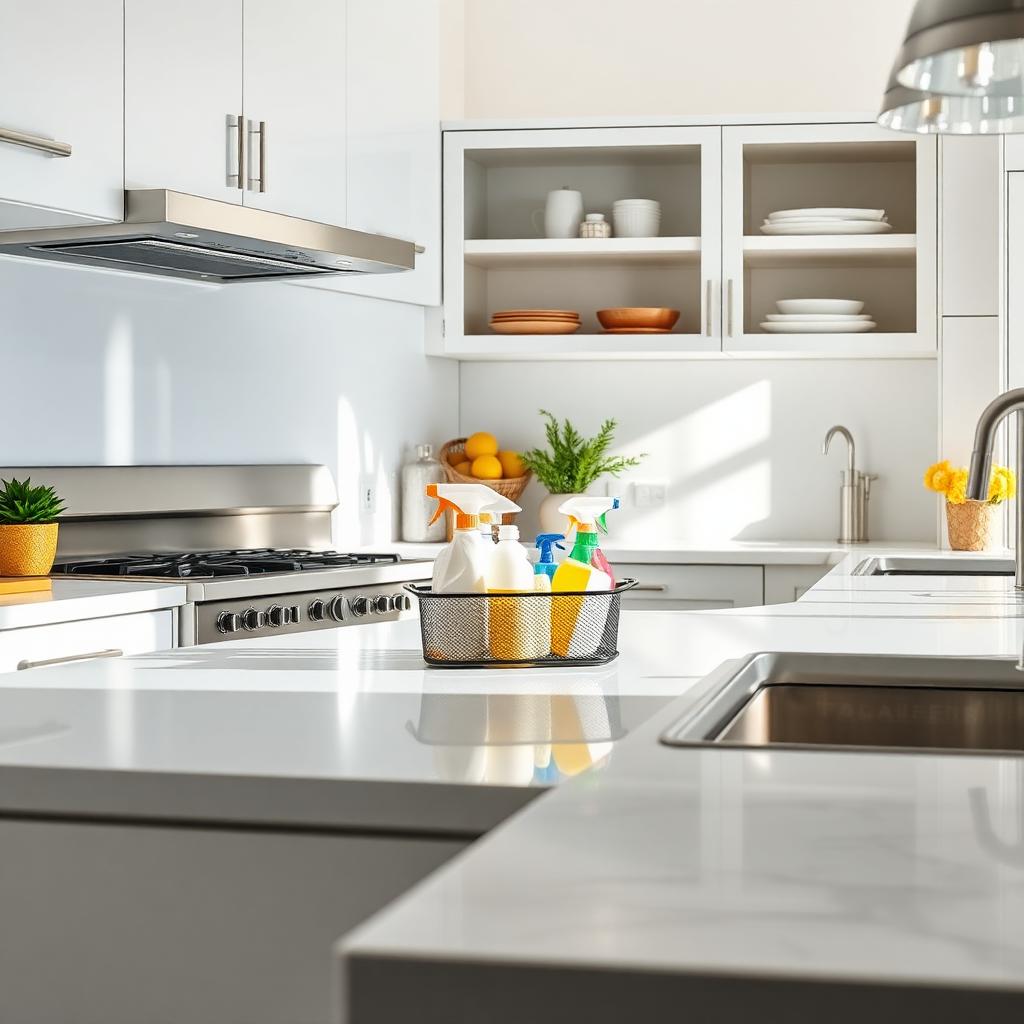
There's a difference between wiping the kitchen down and actually deep cleaning it. A wipe-down is the twenty minutes after dinner. A deep clean is the weekend where you finally pull out the fridge, degrease the range hood filter, and remember that the grout used to be white. This guide is the schedule I use in my own house twice a year and the one I hand to friends before they move into a rental.
Two things separate a good deep clean from a frustrating one: order of operations and matching the cleaner to the surface. Get those right and a whole kitchen takes a weekend, not a week.
Before you start: the ten-minute prep
Empty the sink and clear the counters completely. Every appliance you can lift — toaster, kettle, stand mixer, knife block — goes onto the dining table or a covered floor. You cannot deep clean around clutter; you'll just move the same crumbs from one pile to the next.
Gather your supplies in a caddy: microfiber cloths (a dozen minimum), a soft scrub brush, a stiff nylon brush for grout, dish soap, baking soda, distilled white vinegar, a non-abrasive cream cleanser like Bar Keepers Friend, a stone-safe cleaner if you have marble or granite, and a degreaser for the range area. Skip the multi-purpose spray for this — you want the right tool for each surface.
Saturday morning: top-down, dry-to-wet
Always work top to bottom so dust and grime you dislodge fall onto surfaces you haven't cleaned yet. Start with light fixtures and cabinet tops — the greasy dust on top of upper cabinets is legendary and nobody ever cleans it. Use a warm degreaser and a microfiber cloth, and lay newspaper on top after cleaning to make next year's job a two-minute swap.
Then cabinet faces. Wood cabinets: a mild soap solution (a teaspoon of dish soap in a quart of warm water), wrung-out cloth, dry immediately. Painted cabinets: same, but test in an inconspicuous spot first — cheap paint can lift. Never use vinegar or straight ammonia on wood cabinet finishes; both etch the topcoat.
The range hood, the worst job first
Pull the metal mesh filters out of the range hood — most just squeeze and drop. If they're gummy with grease, soak them in a sink full of hot water with a half cup of baking soda and a squirt of dish soap for 20 minutes, then scrub with a soft brush. Rinse and let them air dry.
While the filters soak, wipe the hood interior and the fan blades you can reach with a warm degreaser. Do not spray degreaser upward into the fan motor; wet the cloth first, then wipe. If the hood exterior is stainless steel, finish with a stainless-safe polish in the direction of the grain — cross-grain streaks are the giveaway of a rushed job.
The stovetop, oven and microwave
For a gas stovetop, lift the grates and burner caps into the same soapy sink water. Scrub the burner surface with a paste of baking soda and water, and clean the burner ports with a straightened paperclip if any are clogged. Never use steel wool — it scratches the enamel and the marks are permanent.
For the oven, use the self-clean cycle if you have one and can leave the house for three hours (it produces smoke and heat). If not, coat the interior in a thick paste of baking soda and water, leave overnight, then wipe clean and finish with a vinegar spray to dissolve any residue. Do not use commercial oven cleaner on a self-cleaning oven — the caustic chemistry damages the special coating.
For the microwave, boil a bowl of water with a tablespoon of vinegar and a lemon slice inside for four minutes. The steam loosens everything; a single wipe finishes the job.
Saturday afternoon: the refrigerator and freezer
Empty the fridge into a cooler with ice packs. Remove every shelf and drawer and wash them in the sink with warm soapy water — never with hot water on a cold glass shelf, which can crack it. Let them come to room temperature first.
Wipe the interior with a solution of one tablespoon baking soda per quart of warm water, which cleans and neutralizes odors without leaving a scent your food will absorb. Skip vinegar inside the fridge; it does the same job but the smell lingers.
Pull the fridge out and vacuum the condenser coils on the back or underneath. Dust on the coils makes the compressor work harder, shortens its life and adds ten to fifteen percent to the appliance's energy use.
The sink, faucet and disposal
For a stainless sink, sprinkle Bar Keepers Friend across the bowl, add a splash of water, scrub with a soft cloth in the direction of the grain, rinse thoroughly. It removes water spots, light rust and food stains without scratching.
For the faucet, wrap the aerator in a plastic bag filled with white vinegar, secured with a rubber band, for an hour. Mineral buildup dissolves and the spray pattern returns to what it was when the faucet was new.
For the disposal, run cold water, drop in a handful of ice cubes and a quartered lemon, then run the disposal for 30 seconds. The ice scours the blades and the lemon oil deodorizes. Skip drain cleaners entirely — they damage the seals.
Sunday morning: floors, grout and finishing details
Sweep or vacuum first — mopping over grit turns your mop into sandpaper. For tile, a warm-water and mild-detergent solution is enough for most weeks; for a deep clean, add a scoop of oxygen bleach and let it sit for five minutes before mopping. Do not use vinegar on stone tile or on grout you'd like to keep sealed; the acid strips the sealer and etches natural stone.
For grout that's discolored, a paste of baking soda and hydrogen peroxide, scrubbed with a stiff nylon brush and left for ten minutes before rinsing, brings most tile grout back to close to its original color. Re-seal grout once you've cleaned it — a bottle of grout sealer and a foam brush is a twenty-minute job that lasts two years.
Small appliances and the details nobody notices
Toaster: pull the crumb tray and shake it out over the sink, then turn the whole appliance upside down over a garbage can and tap. You will be horrified. Wipe the exterior and put it back.
Coffee maker: run a full brew cycle with a solution of one part white vinegar to one part water, then two cycles of plain water to rinse. Mineral buildup on the heating element is the single biggest reason coffee makers die young.
Cabinet handles, light switch plates, and the fridge door handle: these are the germiest surfaces in the kitchen and the ones we touch most. A minute with a disinfecting wipe on each finishes the deep clean.
Expert tips
- •Do the range hood filters first — they need to soak while you clean everything else, and pulling them out early prevents you from putting off the greasiest job.
- •Never mix bleach and ammonia (or bleach and vinegar). The resulting chloramine gas is genuinely dangerous. If you're not sure whether a product contains bleach or ammonia, ventilate hard and don't mix.
- •Use warm water, not hot. Boiling water sets protein stains (egg, milk, blood) and cracks cold glass shelves. Warm plus dish soap does the same job with less risk.
Common mistakes to avoid
- ✕Spraying cleaner directly onto surfaces instead of onto the cloth. Overspray coats the wall behind the counter and drips into cabinet seams.
- ✕Using vinegar on stone counters, stone tile, or unsealed grout. It etches marble and limestone and strips grout sealer.
- ✕Skipping the fridge coils. Dust on the coils is the most common preventable cause of a compressor burning out.
Frequently asked questions
Sources & further reading
- CDC guidelines on household chemical safety — U.S. Centers for Disease Control and Prevention
- American Cleaning Institute cleaning basics library — American Cleaning Institute
- Marble Institute of America stone care guidance — Marble Institute of America
Editor's note: Elena has deep-cleaned kitchens in her own home, a rental she managed for six years, and dozens of client homes as part of home-organization work. The order of operations here is the one she uses on paying jobs.
Master Gardener and former nursery manager. Writes about backyard vegetable beds, native plantings and low-impact home habits.
More in Cleaning Tips
A Natural Cleaning Routine That Actually Works
A gentler cleaning routine that actually cleans — and honest notes on where natural products fall short.
Related topics
Ideas from nearby corners of the site you'll probably like too.
Basement Waterproofing: What Actually Works, in Order
Most basement waterproofing money is spent on the wrong fixes. Here's the order that actually works, starting with the ones that cost nothing.
Composting at Home: A Beginner's Guide to Turning Kitchen Scraps Into Garden Gold
Composting sounds intimidating until you actually start. This is the honest, no-nonsense guide I wish I'd had — what really matters, what doesn't, and how to end up with rich dark compost instead of a smelly pile of regret.

Decluttering and Organization Strategies That Actually Stick
Decluttering strategies that survive past the first weekend high — and the small habits that keep new clutter from arriving.